
Last updated November 22, 2026
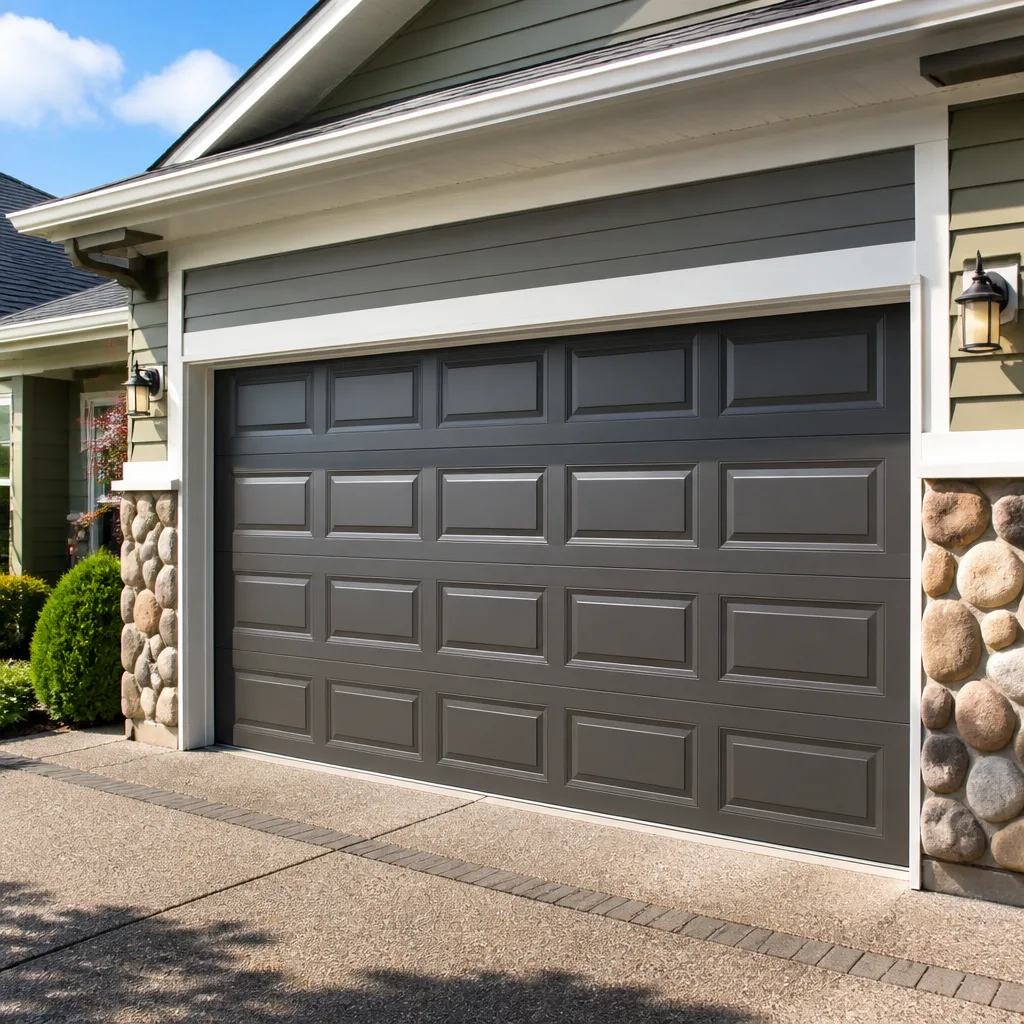 Raised-panel steel
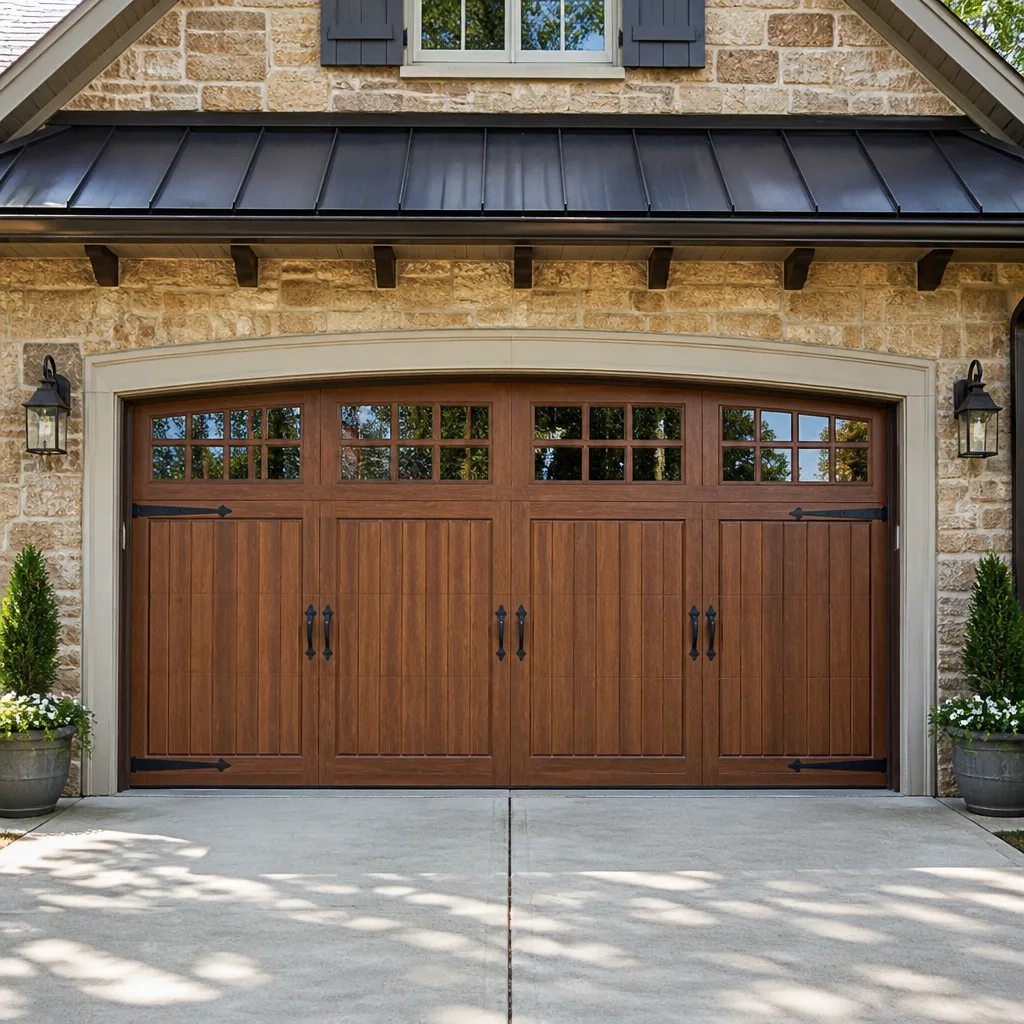 Carriage house
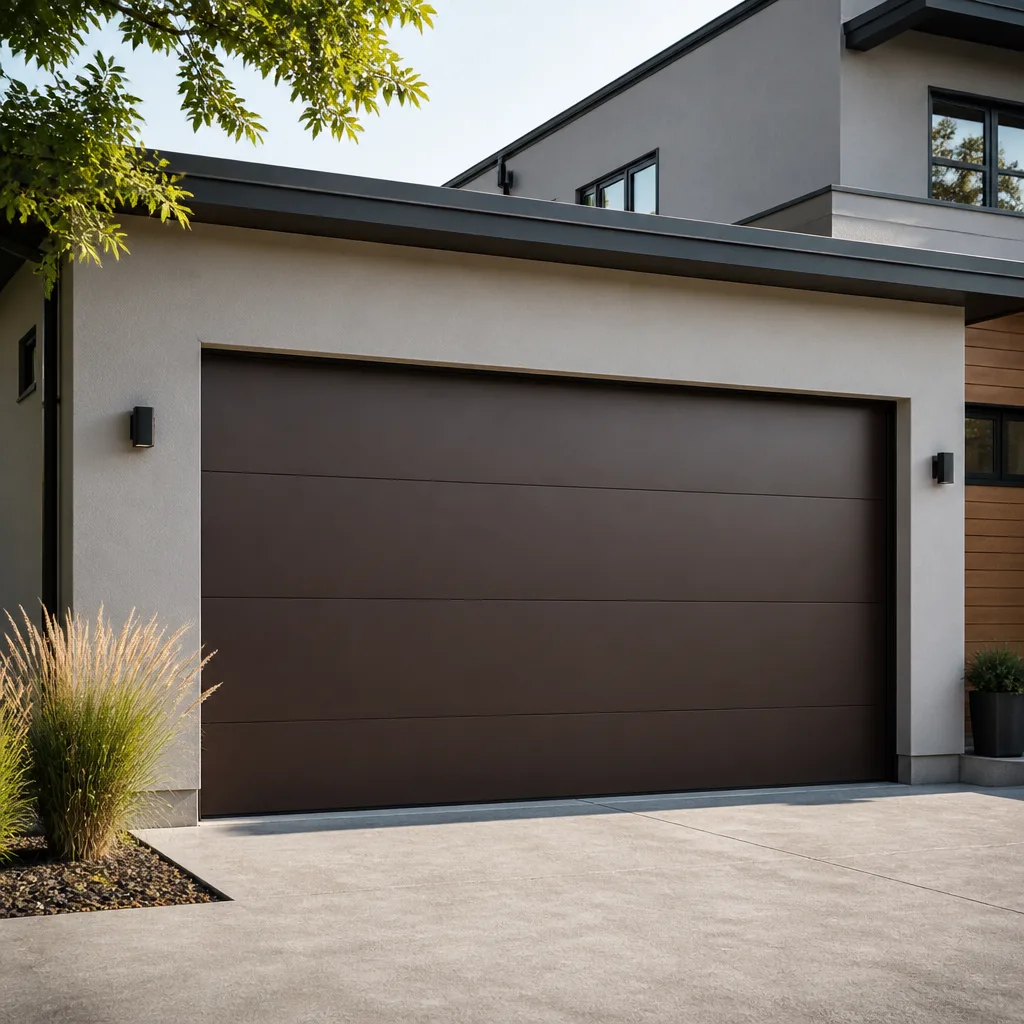 Modern flush
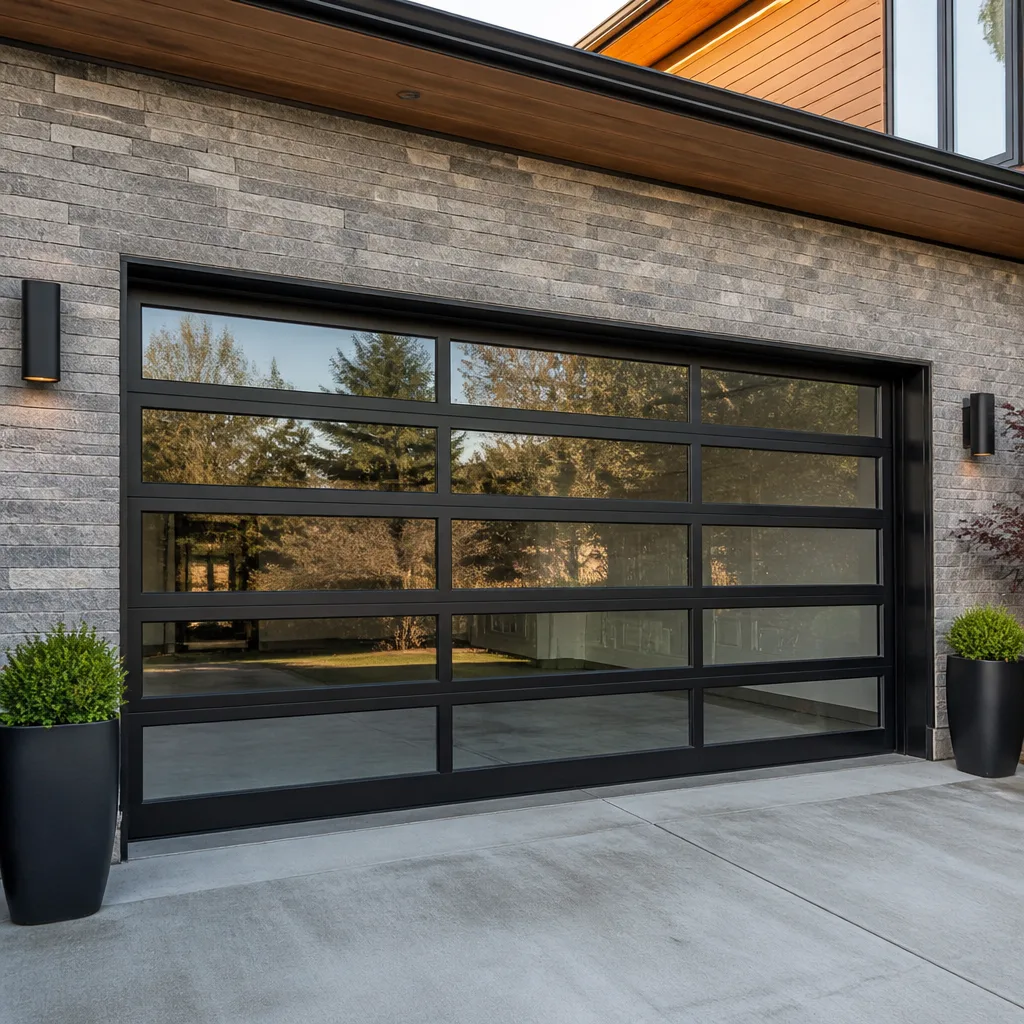 Full-view glass
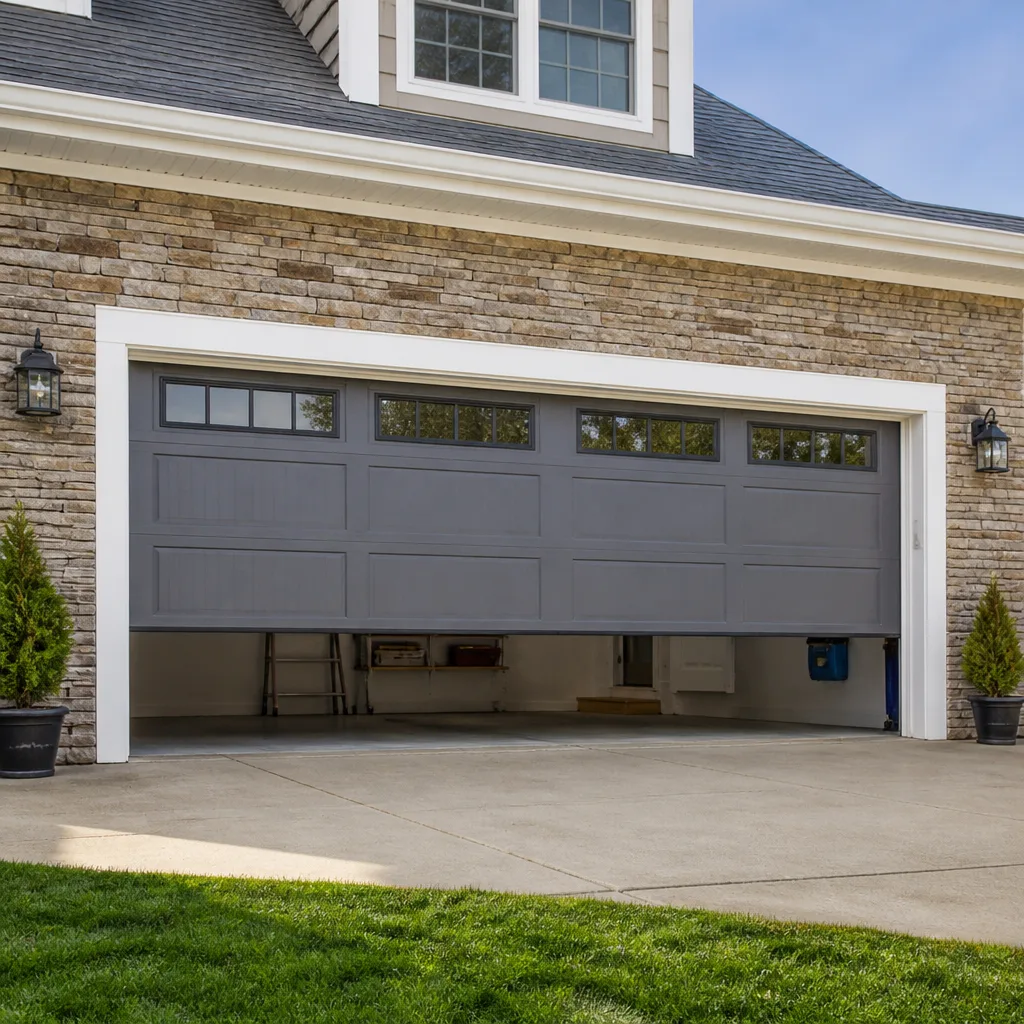 LiftMaster openers
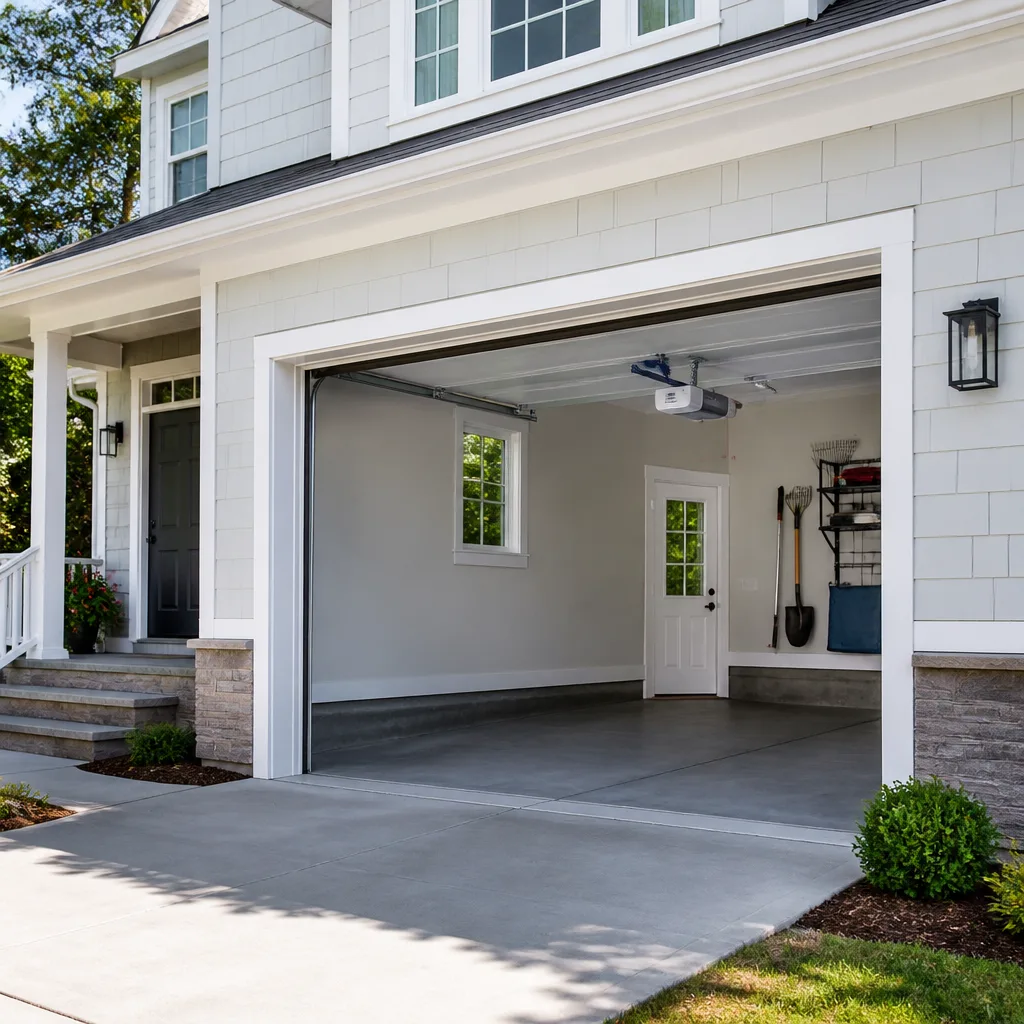 Chamberlain openers
Full 25-point door and opener safety check with every visit - springs, cables, rollers, tracks, and your LiftMaster or Chamberlain opener included
You get a price before we start. It does not change when the pro arrives.
Get your free estimateThe Complete Guide to Garage Doors in Sanford
Most garage door guides are written for a homeowner in Phoenix or Chicago. Sanford gets roughly 54 inches of rain a year and HOA covenants that can void your install, and neither of those facts shows up in the top search results. That gap matters because the door on your house is fighting Central Florida humidity, storm-season wind, and a UV index that eats through cheap finishes, all while a board of volunteers decides whether your new door matches the neighborhood. What follows is the guide we’d hand a Sanford neighbor: how materials actually hold up here, where permits get pulled, which brands dominate local inventory, and how to tell a repair from a replacement before you spend a dime.
Quick Answer
A garage door in Sanford needs a material that resists humidity and UV, an HOA approval before installation, and a permit only when you replace rather than repair. Steel or aluminum doors hold up best in this climate, spring and opener repairs usually don’t require a permit, and the brand already on your door determines how fast parts arrive. Get the material and the covenants right the first time and the door lasts far longer.
Styles & brands we work with
- Raised-panel steel
- Carriage house
- Modern flush
- Full-view glass
- LiftMaster openers
- Chamberlain openers
Table of Contents
- Why Sanford Doors Age Differently
- Choosing a Door Material for Sanford’s Climate
- HOA Approval: What Gets Rejected and Why
- Permits: When a Repair Becomes a Replacement
- Brands and Parts Availability in Seminole County
- Repair or Replace? How to Decide
- A Maintenance Routine That Works Here
- Safety: What You Should Never Handle Yourself
Why Sanford Doors Age Differently
Sanford sits in a stretch of Central Florida that swings between soaking wet and bone dry over the course of a year, and that swing is what does the damage. Roughly 54 inches of rain falls annually, most of it in a concentrated storm season, and the humidity between storms rarely lets surfaces dry out completely. A garage door is a large moving assembly of steel, wood, aluminum, and moving metal parts, and every one of those materials responds to moisture differently.
Here’s what that means in practice:
- Rust starts at the joints. Hinges, rollers, and the bottom brackets sit where water collects and where bare metal gets exposed by friction. A dry climate gives those spots time to stay sound; Sanford’s humidity keeps them damp long enough for rust to set in.
- Wood rots from the inside out. A wood door can look fine on the face while the bottom rail and stiles soak up moisture and soften. Once the core is compromised, the door loses structural rigidity.
- Springs fatigue faster. A torsion spring is a steel coil under constant tension, and it cycles every time the door opens. Humidity doesn’t destroy the spring directly, but the added friction from sluggish, rusting moving parts makes every cycle a little harder on it.
- UV fades and cracks finishes. Sanford’s sun is intense, and paint or factory finish on the south-and-west-facing side of a door takes the worst of it. Faded, chalky paint isn’t just cosmetic; cracked finish lets moisture reach the substrate.
None of this is a reason to panic. It’s a reason to inspect the parts that fail first, and to choose materials that were built for a humid climate. We work on the door you already have across Raynor, LiftMaster, Chamberlain, and Genie systems, and most of what we see here traces back to these same few wear points.
Choosing a Door Material for Sanford’s Climate
Material is the single decision that determines how a door holds up against Sanford’s UV index and rainfall. The right choice depends on how much you want to spend, how your garage is oriented, and how much maintenance you’re willing to do. Here’s how the main options stack up in this climate.
Steel
Steel is the most common residential door in the Sanford market, and for good reason. It’s strong, affordable, and holds a finish well when it’s galvanized or painted with a quality coating. The gauge matters: a lighter-gauge steel panel dents more easily than a heavier one, and cheaper steel is quicker to rust at the seams. A painted steel door with good bottom seals resists Central Florida humidity well, and steel is the material we see most often across Clopay and Amarr doors locally.
Aluminum
Aluminum won’t rust the way steel does, which makes it a smart pick in a wet climate. It’s lighter, so it’s easier on springs and openers, and it doesn’t rot. The trade-off is that aluminum dents and oil-cans more readily than steel and can flex in strong wind. For a garage that faces a lot of rain, aluminum’s corrosion resistance is a genuine advantage.
Fiberglass
Fiberglass over a frame gives you a wood look without the rot risk, and it doesn’t rust. It holds up well to moisture, but the finish can chalk and fade under intense UV, and older fiberglass surfaces are prone to cracking if they aren’t maintained. It’s a reasonable middle option for a homeowner who wants appearance without wood’s upkeep.
Wood
A genuine wood door is beautiful and carries a repair-ability advantage since sections can be patched. In Sanford’s climate, though, wood needs the most attention of any material. It absorbs moisture, invites rot at the bottom rail, and needs regular sealing to stay sound. If you love the look, go in knowing it’s a maintenance commitment rather than a set-and-forget choice.
Whatever you pick, the details matter as much as the material: good bottom seals, weatherstripping around the frame, and hinges that shed water all extend a door’s life in Sanford. When it’s time to replace rather than patch, our garage door installation process starts with a free measure and a written price so the material and fit are settled before anything is ordered.
HOA Approval: What Gets Rejected and Why
In Sanford, an unapproved door can mean a violation notice and an order to change it back, which costs more than doing it right at the start. Many of the city’s planned communities, from Celery Estates to Magnolia Park to Retreat at Twin Lakes, have architectural review rules that govern how a garage door looks from the street. The rules aren’t meant to be difficult; they exist to keep the neighborhood consistent, but they can catch a homeowner off guard if nobody reads them first.
Here’s what tends to get rejected:
- Wrong color or finish. A door color that doesn’t match the approved palette is the most common reason a request comes back. Reviewers compare against a color list, and “close enough” often isn’t.
- Window and panel patterns that don’t match the community style. A carriage-house window layout that clashes with the surrounding homes gets flagged. Some communities require a specific panel design or forbid certain window inserts.
- Material changes. Switching from the neighborhood’s typical steel to a bold wood or a fully glass door will draw scrutiny because it changes the streetscape’s texture.
- Missing or incomplete submittals. A request without a product spec sheet, a color sample, or a clear photo of the proposed door gets bounced for paperwork as often as for design.
- Doors installed before approval. This is the costly one. Installing first and asking later can trigger a demand to remove the door.
The fix is straightforward: get your HOA’s architectural guidelines in writing before you shop, submit a complete package with specs and color samples, and wait for written approval. It adds a step, but it protects the money you’re spending. Our garage door repair work doesn’t usually trigger architectural review, but any change to the door’s appearance does.
Permits: When a Repair Becomes a Replacement
In most cases, a repair doesn’t need a permit, but a full replacement often does, and the line between the two is where homeowners get confused. The rule of thumb we use in Sanford is simple: if you’re fixing or exchanging parts on an existing door, you’re repairing. If you’re removing the door and its track and installing a new system, that’s a replacement, and replacements commonly require a permit through the local building department.
Here’s how to think about the trigger points:
- Parts swap = repair. A broken spring, a failed opener, a cracked hinge, or a damaged roller is a repair. No permit is generally involved, and these are the calls we handle most.
- Single panel replacement can go either way. Swapping one damaged section on an otherwise sound door is usually treated as a repair, but some jurisdictions want to see it. It’s worth a call to your city’s building department to confirm.
- Full door and track replacement = permit. A brand-new door system changes the structure and the load on the framing, so most cities require a permit. That includes the opener if it’s being replaced at the same time.
- Structural changes always require a permit. If the work involves altering the header, the framing, or the opening itself, that’s beyond a door swap and needs a permit regardless.
Because local rules can shift, the surest move is a direct call to Sanford’s building department with your specific situation. Tell them what you’re replacing and whether the track and framing are changing, and they’ll tell you what they need. It’s better to ask first than to have an inspector ask later. Repairs and installations both get a free estimate up front, and the written price is agreed before any work starts.
Brands and Parts Availability in Seminole County
When a door breaks, the brand already on it determines how fast it gets fixed, and that’s the part national guides skip. Sanford and the surrounding Seminole County market is dominated by a handful of manufacturers, which means parts for those systems are the most readily available locally. The further you get from the mainstream brands, the longer the wait for a specialty part.
The brands we work on regularly, covering the vast majority of residential and light-commercial systems in use, include:
- LiftMaster and Chamberlain openers, which are among the most widely installed and have the deepest local parts support.
- Genie openers, common in homes across the area and supported by widely available components.
- Clopay and Amarr doors, both well represented in the Sanford market for their steel and insulated lines.
- Wayne Dalton and Raynor, including their insulated and carriage-house styles.
- Craftsman systems, which remain common on older homes.
Brand fluency matters because a technician who knows a specific opener can diagnose the actual fault instead of steering you toward a replacement. That’s the difference between a parts swap and a new opener. If a door fails and you can’t wait for a scheduled appointment, emergency service is structured for exactly that: We answer 24/7, with fast dispatch from 7am to 7pm, Sunday through Friday, and a call outside those hours is booked into the next opening. For routine work, our garage door opener repair starts with identifying the precise issue on the brand you have.
Repair or Replace? How to Decide
Most doors can be repaired far longer than their owners think, and the honest answer usually saves money. We don’t upsell a replacement when the problem is a tired spring or a worn roller. But there are genuine signals that a door is past repair, and it’s worth knowing which side of the line you’re on.
Lean toward repair when:
- The door itself is structurally sound, with no cracked or rotted sections and a straight, unstressed look.
- The problem is mechanical: a spring, an opener, a hinge, a roller, or a cable.
- The panels are intact and only the finish is worn.
Lean toward replacement when:
- Multiple sections are dented, rotted, or water-damaged, so patching one leaves the rest fragile.
- The track is bent and the framing has shifted, making a straight, quiet operation hard to restore.
- The door is a material that’s failing across the board, like a wood door that’s soaked through.
- You want an insulated door for a garage used as living or storage space, which a repair can’t add.
In our experience in Sanford, the deciding question is often the bottom of the door. If the bottom rail and seals are sound, the door has life left. If they’re soft or rusted through, that damage tends to run upward. A free estimate settles it with a look rather than a guess.
A Maintenance Routine That Works Here
A few minutes a few times a year is the cheapest insurance a garage door has, and in Sanford’s humidity the routine is slightly different from what a dry-climate guide would tell you. Here’s a seasonal sequence built for this climate.
- Wash and inspect the finish. Rinse the door and look for chalking, fading, or cracked paint, especially on the side that faces the afternoon sun. Touch up bare spots before rust starts.
- Check and lubricate moving parts. Apply a garage-door lubricant to hinges, rollers, and the spring, and wipe away buildup. In humid air, dry metal and trapped grit wear faster.
- Look at the seals and bottom weatherstripping. A failed bottom seal lets water in and stresses the door. Replace it when it’s cracked or flattened.
- Listen to the door. A grinding, scraping, or jerky motion signals friction that will wear down springs and the opener. Catch it early.
- Test the opener’s safety features monthly. Check that the door reverses when it meets an obstruction and that the photo-eye sensors are clean and aligned.
- Tighten the hardware. The vibration from daily use loosens bolts over time. A quick check keeps the door running smooth.
This routine won’t stop a spring from eventually wearing out, since springs are wear items that fail on a cycle count. But it slows corrosion, protects the finish, and helps you spot the small problems before they become a full replacement. Our technicians have up to 12 years of experience with these same maintenance points across all the major brands.
Safety: What You Should Never Handle Yourself
Some garage door parts are genuinely dangerous, and a guide that doesn’t say so isn’t doing its job. The torsion spring and the cables are under extreme tension, and they can release violently if handled without the right tools and training. This isn’t a place for a homeowner with a wrench and a video.
The parts you should leave to a trained professional include the torsion spring, the extension springs, and the lift cables. A spring under tension can cause serious injury in an instant, and a snapping cable is just as dangerous. Adjusting or replacing these without proper tools and technique is how people get hurt. What you can safely do is inspect and observe: look for gaps in the spring, listen for unusual sounds, and watch the door’s motion. If you see a broken spring or a frayed cable, stop using the door and call a professional rather than attempting a fix. Our spring repair is a named specialty for exactly this reason: it’s the most safety-critical and commonly failed component, and it deserves hands-on expertise.
Common Mistakes to Avoid
- Installing before HOA approval. In communities like Magnolia Park, putting up a door before written approval can lead to a violation and a costly removal. Submit first, install second.
- Ignoring the bottom seal. A worn bottom seal lets Sanford’s rain and humidity reach the door’s core, which starts the rot and rust that lead to premature replacement.
- Assuming a full replacement when a part fails. A grinding opener or a squealing door is often a repair, not a replacement, and the honest fix costs far less.
- Choosing a material for looks alone. A wood door looks great but needs the most upkeep in this humid climate, and a heavy-gauge choice pays off in durability.
- DIY on springs and cables. These parts are under extreme tension and can injure you badly. Leave them to a trained professional.
- Skipping the permit on a replacement. A full door and track swap usually needs a permit, and skipping it can complicate a future sale or inspection.
- Buying a brand with no local parts support. When something breaks, a widely installed brand gets fixed fast, while an off-brand system means a longer wait.
See the difference
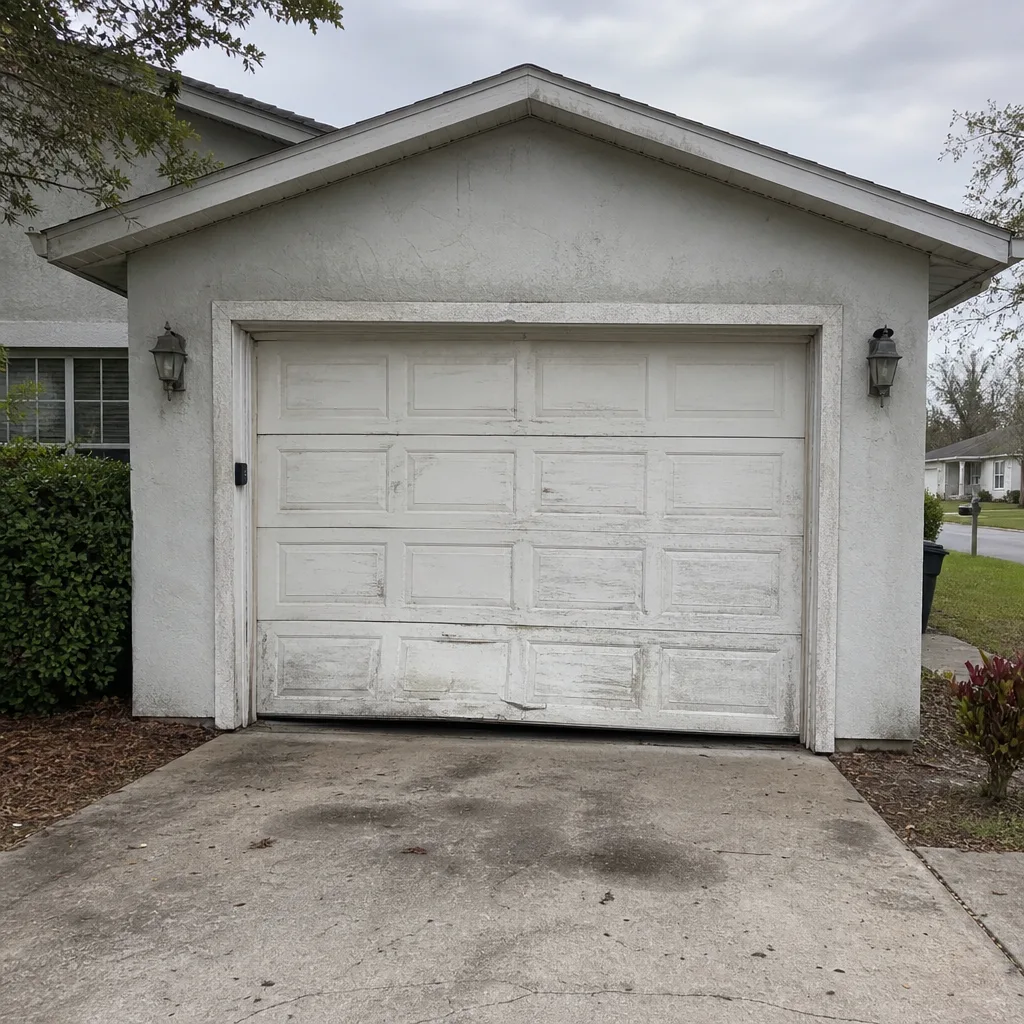 Before
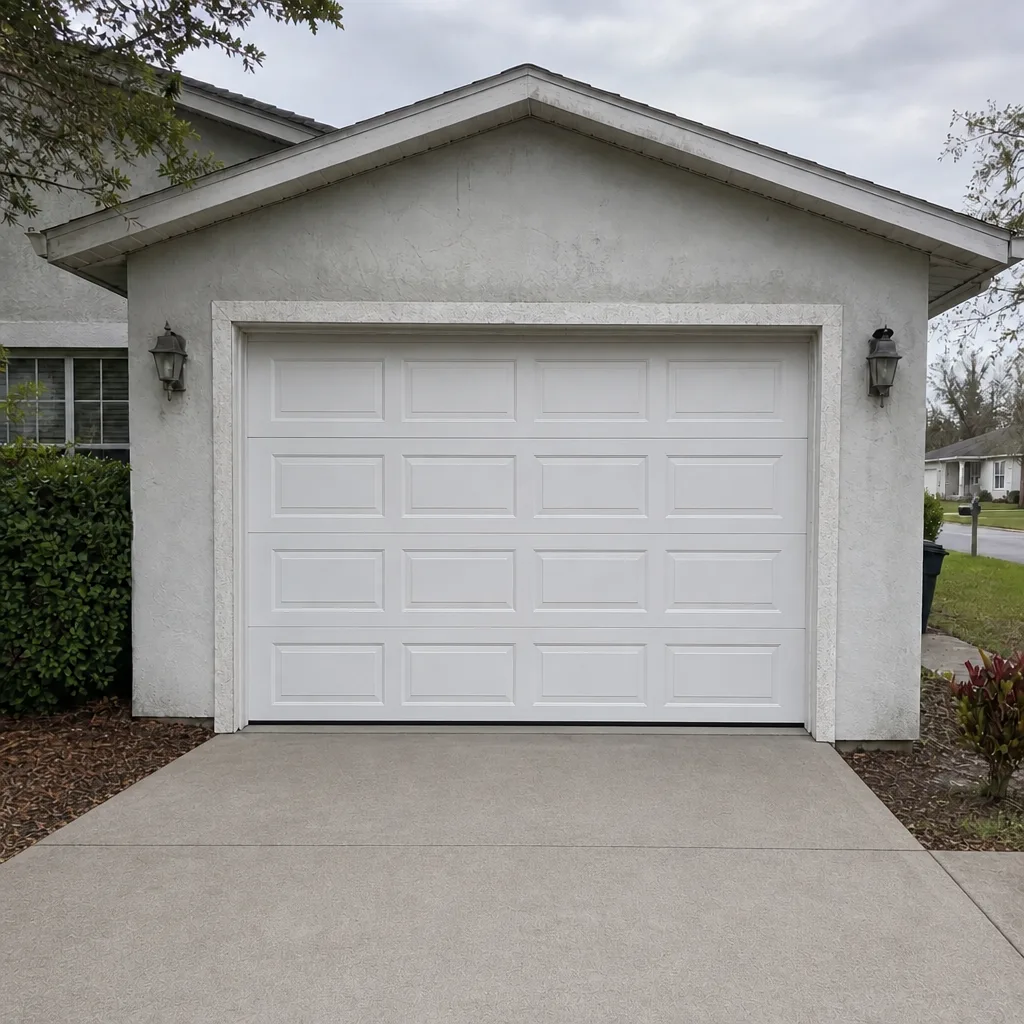 After
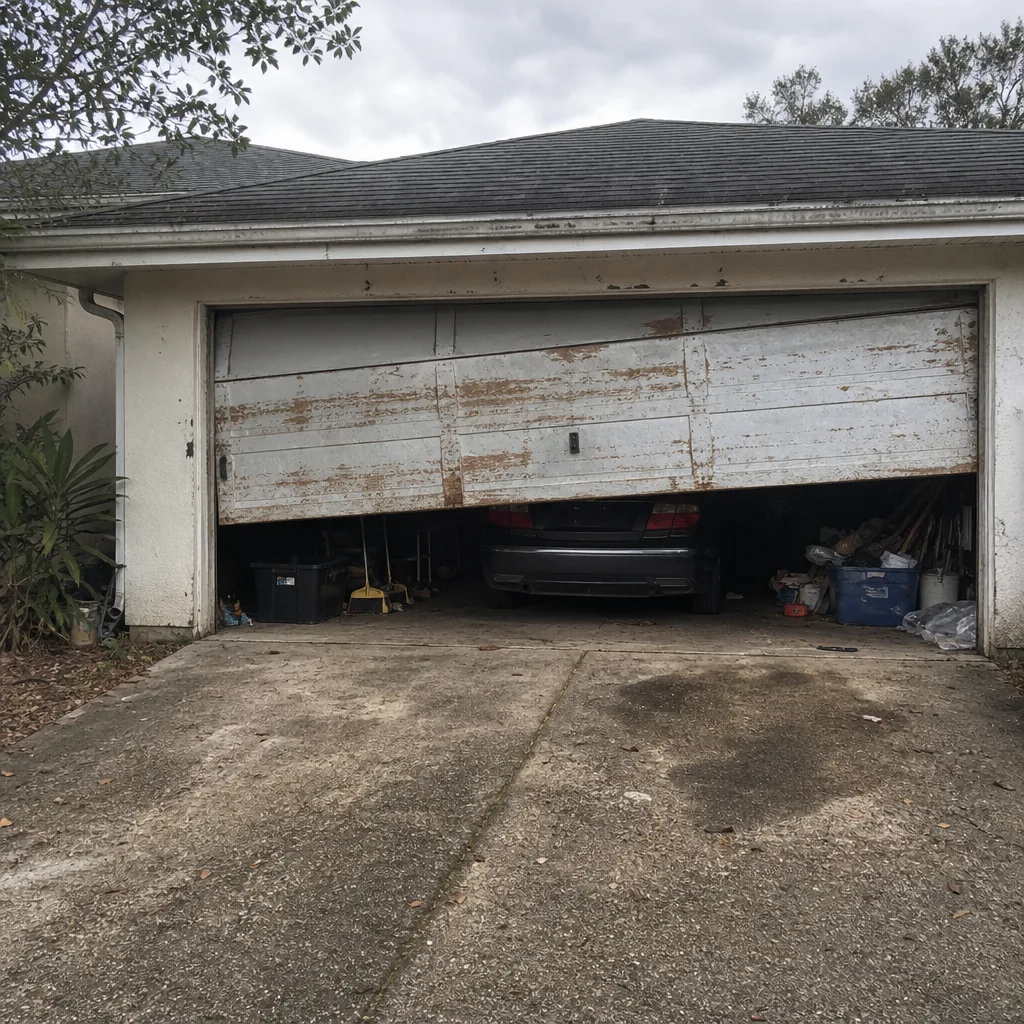 Before
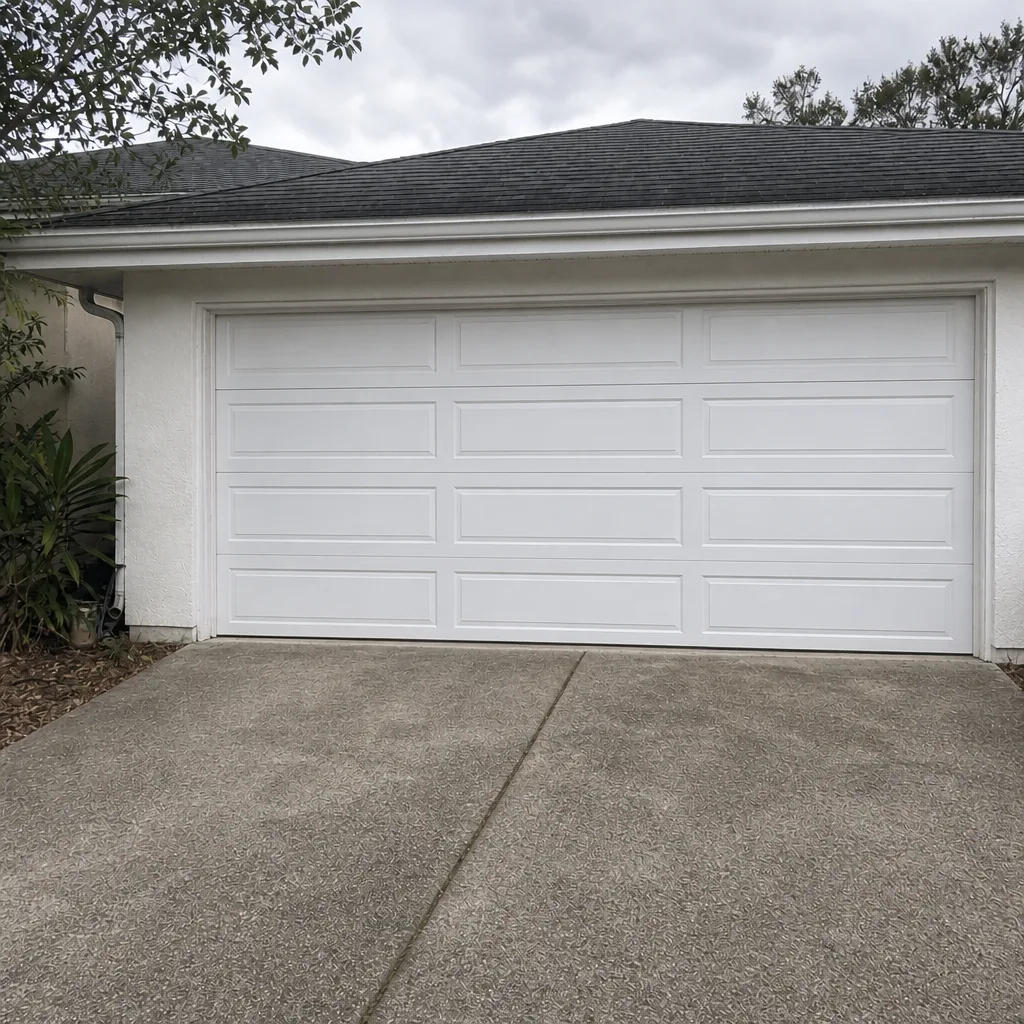 After
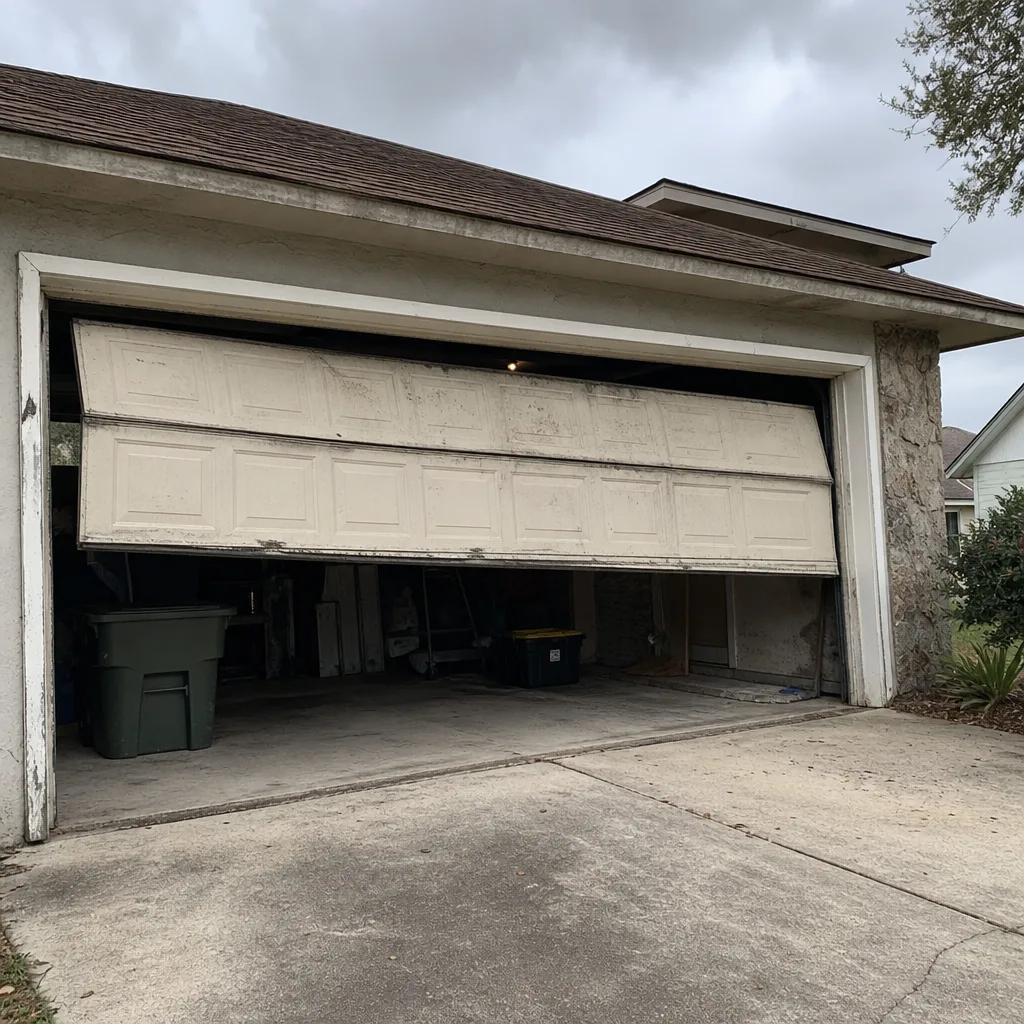 Before
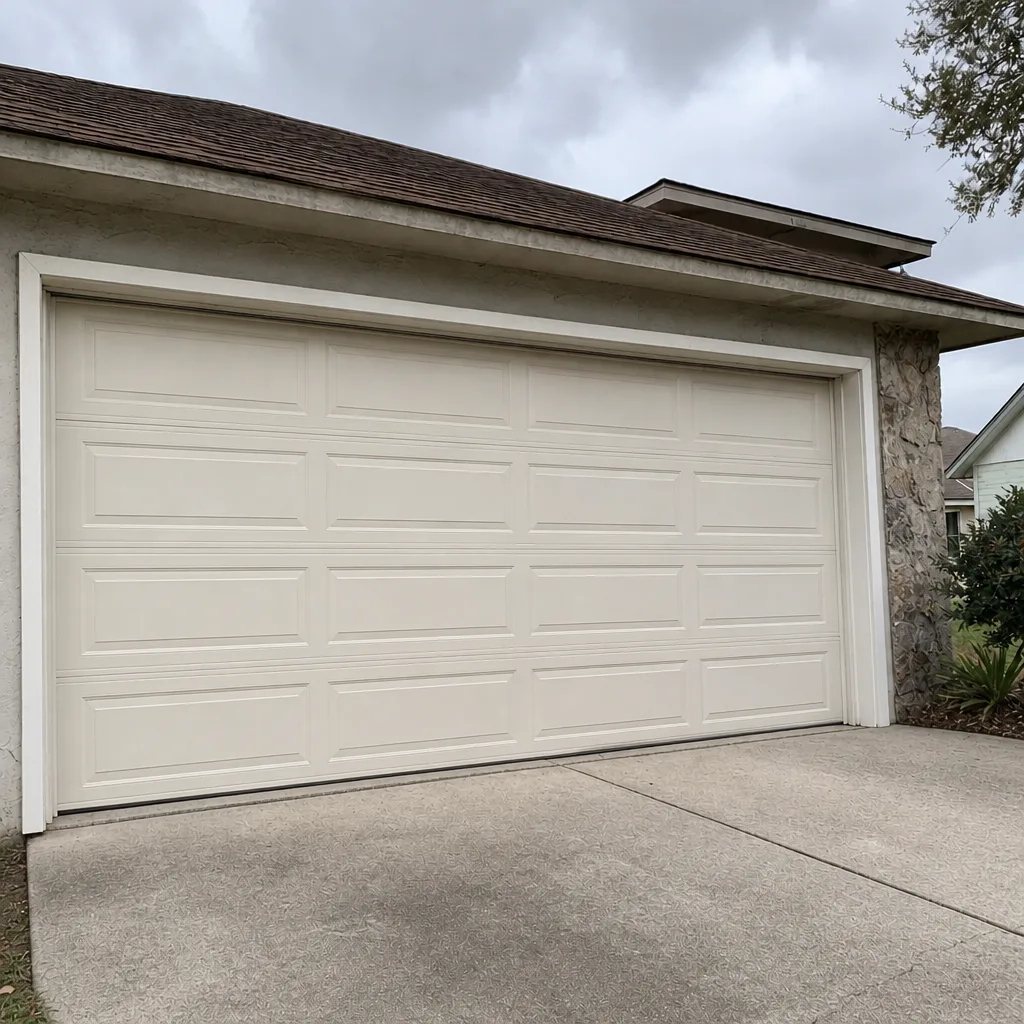 After
When to Call a Professional
Some problems are a Saturday project and some absolutely are not. Call us when a spring snaps, a cable frays, or the door comes off its track, because these are the safety-critical failures that shouldn’t be handled by anyone but a trained technician. Call when the opener runs but the door won’t move, when the door reverses for no reason, or when it slams down instead of settling gently. Call when you hear grinding or scraping, when a panel is cracked or a section is dented enough to bind, or when the door is leaning and the gap at the bottom is uneven. And call before you buy a new door if you’re weighing repair against replacement, so you get a straight answer. Sanford Garage Door Repair Pros offers free estimates in Sanford, and we answer 24/7. Call (855) 506-7237. Fast dispatch from 7am to 7pm, Sunday through Friday.
Frequently Asked Questions
A garage door repair in Sanford is priced per job by a written estimate, and the price is agreed before any work starts, so the number you approve is the number you pay. Spring, opener, roller, and hinge repairs are quoted after we diagnose the actual fault. Call (855) 506-7237 for an exact quote. Estimates are free.
Steel and aluminum hold up best against Sanford’s humidity and UV because they resist rust and rot, while wood needs the most upkeep in this climate. Steel is strong and holds a finish well, and aluminum won’t rust and is lighter on springs and openers. Fiberglass is a reasonable middle option if you want a wood look without the rot risk.
A full garage door replacement commonly requires a permit through the local building department, while a repair or parts swap usually does not. The clearest rule is that a parts fix is a repair and a new door and track system is a replacement. Because local rules can change, confirm your specific situation with Sanford’s building department before the work begins.
Same-day service is often possible for repair calls, and we answer 24/7. Fast dispatch runs from 7am to 7pm, Sunday through Friday, and a call outside dispatch hours is booked into the next opening. Call (855) 506-7237 and we’ll get you scheduled.
In many Sanford communities, yes, a new door needs HOA architectural approval before it’s installed. Common rejection reasons include the wrong color or finish, a panel or window pattern that clashes with the neighborhood, a material change, or an incomplete submittal. Get the guidelines in writing and submit a full package with specs and color samples.
We work on the brands most widely installed in the Sanford and Seminole County market, including LiftMaster, Chamberlain, Genie, Clopay, Amarr, Wayne Dalton, Craftsman, and Raynor. Brand fluency means we diagnose the actual problem on the system you already have instead of steering you toward a replacement. Call (855) 506-7237 for a free estimate.
The Bottom Line
Choosing a garage door in Sanford comes down to a few decisions made in the right order: pick a material that survives the humidity and UV, clear the HOA before you install, confirm whether your project is a repair or a replacement that needs a permit, and know which brand is on your door so parts come fast when something breaks. Most failures here trace back to the same wear points, and most doors can be repaired far longer than their owners expect. Get the material and the covenants right, keep up a simple maintenance routine, and leave the springs and cables to a trained technician. Call (855) 506-7237 for a free estimate and a written, upfront price.
Written by the team at Sanford Garage Door Repair Pros.