
Last updated November 22, 2026
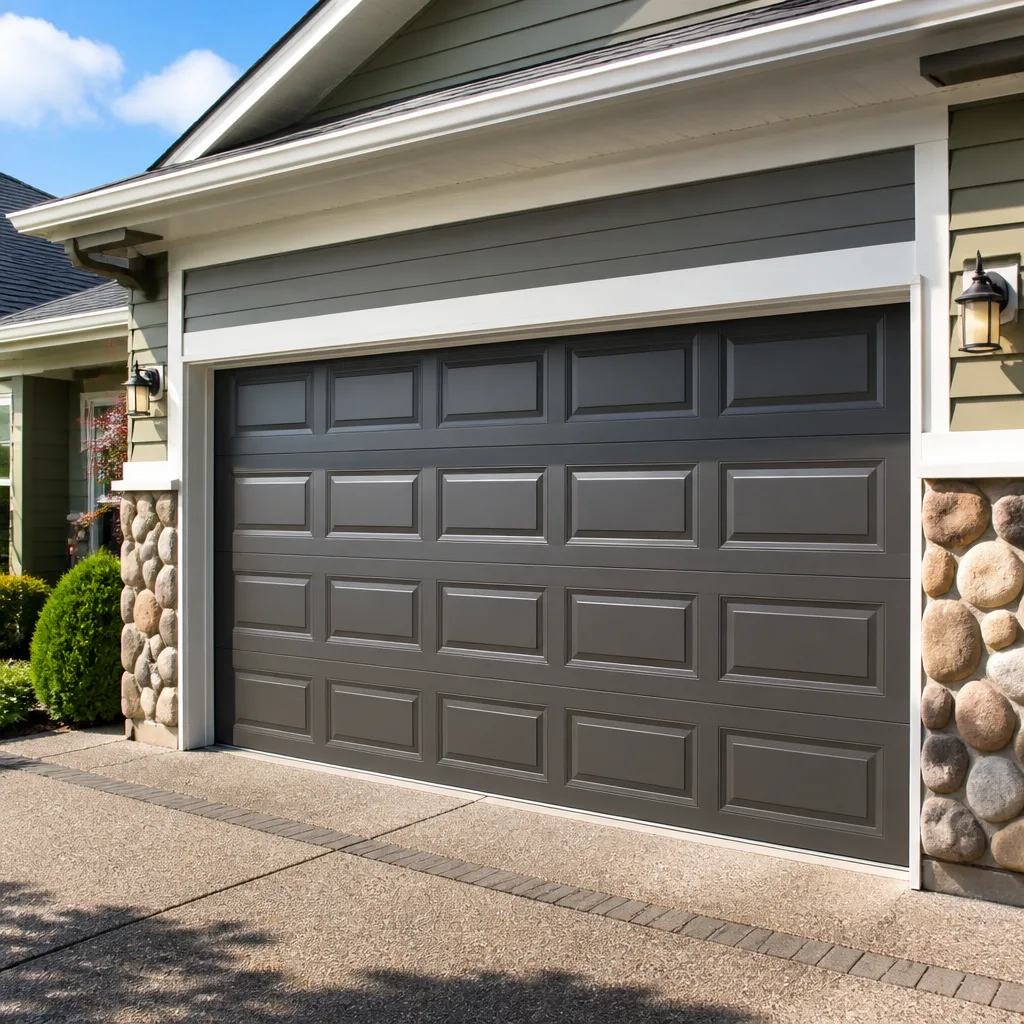 Raised-panel steel
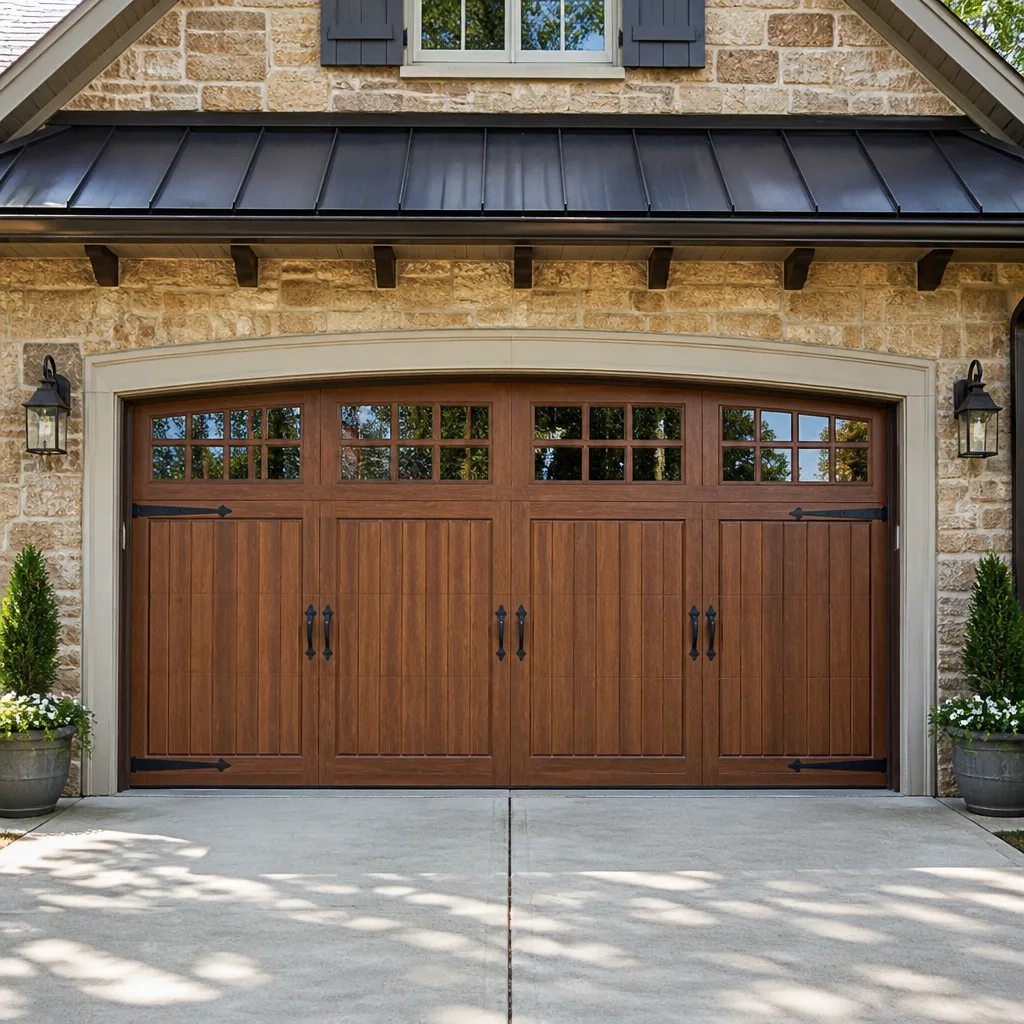 Carriage house
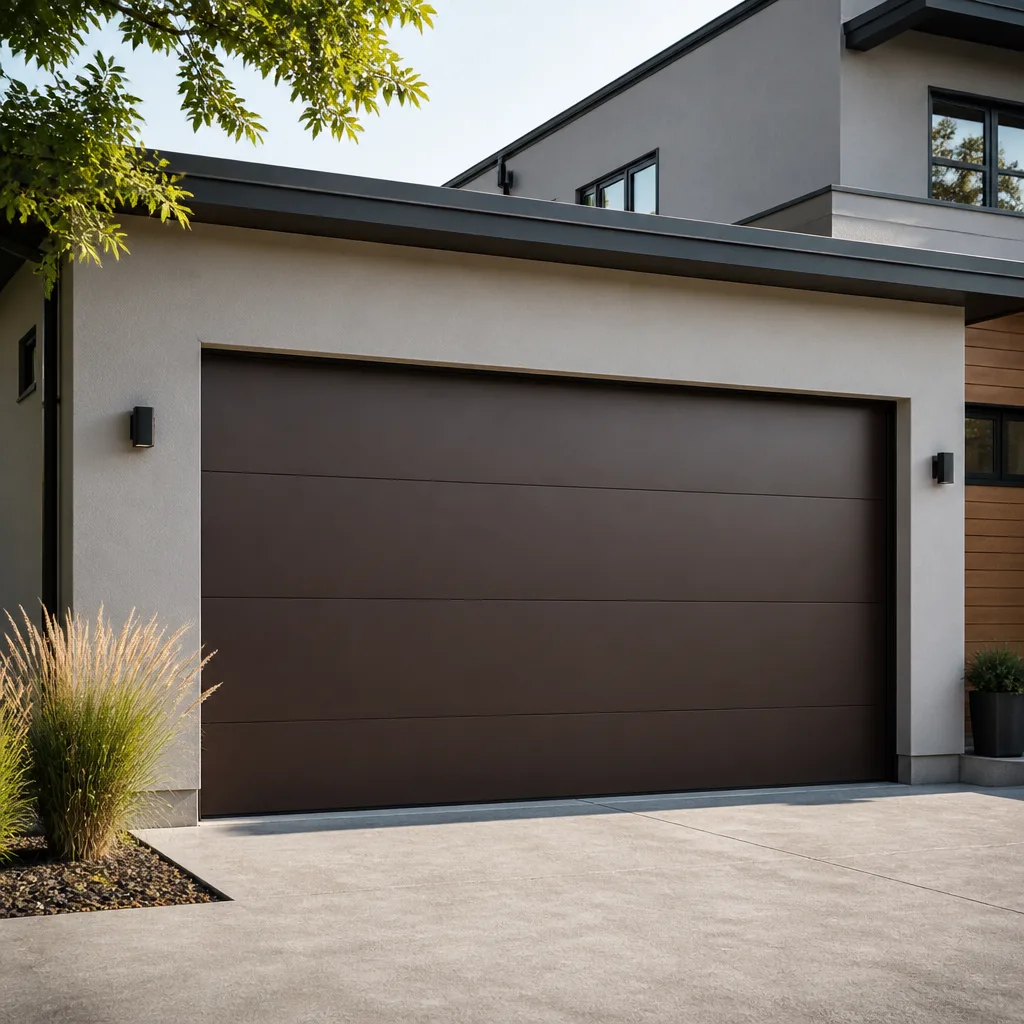 Modern flush
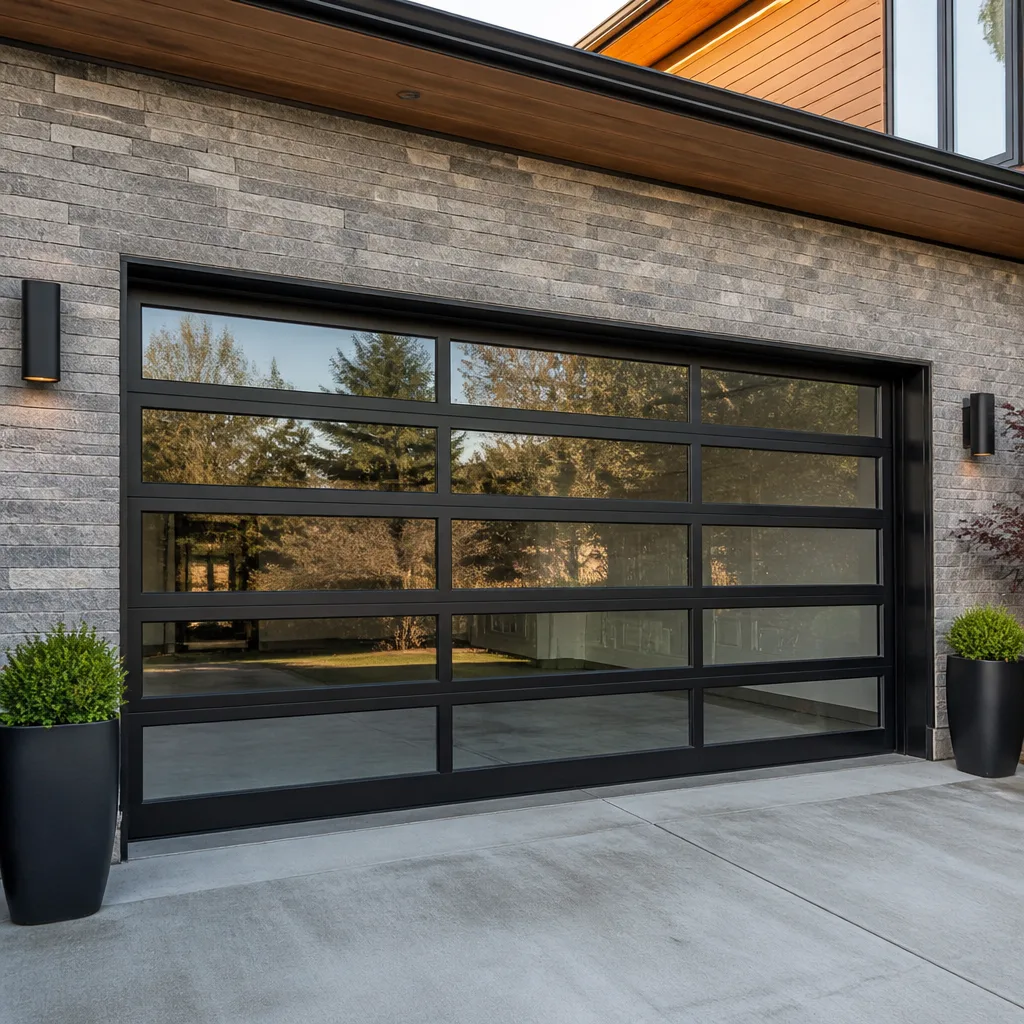 Full-view glass
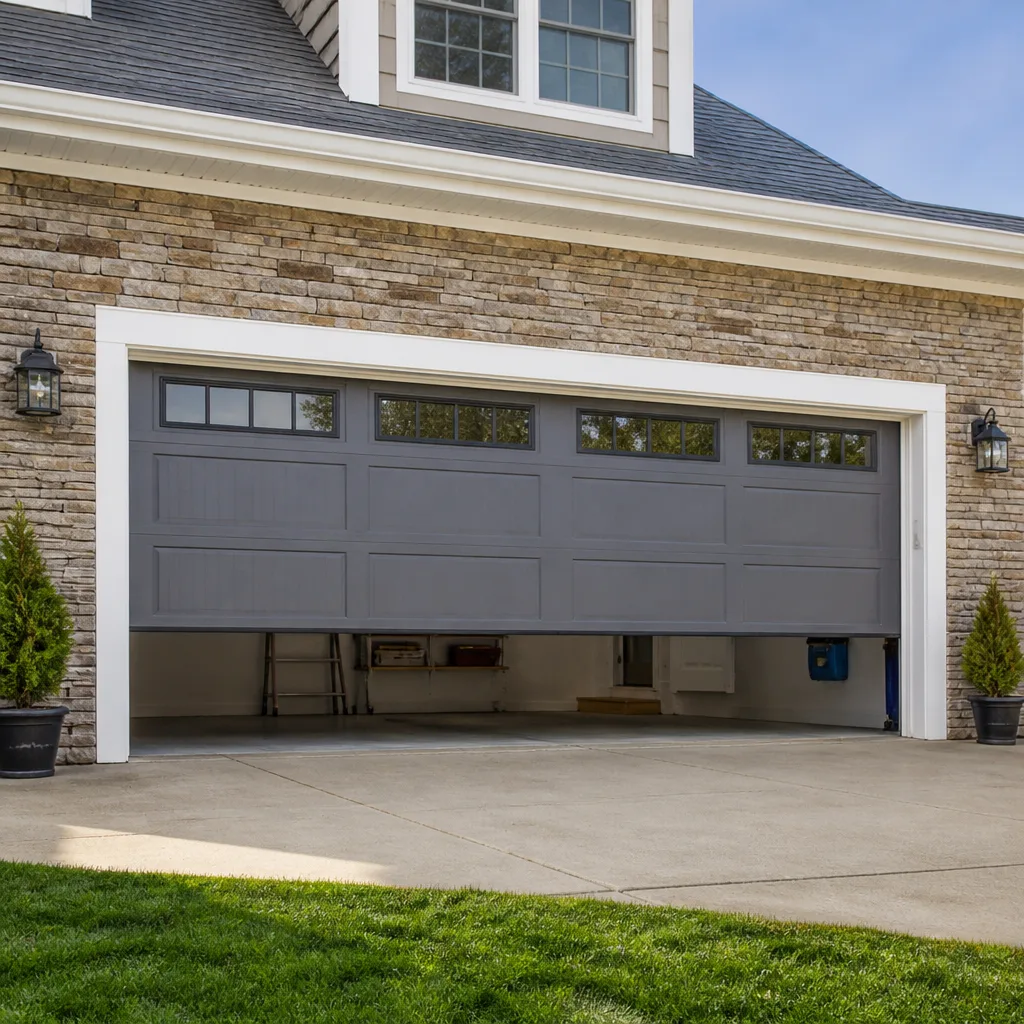 LiftMaster openers
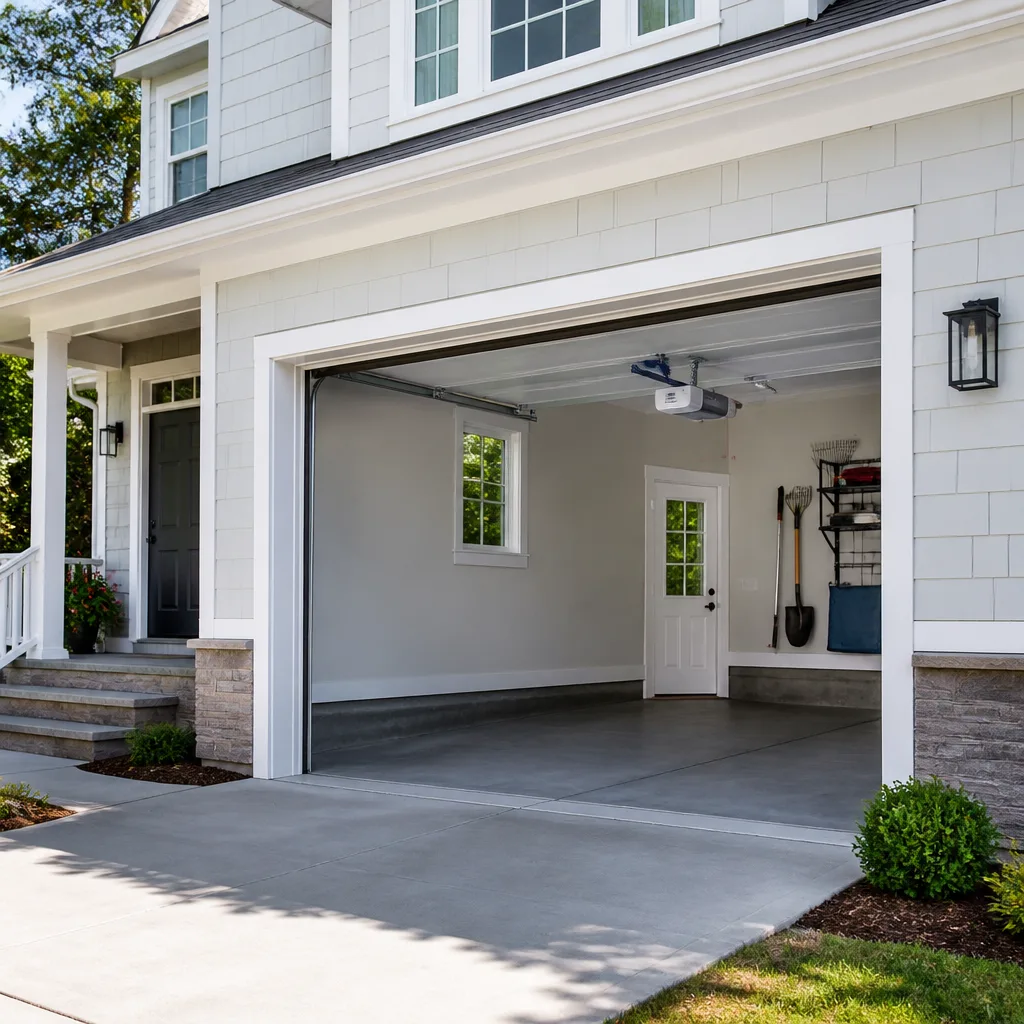 Chamberlain openers
Full 25-point door and opener safety check with every visit - springs, cables, rollers, tracks, and your LiftMaster or Chamberlain opener included
You get a price before we start. It does not change when the pro arrives.
Get your free estimateGarage Door Repair Maintenance Checklist for Sanford Homeowners
A silicone spray that keeps a garage door quiet in the Midwest will pull grit into the same rollers inside six months in Central Florida’s heat. That single difference explains why most maintenance checklists fail Sanford homeowners: they’re written for ice, snow, and a door that sits still half the year. Here, the door runs every day, the wet season does more damage than any winter, and the products that protect a door up north can slowly wreck one here. What follows is a checklist calibrated for Sanford’s climate, its year-round duty cycle, and the jobs you can safely do yourself versus the ones you shouldn’t touch.
Quick Answer
A workable garage door maintenance checklist for Sanford runs on a monthly lube of rollers, hinges, and the torsion bar with a silicone-based product, a quarterly inspection of weatherstripping and hardware torque, and a deeper pre-wet-season check every May before the heavy summer rain. Springs, cables, and torsion assemblies are visual-check-only for homeowners and require a technician. In a subtropical climate with daily use, expect rollers, springs, and weatherseal to wear faster than the national replacement interval suggests.
Styles & brands we work with
- Raised-panel steel
- Carriage house
- Modern flush
- Full-view glass
- LiftMaster openers
- Chamberlain openers
Table of Contents
- Why Sanford’s Climate Changes the Checklist
- The Florida Lubrication Protocol
- The Pre-Wet-Season Inspection Sequence
- What to Check After the First Major Storm
- High-Cycle Use and Component Wear in Sanford
- Weatherstripping Inspection for Sanford Temperature Swings
- What You Can Do Yourself vs. What Needs a Professional
- A Yearly Maintenance Schedule for Sanford Homes
Why Sanford’s Climate Changes the Checklist
Most garage door maintenance advice circulates from colder parts of the country, where the biggest threats are freezing temperatures, road salt, and a door that’s dormant through the winter. Sanford doesn’t share those problems. Winters here are mild. The door opens and closes every day of the year because there’s no freeze to stop it. That constant cycling, combined with high humidity and heavy summer rain, produces a very different wear pattern.
The practical result is that Sanford homeowners should think about their garage door in terms of moisture and duty cycle, not frost. The wet season, usually running from late May into September, drives humidity into the door’s moving parts, softens wood components, and works at weatherstripping from the outside. Warm temperatures mean lubricants that are too thick or petroleum-based collect dust and grit instead of shedding it. And because the door is in daily use 365 days a year, springs and rollers reach the end of their cycle life sooner than a national average replacement interval would suggest.
Sanford’s mix of older homes and newer construction adds another wrinkle. Properties near the historic downtown district often have older doors with metal rollers and original hardware, while newer builds around the city tend toward nylon rollers and sealed bearings. The two setups want different inspection rhythms. Older doors need more frequent hardware tightening; newer doors need closer attention to the opener and its safety sensors.
The Florida Lubrication Protocol
The single most important Sanford-specific maintenance habit is choosing the right lubricant. Petroleum-based sprays, the kind sold in every hardware aisle, feel great for a week and then turn into a dust magnet. In Central Florida’s heat and humidity, that sticky film traps grit, which grinds at rollers and hinge pins until they seize or wear flat. Silicone-based lubricant or a purpose-made garage door lubricant is the correct choice here, and it’s the one maintenance upgrade that pays for itself fastest.
Here’s the monthly protocol we recommend for a Sanford door:
- Rollers: Apply a light silicone spray to the roller stems and bearings, not the wheels themselves. Wipe off excess.
- Hinges: One short spray at each hinge pivot point. If the hinge is caked in old grease, clean it first with a rag.
- Torsion bar and springs: A very light film of silicone along the bar is enough. Never stand under a spring to do this, and never try to adjust one.
- Tracks: Do not lubricate the tracks. Wipe them down with a damp cloth and keep them clean and dry. Grease in the track collects debris and causes the door to bind.
- Opener chain or screw: Use the lubricant the manufacturer specifies for your LiftMaster or Chamberlain unit, not a general-purpose spray.
Skip the WD-40. Skip anything labeled “penetrating oil.” Skip white lithium grease in this climate. Those products have their place on other equipment, but on a garage door in Sanford they shorten the life of your moving parts.
The Pre-Wet-Season Inspection Sequence
Every May, before the afternoon storms settle in for the summer, run a full inspection. This is the most valuable maintenance window on the Sanford calendar. A door that’s tight and properly sealed in May will sail through the wet season; one that goes in with a curled seal or a loose hinge will let water and pests in all summer.
Work through this in order:
- Balance test: Disconnect the opener and lift the door halfway by hand. It should stay put. If it drops or rises, the spring tension is off and needs a technician.
- Visual spring check: Look for gaps, rust streaks, or a stretched look. A broken spring is obvious; a fatigued one often isn’t. This is a look-only item.
- Cable inspection: Check for fraying, kinks, or slack. Cables are under extreme tension and are never a DIY repair.
- Weatherstripping: Run a hand along the bottom seal and the side jambs. Any gap wider than a pencil will let water, insects, and small pests into the garage.
- Hardware torque: Tighten hinge bolts and the track brackets with a socket wrench. Humidity loosens hardware over the year.
- Track alignment: Tracks should be plumb and parallel. A visible bend means the door is rubbing and needs attention.
- Opener test: Check the auto-reverse by placing a roll of paper towels in the door’s path. The door should reverse on contact. Test the photo-eye sensors too.
If any of these checks turns up a problem you can’t fix safely, that’s the moment to weigh a repair call against letting it ride. A curled seal in May is a small job. A seized roller in August is usually a bigger one, and it’s happening when you least want to deal with it. For straightforward fixes, garage door repair covers the whole range from a single hinge to a full hardware refresh.
What to Check After the First Major Storm
The first strong storm of the season is a natural stress test. It tells you what the rest of the summer will expose. After that first big rain, walk the door and run a short check.
- Water intrusion: Look for damp spots along the bottom threshold and the base of the tracks. If water is getting in, the bottom seal is failing or the door isn’t sitting flush.
- Debris in the tracks: Blown leaves, grit, and small twigs collect in the track channels. Clear them with a cloth or a vacuum, never by prying with a tool.
- Panel alignment: Look for a panel that’s popped out of line. If wind caught the door, panels can shift without obvious damage.
- Opener function: Run the door up and down a few times. If it stumbles, hesitates, or sounds different, the opener may have taken on moisture or a power surge. That’s a job for garage door opener repair, not something to chase down yourself.
- Weatherseal condition: Check the seal on all four sides. Storms accelerate wear on the bottom seal more than anything else.
If your door won’t close after a storm, don’t force it. A door that won’t close is a security gap, and a door that closes crooked can damage panels. This is exactly the kind of problem our emergency service is built for. Garage doors are all we do, and we work on the brand you already have.
High-Cycle Use and Component Wear in Sanford
Garage door manufacturers rate springs in cycles – one open and close is one cycle. A standard torsion spring is typically rated for somewhere in the range of ten thousand cycles. In a colder climate, a door might run four to six times a day, sometimes less in winter. In Sanford, where the door is the main entry for many households, it often runs eight to twelve times or more, every day, all year. Run the math and you can see why springs, rollers, and the opener all live shorter lives here.
What that means practically for a Sanford homeowner:
- Springs: Expect to replace them more often than the standard replacement interval suggests. A door that gets heavy use can go through a spring set in a fraction of the calendar time a low-use door would take.
- Rollers: Nylon rollers wear out from grit infiltration before the bearings fail. Inspect them every quarter and replace the set when they start to sound rough or look flat.
- Cables: High-cycle doors stress cables harder. Visual checks monthly, professional replacement whenever fraying appears.
- Opener motor: The motor itself is usually durable; the wear parts are the gear assembly and the drive. Listen for grinding or a change in sound.
Spring repair is a named specialty of ours for a reason. It’s the most commonly failed component and the most dangerous one to touch. Our technicians have up to 12 years of experience, and we treat a spring call as one of the most safety-critical jobs on the list.
Weatherstripping Inspection for Sanford Temperature Swings
Sanford’s temperature swings – warm afternoons, cooler mornings, and a rainy season that pushes humidity up fast – work at weatherstripping from every direction. The bottom seal takes the worst of it. It flexes against the floor every time the door closes, and in summer it sits wet for hours at a time. That’s when it hardens, curls, or tears.
Check weatherstripping on this cadence:
- Monthly: Visual check of the bottom seal for tears, curling, or gaps. A quick hand-test along the bottom after closing will tell you whether the seal is making proper contact.
- Quarterly: Check the side jambs and top seal. Look for cracking, brittleness, or separation.
- After any storm that pushes water under the door: Re-check the bottom seal immediately. Storm-driven water often reveals a gap you didn’t know was there.
As a rule of thumb, any gap wider than the thickness of a pencil – roughly a quarter-inch – is enough to let water, insects, and small pests into a garage. Seal it. Weatherstripping is cheap; replacing damaged panels or cleaning up after pests isn’t. If you’re not sure whether the seal is doing its job, a service call settles it quickly.
What You Can Do Yourself vs. What Needs a Professional
Garage door maintenance spans a huge range of tasks, from the trivial to the genuinely dangerous. Sorting them correctly is the difference between saving money and risking a serious injury.
Safe to do yourself:
- Lubrication of rollers, hinges, and the torsion bar with silicone spray.
- Visual inspection of springs and cables, with a flashlight, from a distance.
- Cleaning the tracks with a cloth or vacuum.
- Testing the opener’s auto-reverse and photo-eye sensors.
- Tightening visible bolts on hinges and bracket hardware.
- Wiping down panels and cleaning the seal.
Requires a professional:
- Any work on torsion springs or extension springs. These are under enormous tension and can cause serious injury if handled without proper tools and training.
- Any work on cables, which can snap with lethal force.
- Spring adjustment or replacement.
- Track repair or alignment when a track is bent.
- Opener troubleshooting that involves electrical connections.
- Panel replacement and door installation.
The line is simple: if it’s under tension, leave it to us. Springs and cables are the two components that injure homeowners most often, and they’re the two we’d never walk a customer through on the phone. If your door is due for a larger fix, garage door installation covers when replacement makes more sense than repair, but a well-maintained door usually gets years more service before that comes up.
A Yearly Maintenance Schedule for Sanford Homes
A simple calendar makes maintenance easy to remember. Here’s how we’d structure a year for a Sanford home with a daily-use door.
- Monthly (all year): Silicone lubrication of rollers, hinges, and torsion bar. Visual check of springs and cables. Opener auto-reverse test.
- Quarterly: Torque check on hinges and brackets. Track cleanliness. Weatherstripping check on all four sides. Roller inspection for flat spots or rough movement.
- May: Full pre-wet-season inspection – balance test, spring and cable visuals, seal inspection, hardware tightening, opener check.
- After the first major storm: Water intrusion check, track clearing, panel alignment check, opener function test.
- October: Post-season review. Replace the bottom seal if it’s worn. Check rollers for replacement. Schedule any professional repair before the holidays.
- Ongoing: Listen to the door. Any new noise, hesitation, or grinding is worth investigating early, when it’s cheaper to fix.
Light-commercial doors and multi-unit properties in Sanford need the same structure compressed into a shorter cycle, because the door count multiplies the wear. A landlord overseeing several doors should treat the May inspection as the anchor and the monthly lube as non-negotiable.
Common Mistakes to Avoid
- Using petroleum-based lubricants in the Florida heat. They attract dust and grit and gum up rollers inside six months. Stick to silicone-based products or a garage-door-specific lubricant.
- Greasing the tracks. Tracks are supposed to be dry. Grease in the track traps debris and causes binding. Clean them, don’t lube them.
- Skipping the May inspection. Sanford’s wet season is the main stress test of the year. A door that goes in unsealed suffers all summer.
- Assuming a national replacement interval applies here. High-cycle use in a year-round warm climate wears springs and rollers faster. Go by sound and feel, not the calendar published for colder regions.
- Ignoring a gap wider than a pencil. Weatherseal gaps that size let in water and pests. Small fixes now prevent bigger jobs later.
- Trying to adjust a torsion spring. This is a hard no. Springs and cables are dangerous and belong to a technician, not a homeowner with a socket set.
- Running a door with a suspicious noise. A grinding or scraping sound often means a roller or bearing is failing. Waiting usually turns a small fix into a larger one.
See the difference
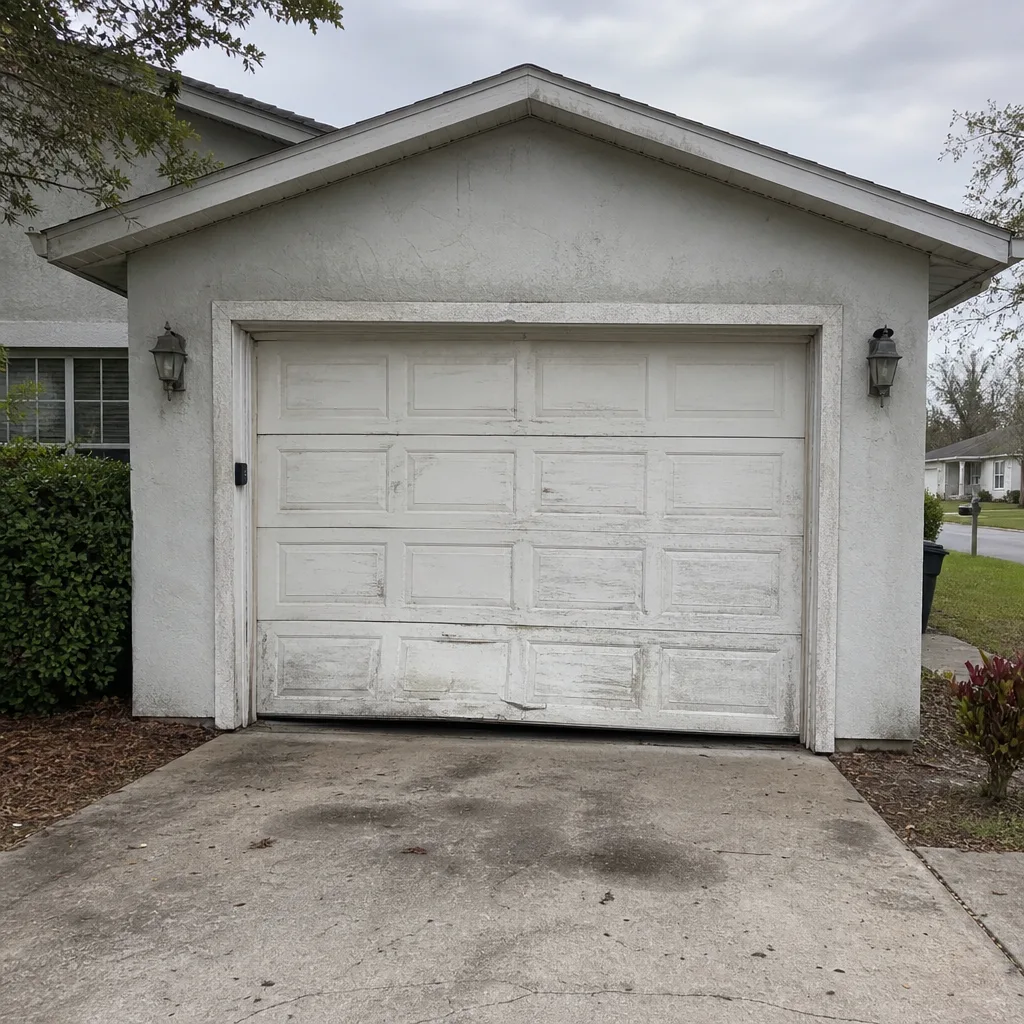 Before
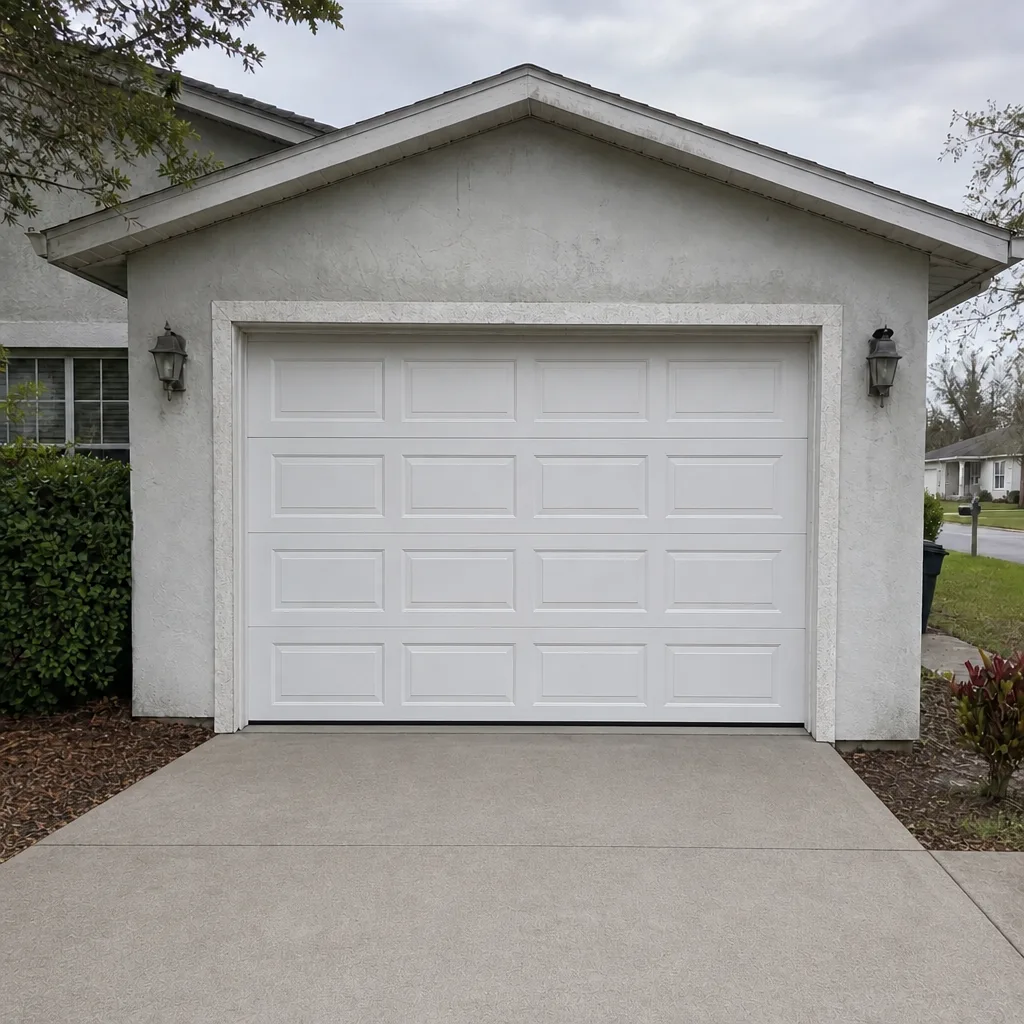 After
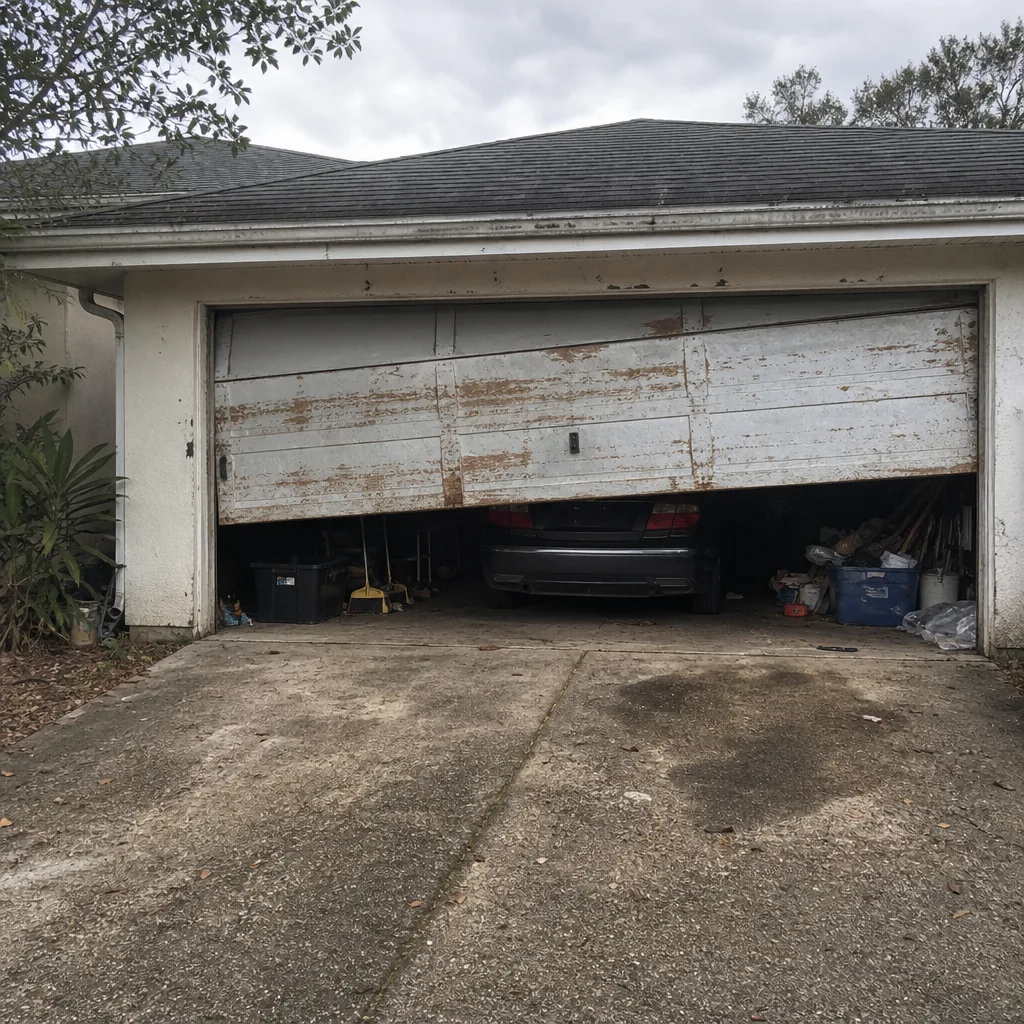 Before
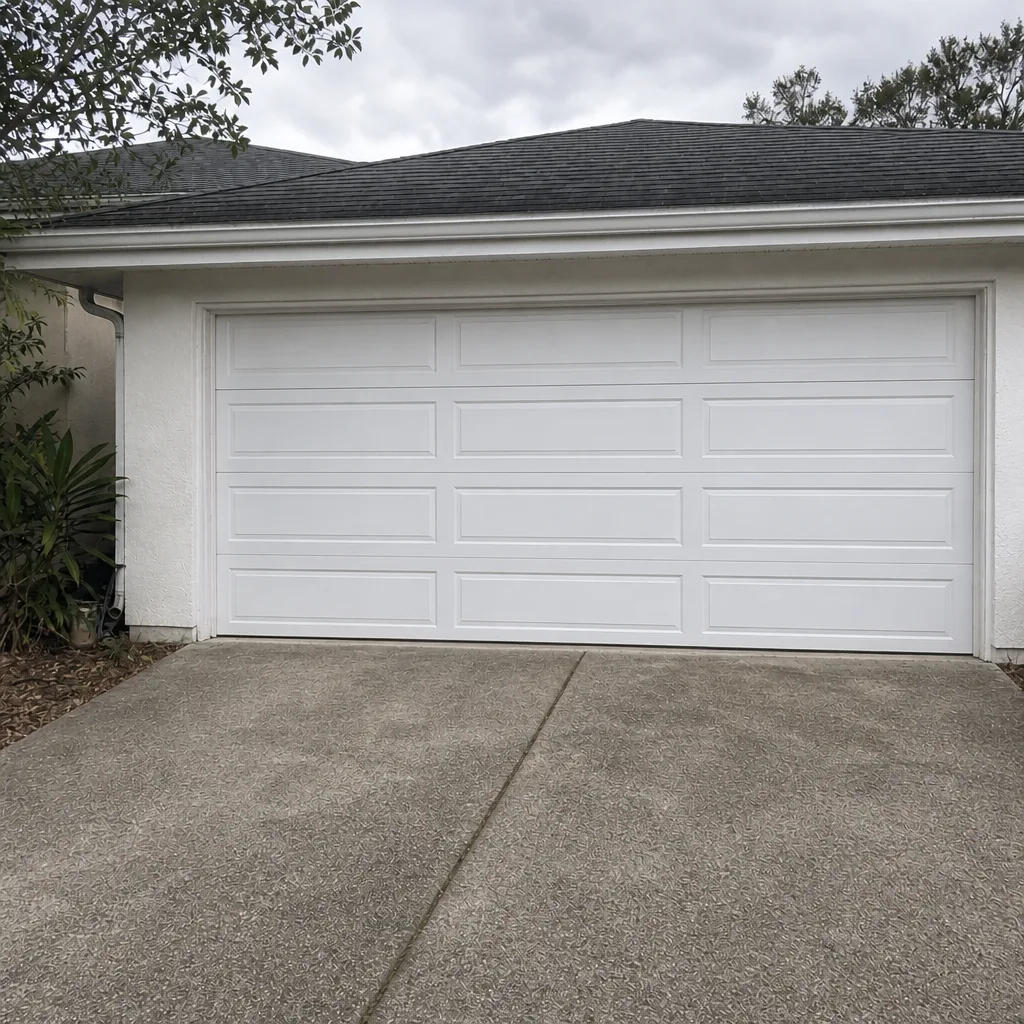 After
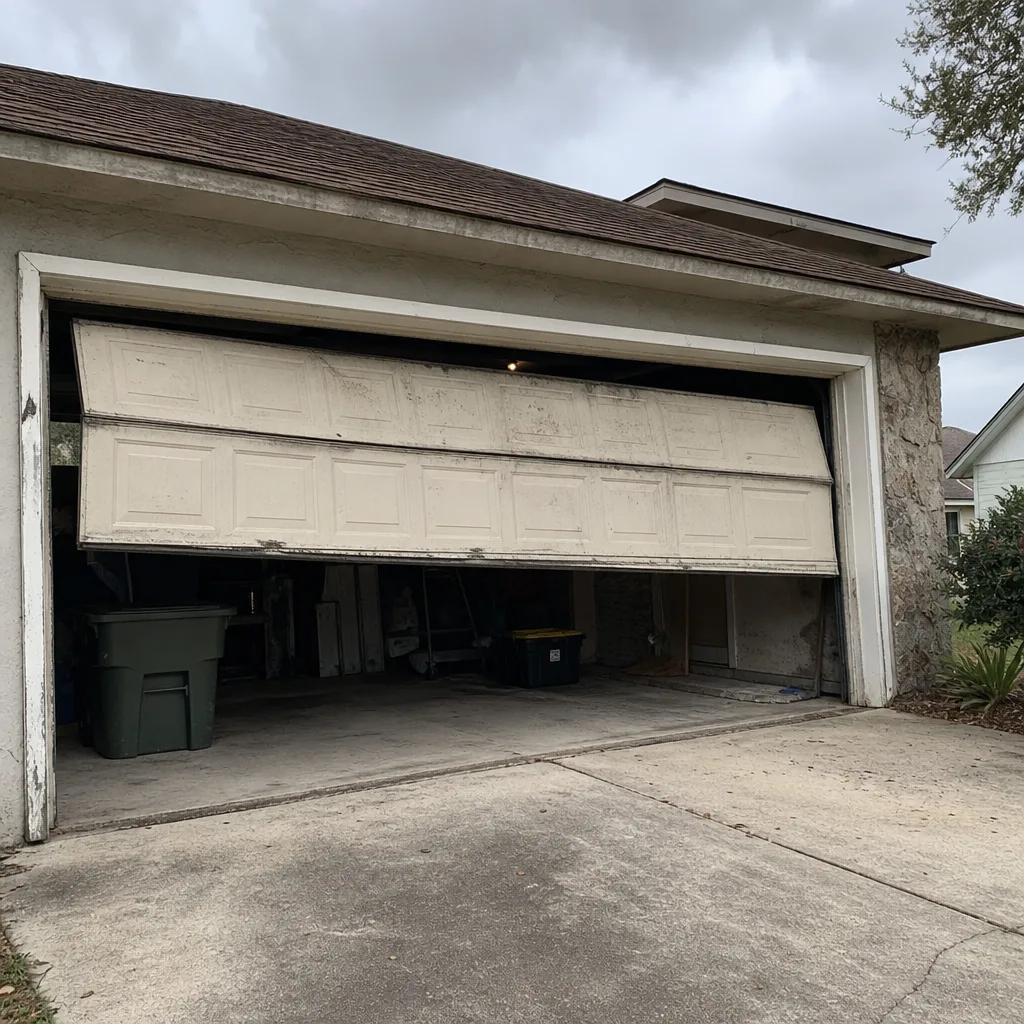 Before
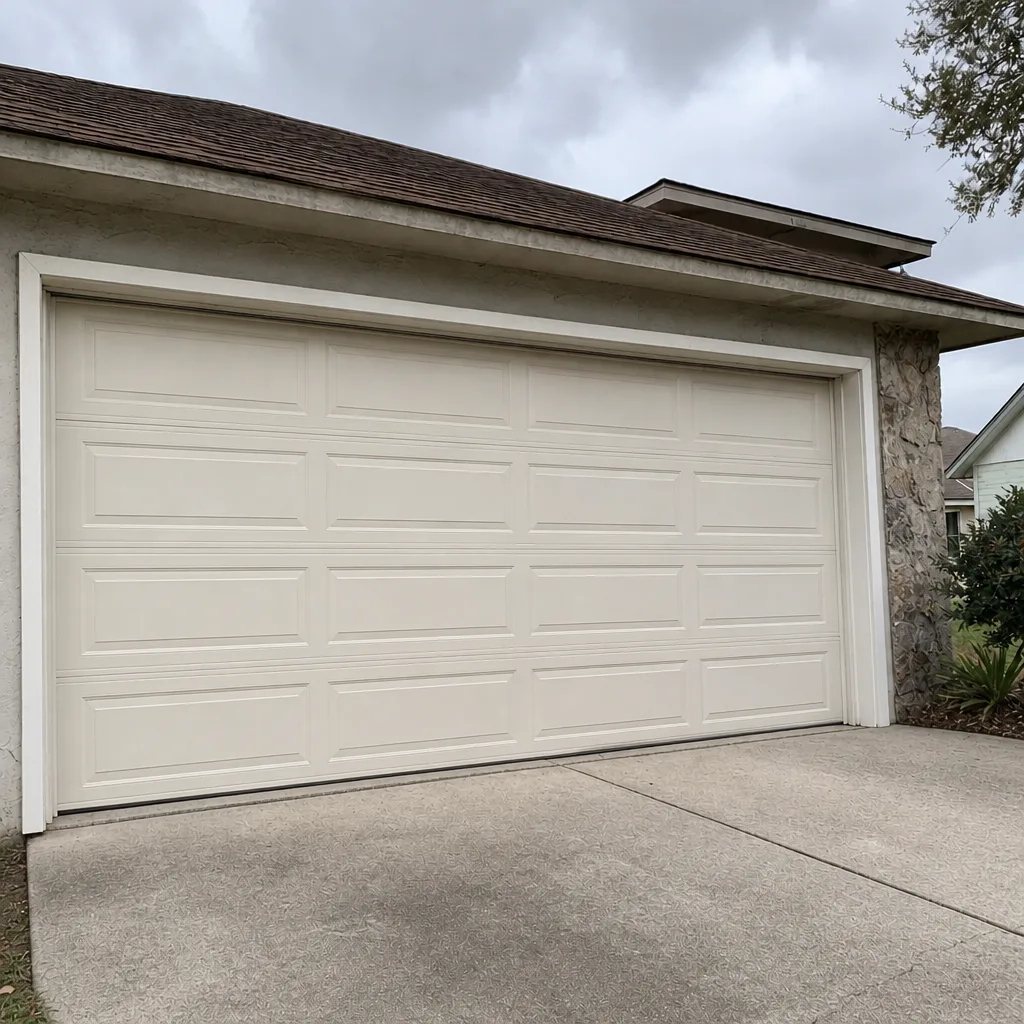 After
When to Call a Professional
Some jobs are clearly not for a homeowner, and some are ambiguous enough that it’s worth a call. Get a professional involved when the door won’t close fully, when you hear a loud bang from the torsion assembly, when the door is crooked, when the opener reverses or stalls, or when you see a spring with a visible gap. Any cable damage is an immediate call. Also call if a door is more than a few years old and has never been professionally inspected – some wear hides behind panels and brackets.
Sanford Garage Door Repair Pros offers free estimates in Sanford. We service and install systems from LiftMaster, Chamberlain, Genie, Clopay, Amarr, Wayne Dalton, Craftsman, and Raynor, which means the door you already have is a door we know. We don’t upsell replacement when a repair will do. Call Sanford Garage Door Repair Pros at (855) 506-7237. We answer 24/7. Fast dispatch from 7am to 7pm, Sunday through Friday. Emergencies are genuinely offered, not a marketing line.
Frequently Asked Questions
Once a month with a silicone-based lubricant is the right cadence in Sanford’s heat and humidity. Petroleum-based sprays collect dust and drag on rollers within a few months here, so the product matters as much as the schedule. Call (855) 506-7237 if you’d rather have it done as part of a service visit.
Daily year-round use is the main reason. Springs are rated in cycles, and a Sanford door that opens and closes eight to twelve times a day accumulates cycles far faster than a door in a cold climate that sits still through winter. High humidity also contributes to corrosion on the spring and its fittings. Call (855) 506-7237 to schedule a spring inspection – estimates are free.
No. Torsion and extension springs are under extreme tension and cause serious injuries every year. A trained technician with the correct winding bars and safety procedures handles this safely; a homeowner with a wrench does not. Our spring repair specialty exists for exactly this reason.
Any gap wider than a pencil, about a quarter-inch, is enough to let water, insects, and small pests into a garage. In Sanford’s wet season, that gap lets in storm-driven rain and accelerates damage. If you’re not sure, a quick inspection call settles it. Reach us at (855) 506-7237.
A grinding sound, a door that reverses mid-travel, or a remote that only works close-up usually points to a repairable problem, not a full replacement. Our technicians diagnose across LiftMaster, Chamberlain, Craftsman, and Raynor units and won’t push a new opener when a repair makes sense. Call (855) 506-7237 for a free estimate.
Yes. Emergency garage door service is a core offering, not an add-on. If your door won’t close, won’t open, or came off its tracks, call (855) 506-7237. We answer 24/7. A call outside dispatch hours is booked into the next opening, Sunday through Friday, 7am to 7pm.
The Bottom Line
A Sanford garage door lives a different life than a garage door in a colder climate. Daily year-round use and a long wet season mean the maintenance priorities are lubrication discipline, pre-wet-season sealing, and attention to spring and roller wear that comes sooner than national guidance would suggest. Run a monthly silicone lube, a quarterly hardware and weatherseal check, and a full inspection in May. Leave springs, cables, and torsion work to a professional. If anything is unclear or something sounds off, call us at (855) 506-7237 for a free estimate. We answer 24/7. Fast dispatch from 7am to 7pm, Sunday through Friday.
Written by the team at Sanford Garage Door Repair Pros.