
Last updated November 22, 2026
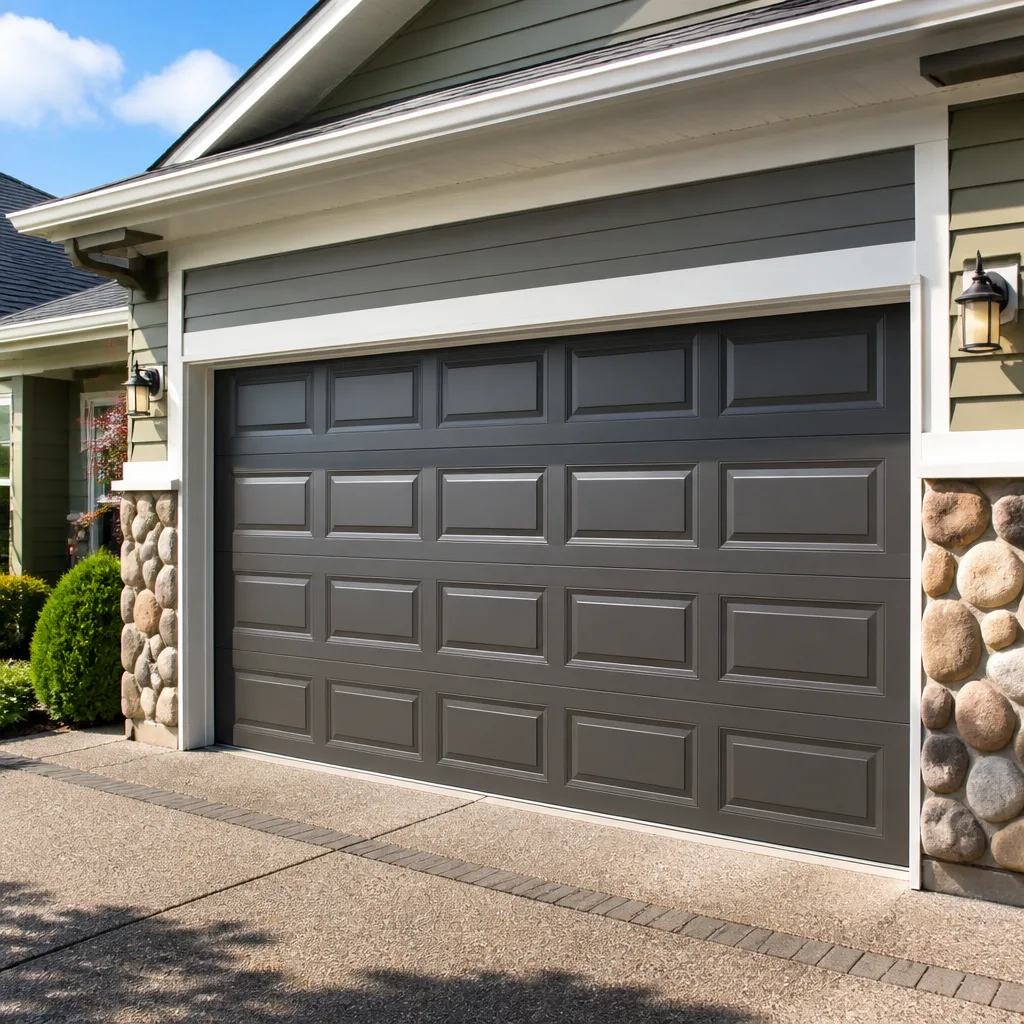 Raised-panel steel
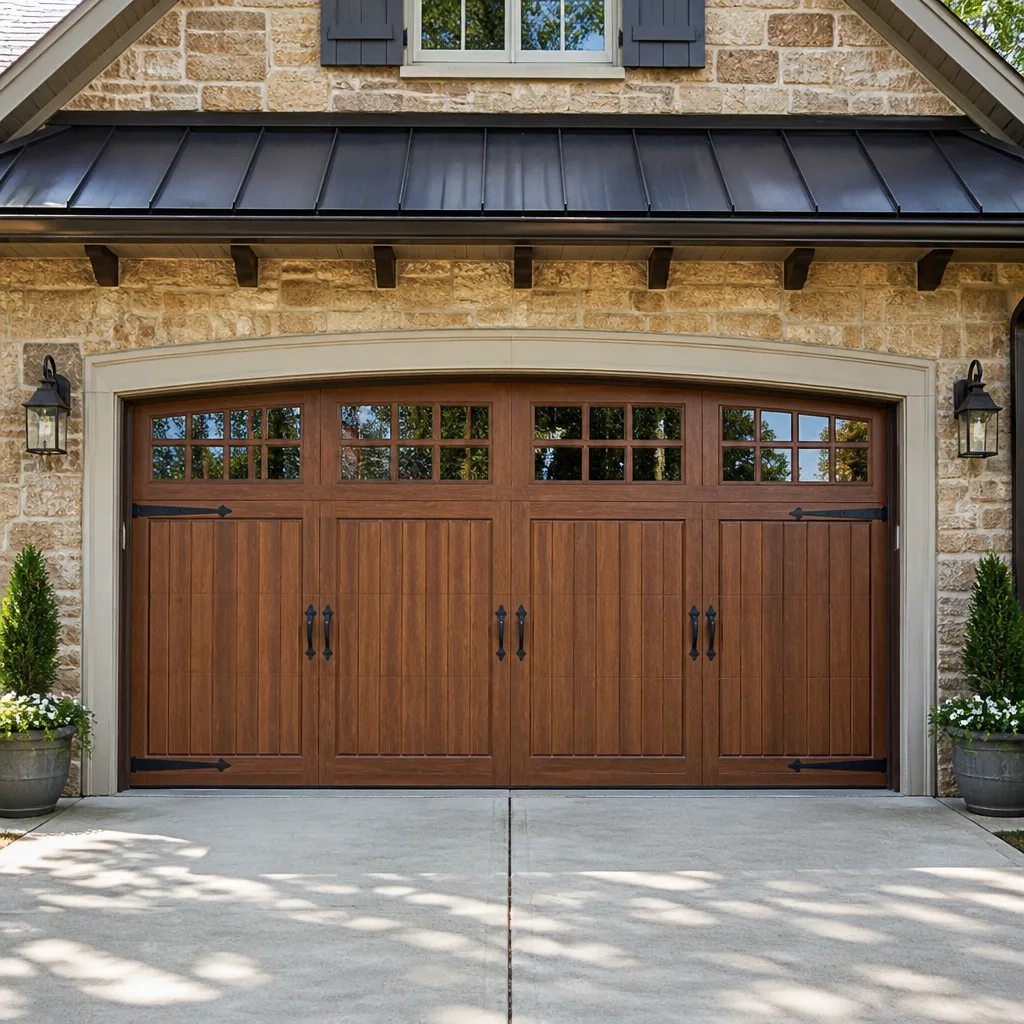 Carriage house
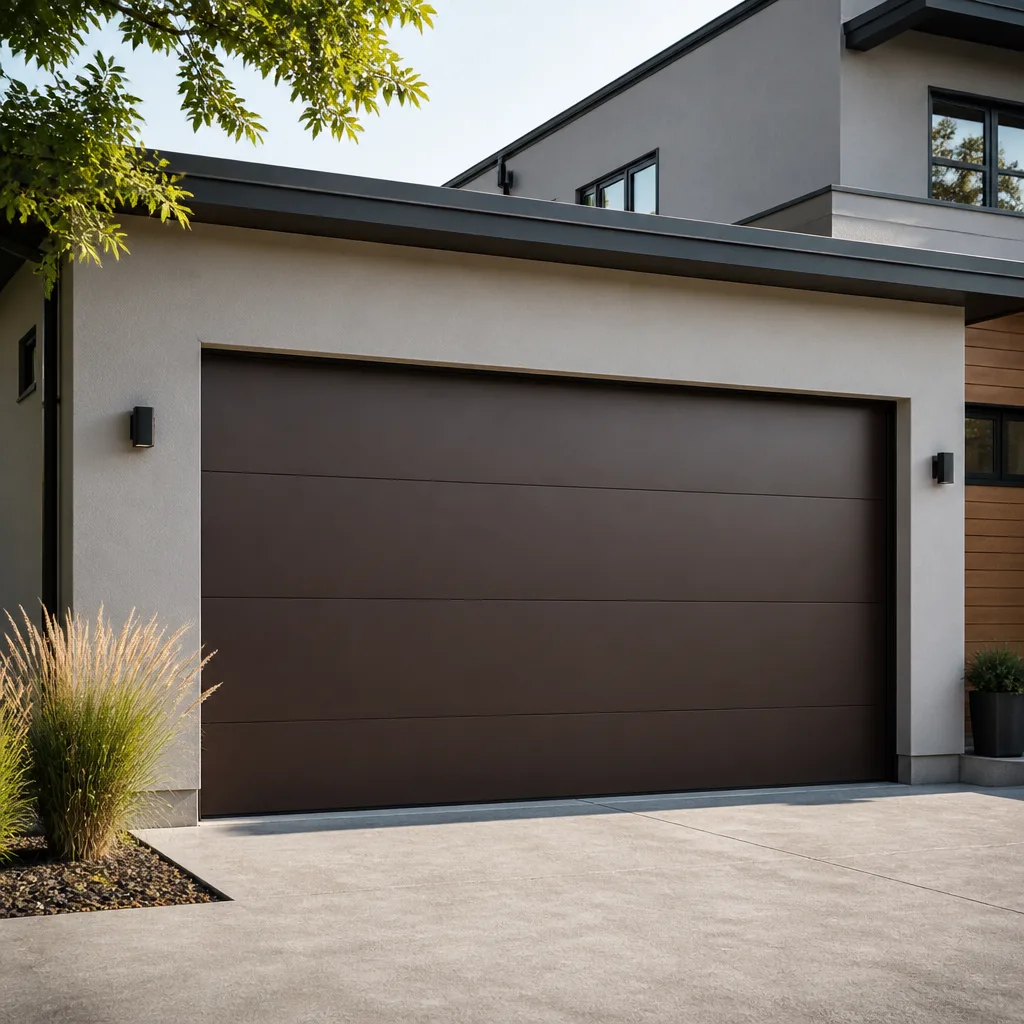 Modern flush
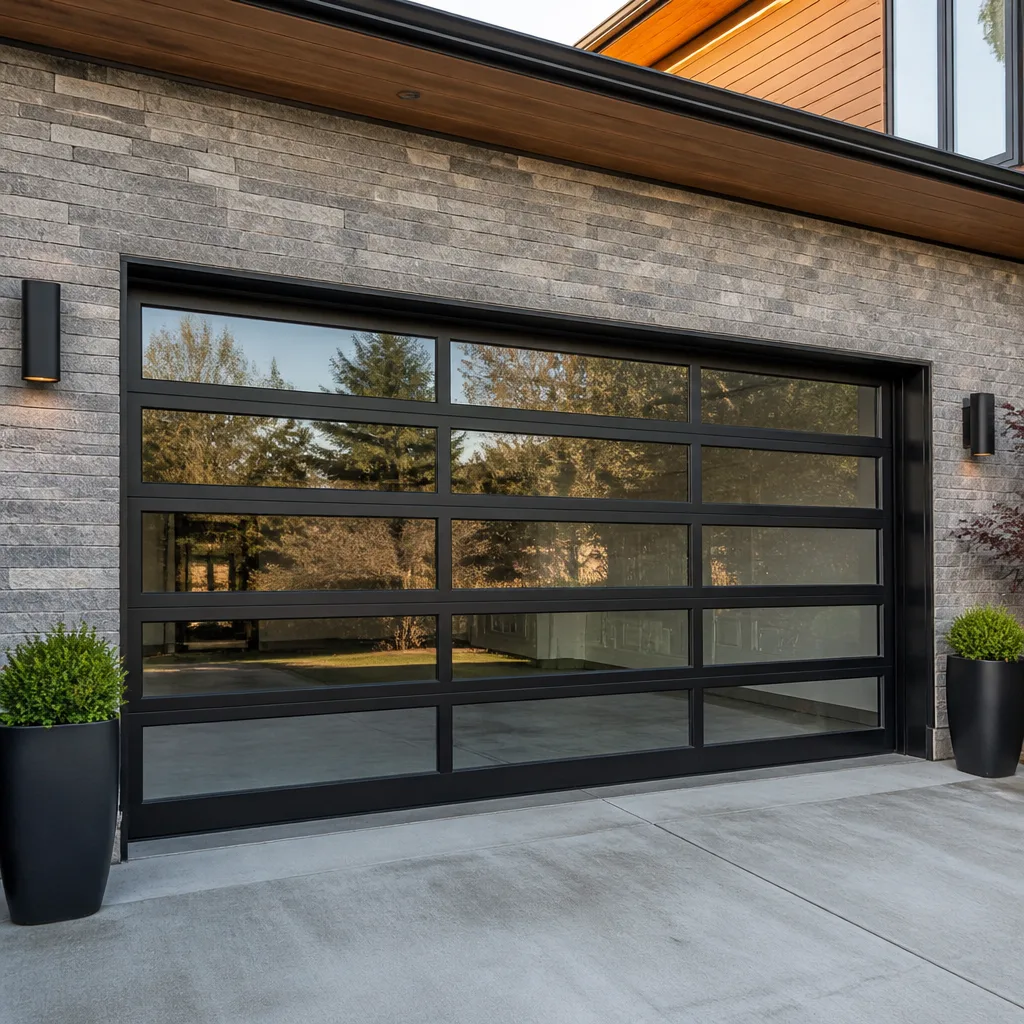 Full-view glass
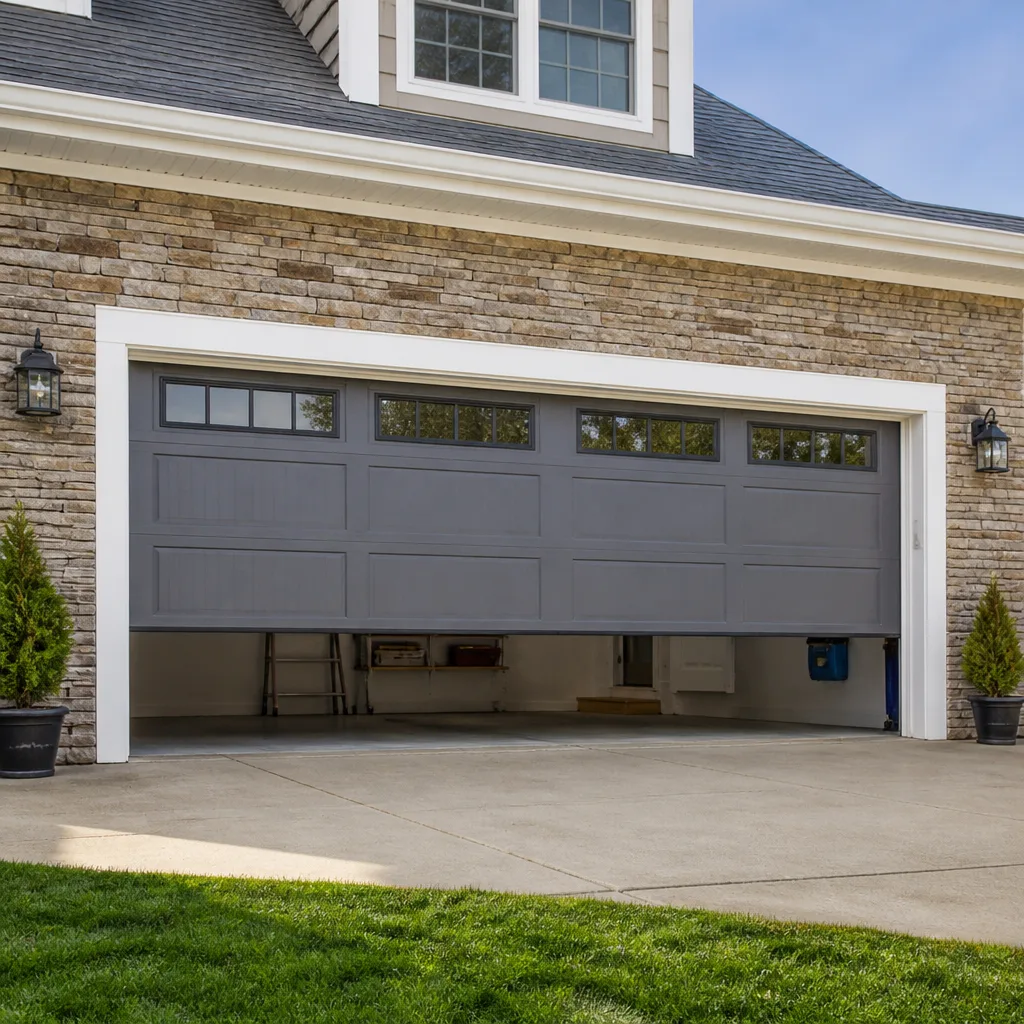 LiftMaster openers
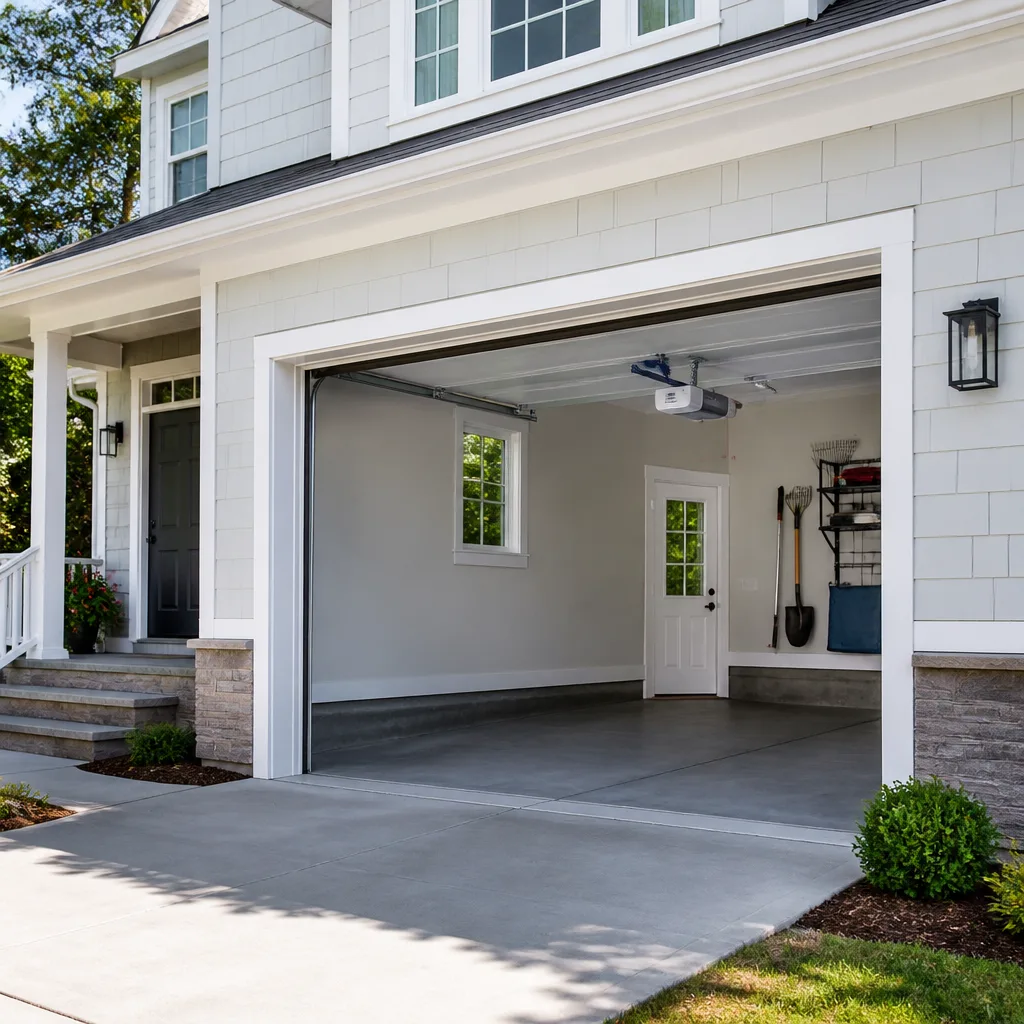 Chamberlain openers
Full 25-point door and opener safety check with every visit - springs, cables, rollers, tracks, and your LiftMaster or Chamberlain opener included
You get a price before we start. It does not change when the pro arrives.
Get your free estimateDIY vs Professional Garage Door: The Sanford Homeowner’s Decision Guide
Most homeowner debates about DIY versus hiring out come down to confidence. Garage doors are different. A torsion spring under load stores enough energy to break bones, and the tools that make it safe to handle aren’t sitting in most garages. That single fact draws a hard line down the middle of this topic: some garage door work is genuinely reasonable for a careful homeowner, and some of it belongs in a different category entirely. This guide separates the two task by task, explains what Florida licensing and Seminole County permitting actually require, and shows you the real cost of doing a spring job yourself. If you live in Sanford and your door is giving you trouble, this is the page to read before you pick up a wrench.
Quick Answer
In Sanford, sensors, remotes, weatherstripping, and cosmetic panel work are safe and sensible DIY projects. Torsion spring replacement, cable work, track realignment on a loaded door, and anything structural should go to a licensed garage door professional. The dividing line isn’t skill, it’s stored energy and liability: springs and cables can injure you seriously, and unpermitted structural work can complicate a homeowner’s insurance claim. If a job involves the counterbalance system, call a pro.
Styles & brands we work with
- Raised-panel steel
- Carriage house
- Modern flush
- Full-view glass
- LiftMaster openers
- Chamberlain openers
Table of Contents
- The task-by-task breakdown: what’s safe to DIY in Sanford
- Florida licensing law and what it means for your insurance
- The real tool cost of a DIY torsion spring job
- Permits, HOA rules, and Seminole County inspections
- How to audit a previous homeowner’s DIY repair before a sale
- When a “small” problem is actually a professional job
- What professional garage door work costs in Sanford
- Why brand fluency matters more than you’d think
The Task-by-Task Breakdown: What’s Safe to DIY in Sanford
Not every garage door repair is a job for a professional. Some are simple, low-risk, and finish in under an hour with basic tools. The key is knowing which side of the line each task falls on, and in our experience the confusion usually comes from treating all garage door work as one category.
Legitimate DIY tasks in Sanford
- Safety sensor alignment and cleaning. Photo-eye sensors get knocked out of alignment or clouded with dust, and both problems stop the door from closing. Wipe the lenses, check that the small indicator lights are steady, and adjust the brackets until the beams line up. No special tools needed.
- Remote and keypad programming. Every major opener brand – LiftMaster, Chamberlain, Genie, and others – has a pairing procedure in the manual or on the manufacturer’s site. Most take two minutes.
- Weatherstripping replacement. The rubber strip along the bottom of the door wears out and lets water and pests in. It slides out of its channel and a new one slides in. Sanford’s summer rain makes this a worthwhile annual check.
- Panel painting and cosmetic touch-ups. If a steel or wood panel is scuffed or sun-faded, sanding and repainting it is a weekend project. Match the original color and use a paint rated for exterior use.
- Visual inspection and lubrication. Look at the springs, cables, rollers, and hinges. Lubricate rollers and hinges with a garage-door-specific spray. This is maintenance, not repair, and it’s the single best way to spot a problem before it becomes an emergency.
- Replacing rollers and hinges (with the door closed and springs unloaded). A stuck roller or a squeaky hinge is a straightforward swap on a door that’s fully closed and at rest. If you’re not sure the door is at rest, don’t do it.
Tasks that require a licensed professional
The counterbalance system – springs, cables, drums, and the shaft they ride on – is where DIY becomes genuinely dangerous. A torsion spring under tension holds a large amount of stored force, and releasing that force improperly can send a winding bar or a piece of hardware flying. Cable replacement is similarly risky because the cable is the only thing preventing a loaded spring from unloading suddenly. Track realignment on a door with tensioned springs, panel replacement on a door that must be re-hung, and any opener repair that involves the motor capacitor or the drive assembly are all professional work.
We’re not saying this because we sell the service. We say it because the physics of a wound spring doesn’t negotiate. Improvised tools, a socket on a ratchet, or a screwdriver braced against the floor can all fail at the wrong moment. A trained technician uses proper winding bars, understands the number of turns the spring requires, and knows when a door needs a spring rated for its exact weight. If you live in Sanford and your door uses a torsion spring, treat every repair that touches it as professional work.
A simple decision rule
- Does the job require the door to be raised, held, or supported? If yes, stop.
- Does the job involve springs, cables, or the shaft across the top of the door? If yes, stop.
- Does the job need a tool you don’t own or haven’t used? If yes, ask why before buying.
- Does the job touch anything structural – the header, the track mounts, or the framing around the opening? If yes, it needs a licensed contractor.
- If none of the above apply, it’s likely a reasonable DIY task. Buy the right part, read the manual, and take your time.
For the professional side of that list, we’ve handled just about every brand and configuration in use today. When the answer is “call a pro,” our garage door repair team is the group that shows up.
Florida Licensing Law and What It Means for Your Insurance
Florida doesn’t treat all garage door work the same, and the difference matters when money is on the line. Replacing a sensor or a remote is homeowner maintenance. Structural garage door work – installing a new door in a new opening, altering the header above the door, replacing framing – is construction work that falls under Florida’s contractor licensing rules. The State of Florida licenses contractors through the Department of Business and Professional Regulation, and a garage door installation that involves structural framing should be done by someone with the appropriate license for that scope.
What happens if you DIY a permitted job and your homeowner’s insurance carrier later investigates a claim? The claim can be denied or reduced if the carrier finds work that was performed without the required permit or without a licensed contractor. That’s not a scare tactic; it’s how most homeowner policies read. If a door comes off its track and damages a car, or a panel fails during a storm and the opening is exposed, the carrier will ask how the door was installed and by whom. If the answer is “the previous owner installed it themselves,” you may spend months proving your side.
What that means in practice
- Repairs on an existing door generally don’t require a licensed contractor unless they change the structural configuration. Replacing a broken spring or an opener is repair work, not construction.
- New door installation in an existing opening is usually a repair or replacement classification, but pull a permit if the work touches the framing or the header. Your city’s building department is the authority on which side your project falls on.
- Structural changes – widening an opening, reframing a header, converting a carport – require a licensed contractor and a permit. Don’t shortcut this.
- Insurance claims can be affected by unpermitted structural work, even if it was done correctly. Permits protect you at resale and at claim time.
We work with homeowners in Sanford every week who are trying to sort out whether their door needs a permit. We can’t pull it for you, but we can tell you what to ask. Our garage door installation work is done by technicians who’ve handled the paperwork side of enough jobs to know where the lines usually fall.
The Real Tool Cost of a DIY Torsion Spring Job
The YouTube spring replacement video looks straightforward. What it doesn’t show is the tool list. A legitimate torsion spring job requires equipment most homeowners don’t own, and the numbers only make sense against a professional quote once you add it all up.
What a proper DIY spring kit actually costs
- Two winding bars in the correct diameter for your springs. Cheap bars are exactly the ones that fail. Expect to pay more than you think for a pair rated for actual spring tension. A single set is often $30-$60 or more depending on quality.
- Properly rated C-clamps for locking the door in place while the spring is off. A pair of 6-inch clamps runs $20-$40. Cheap clamps that slip are a real hazard.
- A spring sizing tool or accurate door weight measurement. Spring color coding is not enough. The wrong spring rating shortens spring life and can strain the opener. If you can’t measure the door’s weight accurately, you can’t pick the right spring.
- Torsion spring replacements. A single spring at retail runs in the range of what a professional charges installed – the spring manufacturer doesn’t sell you a discount for doing the labor yourself.
- An impact driver or ratcheting wrench set if you don’t already own one. This is where the DIY math starts to look worse.
- Time. A first-time spring job takes most homeowners several hours. A trained technician typically does the same job in under an hour with proper tools and a second set of hands on standby.
The math nobody mentions
Add the tools, the spring, the clamps, and the time, and the DIY total often lands within a hundred dollars of a professional price – and sometimes above it, once you count a mistake. If the door slips off the C-clamps, if a winding bar slips, if the wrong spring gets installed and the opener cycles too hard and burns out, you’re back to a professional with a bigger problem than you started with. A pro has insurance, parts on hand, and knowledge of what the door needs. The economics of DIY on springs are worse than the economics of DIY on almost any other home repair, and the risk profile is much higher.
For the tasks where DIY does make sense – sensors, remotes, weatherstripping – we cheer you on. For springs, our garage door opener repair and spring team is here because the door won’t work without a properly loaded counterbalance. If you’re not sure, call. We’ll tell you honestly whether it’s a job for us or a job for you.
Permits, HOA Rules, and Seminole County Inspections
Sanford sits inside Seminole County, and the permitting rules here generally follow the county’s building department for structural work and the City of Sanford’s own building division for work inside city limits. The key is that some DIY jobs still require a permit and inspection even when they’re done correctly.
Jobs that typically need a permit even if you DIY them
- Replacing a garage door where the new door has a different weight or configuration than the old one, because the opener and springs must be matched.
- Any change to the header, framing, or opening size.
- Electrical work on a new opener circuit (this is an electrician’s job, separate from the door).
- Adding a new garage door to a structure that didn’t previously have one, or converting a carport.
Jobs that usually don’t need a permit
- Replacing a broken spring, cable, or opener on an existing door.
- Replacing rollers, hinges, sensors, or weatherstripping.
- Painting or resurfacing door panels.
The city’s building department is the authority on your specific project. Ask before you start, and get the answer in writing. It’s a phone call that saves a lot of trouble.
HOA considerations in Sanford
Many Sanford neighborhoods have HOA rules that govern garage door appearance, color, panel style, and even whether the door can be left open during the day. If you’re replacing a door, check the HOA architectural review requirements before you order. If you’re painting a panel, confirm the color is allowed. A door that looks different from the rest of the street is often the first clue an HOA board notices. Doing the work correctly and then finding out the HOA requires a different style is a costly correction. Ask first, buy second.
How to Audit a Previous Homeowner’s DIY Repair Before a Sale
If you’ve bought a home in Sanford or are about to, the garage door deserves a close look. Previous owners sometimes repair a spring or a cable themselves to save money, and the signs are often visible. Catching them before closing saves a negotiation.
What to look for
- Mismatched spring colors. Torsion and extension springs are color-coded by weight rating. If the left and right springs are different colors on a two-spring door, or the color doesn’t match what the door manufacturer specifies, someone replaced one spring with the wrong rating.
- Tool marks on the shaft or winding cones. Scratches where a wrench, socket, or improvised bar was used are a strong signal of a homeowner-performed repair.
- Improper cable routing. Cables should run neatly through the drums and be secured correctly at the bottom bracket. Kinked, frayed, or loosely routed cables are a red flag.
- Bent or missing brackets. A bracket that doesn’t sit flush, or one that’s been replaced with a different style, hints at a repair done without the right part.
- Off-brand or mismatched rollers and hinges. A single odd-brand roller is worth a question; a whole set of mismatched rollers suggests piecemeal replacement.
- A door that doesn’t balance. Pull the release and lift the door halfway. If it doesn’t stay put, the springs are wrong or worn. A balanced door stays where you leave it.
- An opener that strains. If the opener pulls hard or the door jerks on the way up, the springs or the door weight are wrong and the opener is compensating. That burns out motors.
None of these alone is a dealbreaker. Several together, or any of them paired with a door that doesn’t operate smoothly, is the time to bring in a professional to inspect. Our team does this kind of audit routinely in Sanford, and a written report is useful leverage in a purchase negotiation. Call us if you’re in that window and want a trained eye on the door.
When a “Small” Problem Is Actually a Professional Job
Some garage door problems look minor and aren’t. The gap between a sensor that needs adjusting and a cable that’s about to snap can be one symptom. Here’s how to tell.
The “small problem” checklist
- The door won’t close. Sensor issue, or an obstruction. Usually DIY. If the door reverses partway up, that’s often the sensors or the force limit – check sensors first, call a pro if the issue persists.
- The door is loud. Often lubrication or a worn roller. DIY. If the noise comes from the springs or the shaft, stop and call.
- The door is slow. Usually opener settings or a failing motor. A pro should look at the opener.
- The door is off its track. Never DIY. A door off track can fall. Keep people and vehicles out from under it, and call a professional.
- A cable is visibly frayed or off a drum. Never DIY. Cables hold spring tension. A pro handles this.
- A spring is broken. Never DIY. A broken spring means the door is dead weight. Call for same-day service if you can – garage doors that won’t close are also a security exposure, so a door that’s stuck open overnight is worth treating as urgent.
- The opener runs but the door doesn’t move. Could be a stripped gear, a broken spring, or a disconnected trolley. A pro can diagnose in minutes.
What Professional Garage Door Work Costs in Sanford
Professional garage door work in Sanford is priced per job, and the written estimate you receive is the price you pay. Here are typical ranges for the most common services, so you have a starting point before you call.
- Spring replacement (one spring): Typically $150-$350 depending on spring type and door configuration. A matched pair is usually replaced together, so a pair runs about twice a single spring price.
- Cable replacement: Usually $120-$280 per cable depending on door size and access.
- Roller and hinge replacement: A typical full set runs $100-$250.
- Safety sensor or photo-eye replacement: Typically $90-$200.
- Opener repair: $120-$350 depending on the fault and part availability.
- New opener installation: $300-$700 depending on opener type and door weight.
- Track realignment: $90-$250.
- New door installation: $800-$3,000+ depending on door material, size, and insulation.
These are typical ranges, not fixed prices. Every job gets a written quote before any work starts, and the quote is what you pay. Free estimates mean you can compare without pressure. If you’re in Sanford and the work is on the installation side, expect a measure and a written price on the first visit rather than same-day service; new doors have to be ordered and scheduled. If the work is repair, same-day is often possible.
Why Brand Fluency Matters More Than You’d Think
Garage doors and openers aren’t interchangeable. A LiftMaster opener has different internal tolerances than a Genie, and a Clopay door’s weight profile is different from a Chamberlain-matched door in the same opening. When you call someone who services one brand, the diagnostic lens is narrower. When you call someone fluent across the major brands, the technician can diagnose the actual problem instead of steering you toward a proprietary replacement.
The brand fluency advantage
- Faster diagnosis, because the tech already knows the failure patterns for the brand in your opening.
- The right spring or part the first time, instead of a generic part that fits “well enough.”
- No upsell to replace a working component because a proprietary variant is the only one the tech stocks.
We service, repair, and install systems from LiftMaster, Chamberlain, Genie, Clopay, Amarr, Wayne Dalton, Craftsman, and Raynor – the group that covers most residential and light-commercial doors in use today. That matters less for a sensor swap and more for a diagnosis. If your door is making a noise that’s been getting worse, brand fluency is what makes the second visit unnecessary. Under the umbrella of Sanford Garage Door Repair Pros, we do brand-agnostic work by design, and our technicians have up to 12 years of experience across the full repair-to-replacement spectrum.
Common Mistakes to Avoid
- Trying a torsion spring replacement with a socket and a ladder. The winding bars you need are not optional, and a socket isn’t a substitute. A spring under load doesn’t care how careful you are – it will release with the force stored in it.
- Assuming a door that opens is safe. A door with a frayed cable or a spring that’s lost tension will open for a while and then fail suddenly. Sanford’s heat and humidity accelerate the wear on springs and plastic components, so a door that passed inspection a year ago can be in worse shape by summer. Check it before the hot season.
- Painting a wood door without priming. Wood doors need primer or the paint peels within a season. If your door is wood and you’re repainting it, do the prep work.
- Skipping the permit on a structural install. It’s tempting on a busy week. It creates a paper trail problem at resale and at insurance-claim time. Pull the permit.
- Ignoring the HOA before ordering a replacement door. Confirm the door style and color are approved before you spend the money. An HOA correction is expensive.
- Buying a spring off the internet by color code. Color codes indicate weight ranges, not exact ratings. If your door weight isn’t measured, you can’t pick the right spring. The wrong spring shortens the life of the opener and the door.
- Trying a new opener installation while reusing old brackets. Old brackets are usually rated for the old door. New openers come with the correct brackets for a reason. Use them.
- Letting a “small noise” run for months. The noise is a symptom. The repair cost is smaller today than it will be in three months.
See the difference
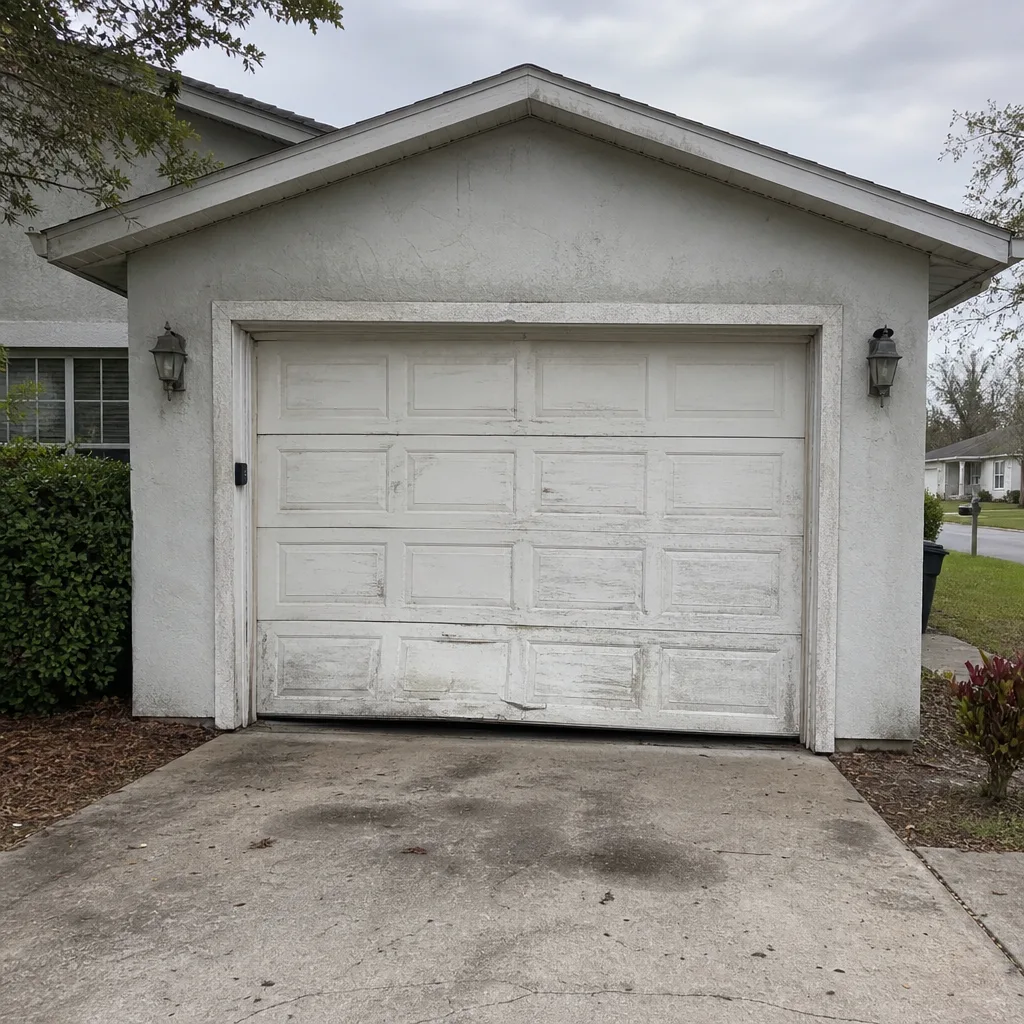 Before
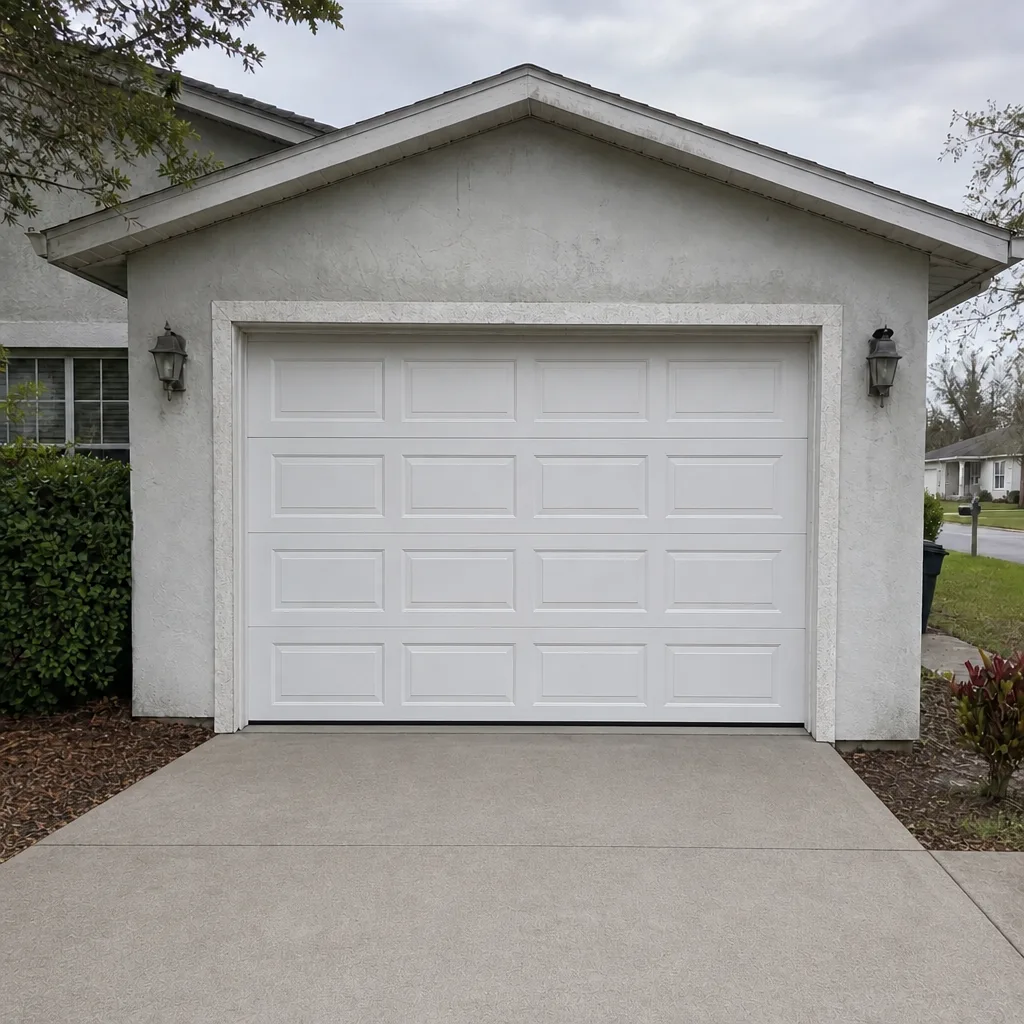 After
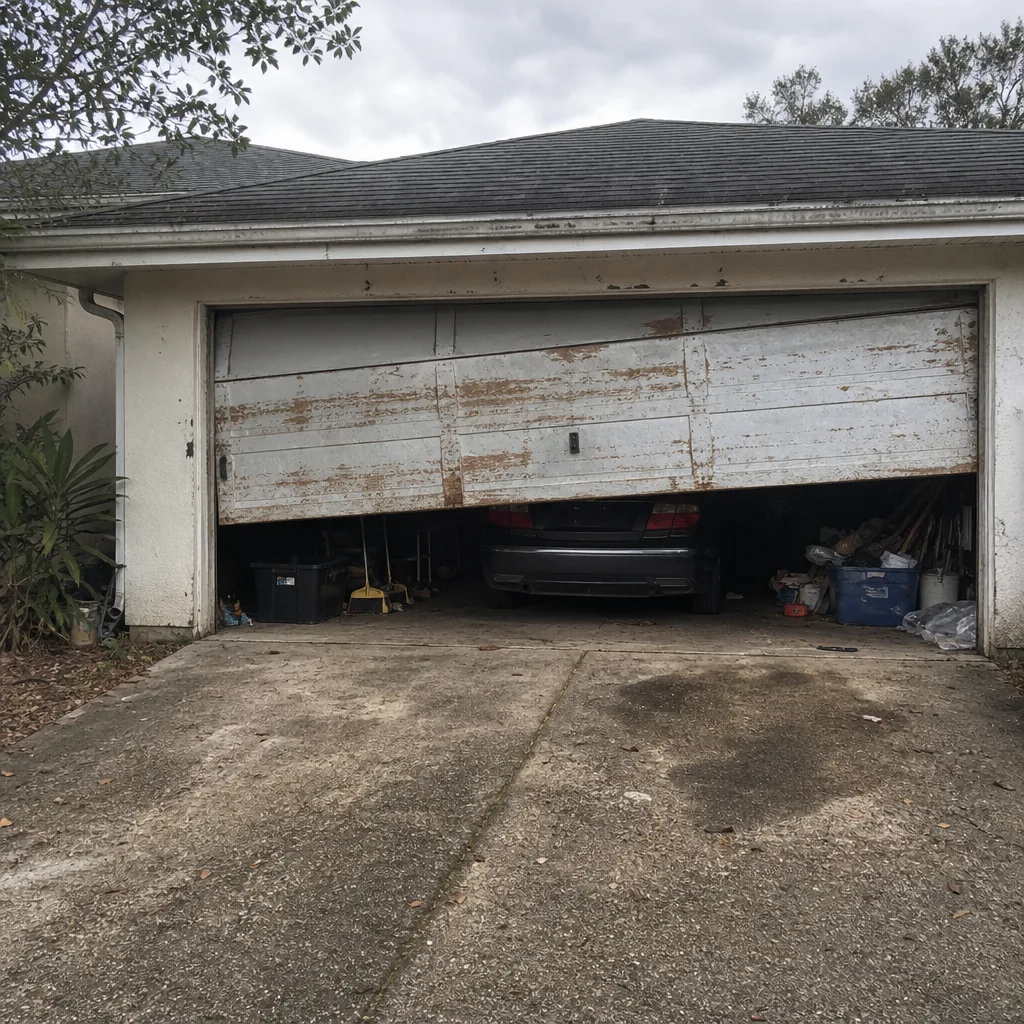 Before
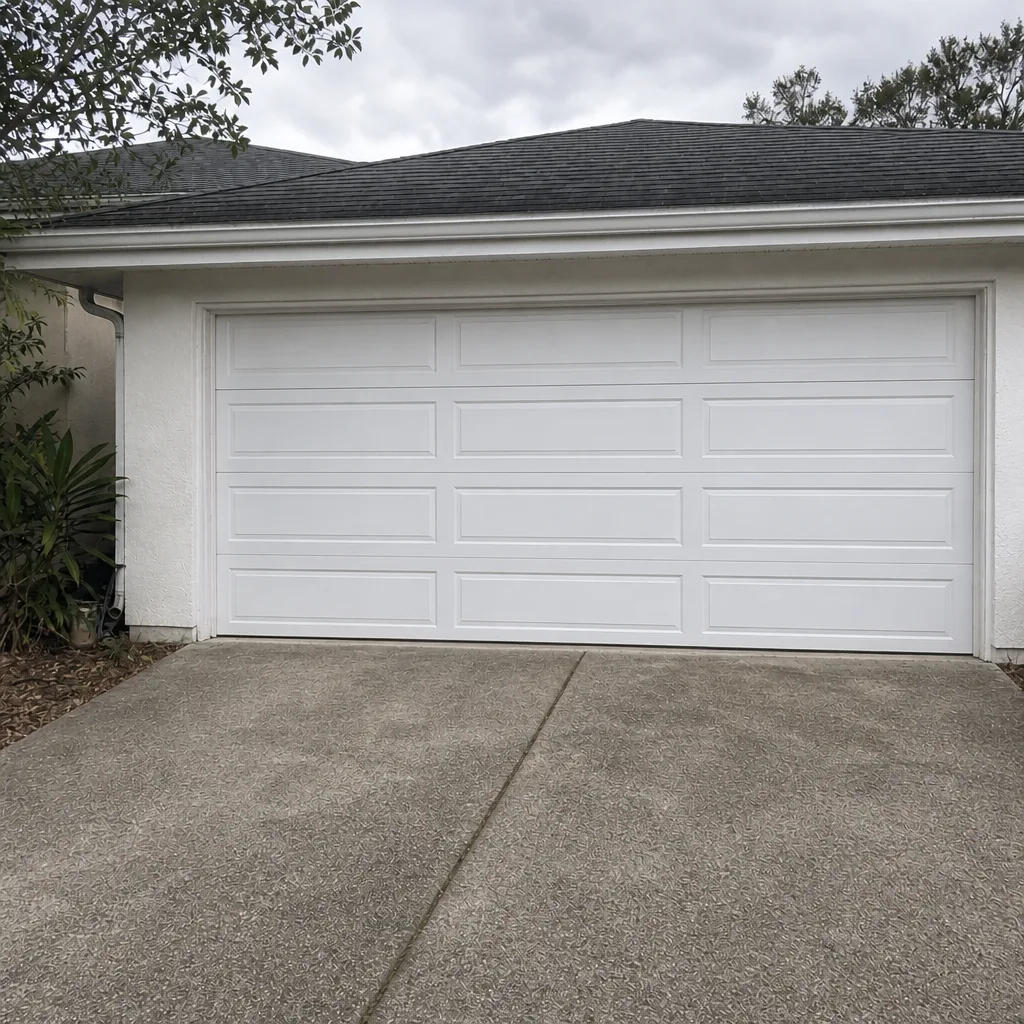 After
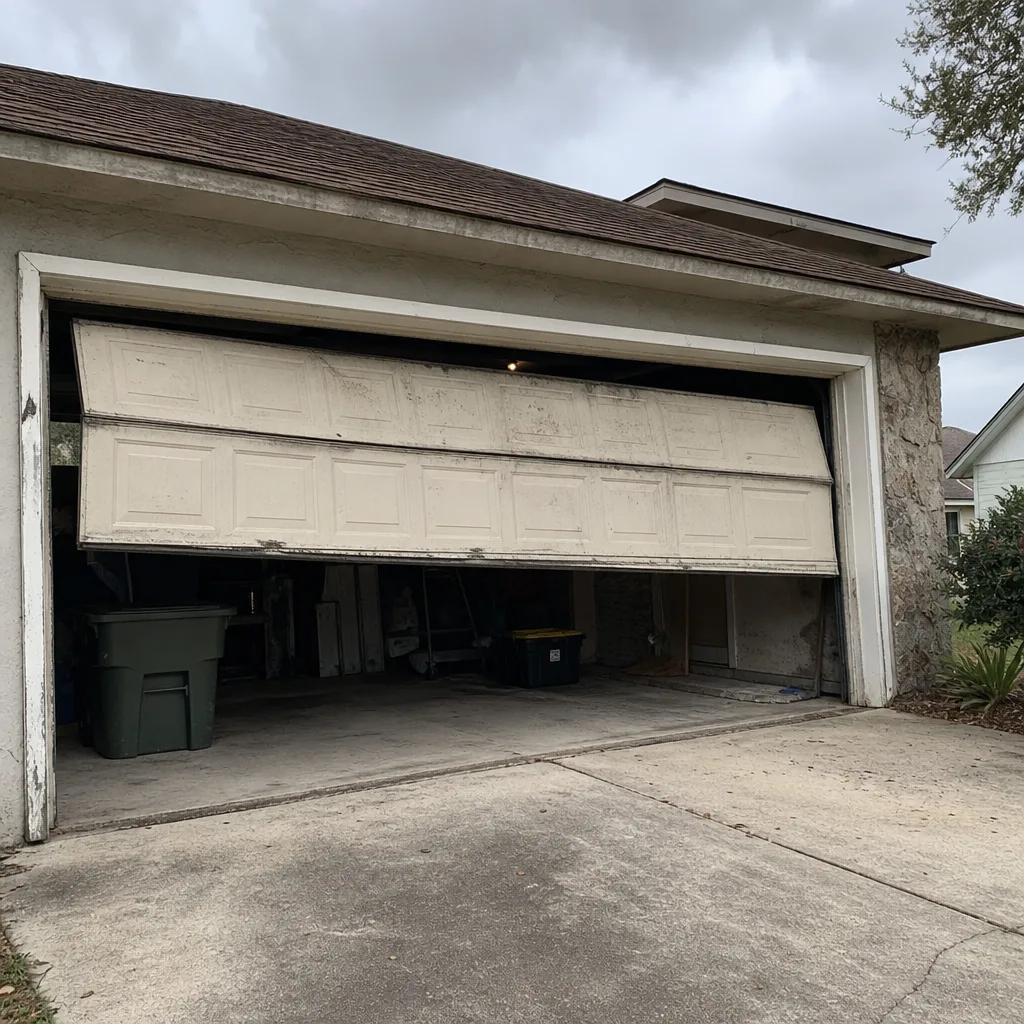 Before
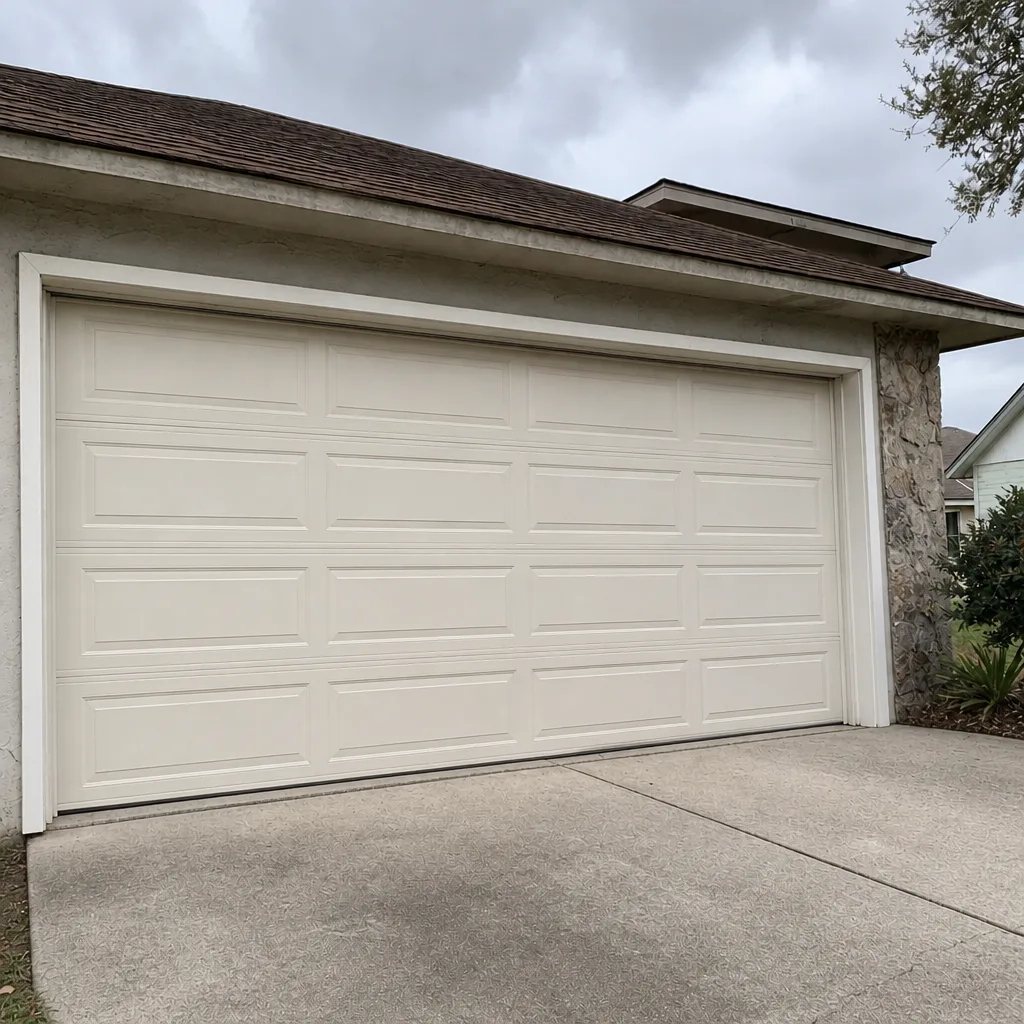 After
When to Call a Professional
Call a professional the moment the work involves springs, cables, the shaft, structural framing, or the door being off its track. That’s not a judgment on your capability – it’s a judgment on the physics. Also call if the door won’t close and you’re holding it open at night, if a panel is cracked in a way that affects the door’s balance, or if you’ve found signs of a previous homeowner’s DIY spring job and want an audit before you buy the house. For everything else – sensors, remotes, weatherstripping, panel painting – we’re happy to be the backup you don’t need. If you’re in Sanford and the work is on the professional side, Sanford Garage Door Repair Pros offers free estimates in Sanford – call (855) 506-7237. We answer 24/7, and fast dispatch from 7am to 7pm, Sunday through Friday, gets a technician to a door that can’t wait. Garage doors are all we do.
Frequently Asked Questions
No. Torsion spring replacement is not a safe DIY job, no matter how many videos you’ve watched. The spring stores the full weight of the door as rotational force, and releasing that force with improvised tools can cause serious injury. It’s also the job most likely to leave you with a door that’s unbalanced and an opener that burns out. Call a licensed garage door technician for spring work in Sanford – our team handles this category daily.
Sensor alignment, remote and keypad programming, weatherstripping replacement, panel painting, lubrication, and (with the door fully closed and at rest) roller and hinge replacement are all reasonable DIY tasks. Anything involving the springs, cables, or the shaft across the top of the door is a professional job. If you’re not sure which category your repair falls into, call (855) 506-7237 and we’ll tell you honestly. Estimates are free.
Not necessarily, and often not. Most homeowner policies require that structural work be permitted and inspected. If your carrier discovers unpermitted work during a claim investigation, the claim can be denied or reduced. The safe pattern is to pull the permit for any structural work and use a licensed contractor for anything that touches the framing. For repairs on an existing door, ask the city’s building department whether a permit is required for your specific project, and get the answer in writing.
It depends on whether the work touches the structural framing. A straight replacement in an existing opening usually does not require a permit; a replacement that changes the door’s weight, size, or the header configuration often does. The City of Sanford building division or Seminole County’s building department is the authority here. Call them before you buy the door. If you’d like us to tell you what to ask, call (855) 506-7237 – the estimate is free.
Typical pricing in Sanford is in the range of $150-$350 per spring, depending on the spring type and door configuration. A matched pair is usually replaced together, so a pair costs about twice a single spring price. The written estimate sets the final price and is quoted before any work starts. Call (855) 506-7237 for an exact quote – estimates are free.
Often yes. A door that won’t close is a same-day priority for our team because it’s a security exposure overnight, and repair work like spring and cable replacement is frequently same-day. We answer 24/7, and fast dispatch from 7am to 7pm, Sunday through Friday, gets a technician to the door. Installation work is measured and scheduled, not same-day. Call (855) 506-7237 and we’ll get you booked.
The local garage door professionals we connect you with are licensed and insured as their state requires. Our technicians have up to 12 years of experience and work across the major garage door brands, including LiftMaster, Chamberlain, Genie, and Clopay. For an exact quote on your repair or install, call (855) 506-7237 – estimates are free.
No. The written quote is the price you pay. We quote before any work starts, and the quote holds for the job as scoped. If the door turns out to have a problem that wasn’t visible during the initial assessment, we discuss it with you before any additional work, and nothing new gets added without your agreement. Call (855) 506-7237 for an exact quote – estimates are free.
The Bottom Line
The DIY-versus-professional question for garage doors isn’t about whether you’re capable. It’s about which tasks are physically safe and which aren’t, and which repair bills are worth taking on. Sensors, remotes, weatherstripping, panel painting, and lubrication are reasonable DIY in Sanford. Springs, cables, track repairs on a loaded door, and anything structural belong to a licensed professional. The tool cost on a legitimate DIY spring job rarely beats a professional quote, the injury risk is real, and the permit and insurance consequences of unpermitted structural work can outlast any savings. If the job is on the professional side and you’re in Sanford, we’re the team that shows up. We work on the brand you already have, we diagnose before we replace, and we quote before we start. Garage doors are all we do.
Contact
If you’ve read this far and your garage door still needs attention, call us. Sanford Garage Door Repair Pros handles springs, openers, panels, and full installs across the major brands – LiftMaster, Chamberlain, Genie, Clopay, Amarr, Wayne Dalton, Craftsman, and Raynor – with the same free-estimate, upfront-pricing approach from the first small repair to a full replacement. We answer 24/7. Fast dispatch from 7am to 7pm, Sunday through Friday. Call (855) 506-7237 for a free estimate, and we’ll give you a straight answer on whether the job in front of you is a DIY project or a professional one.
Written by the team at Sanford Garage Door Repair Pros.