
Last updated November 22, 2026
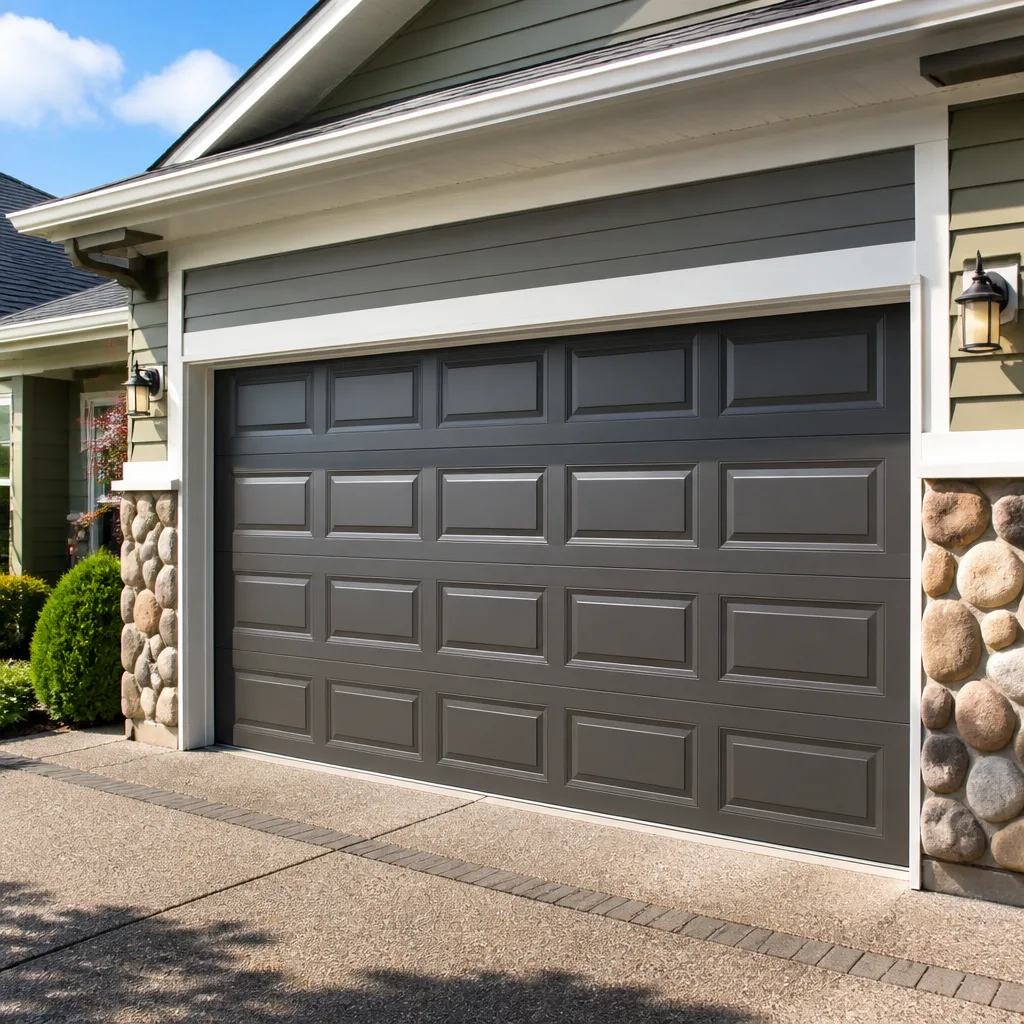 Raised-panel steel
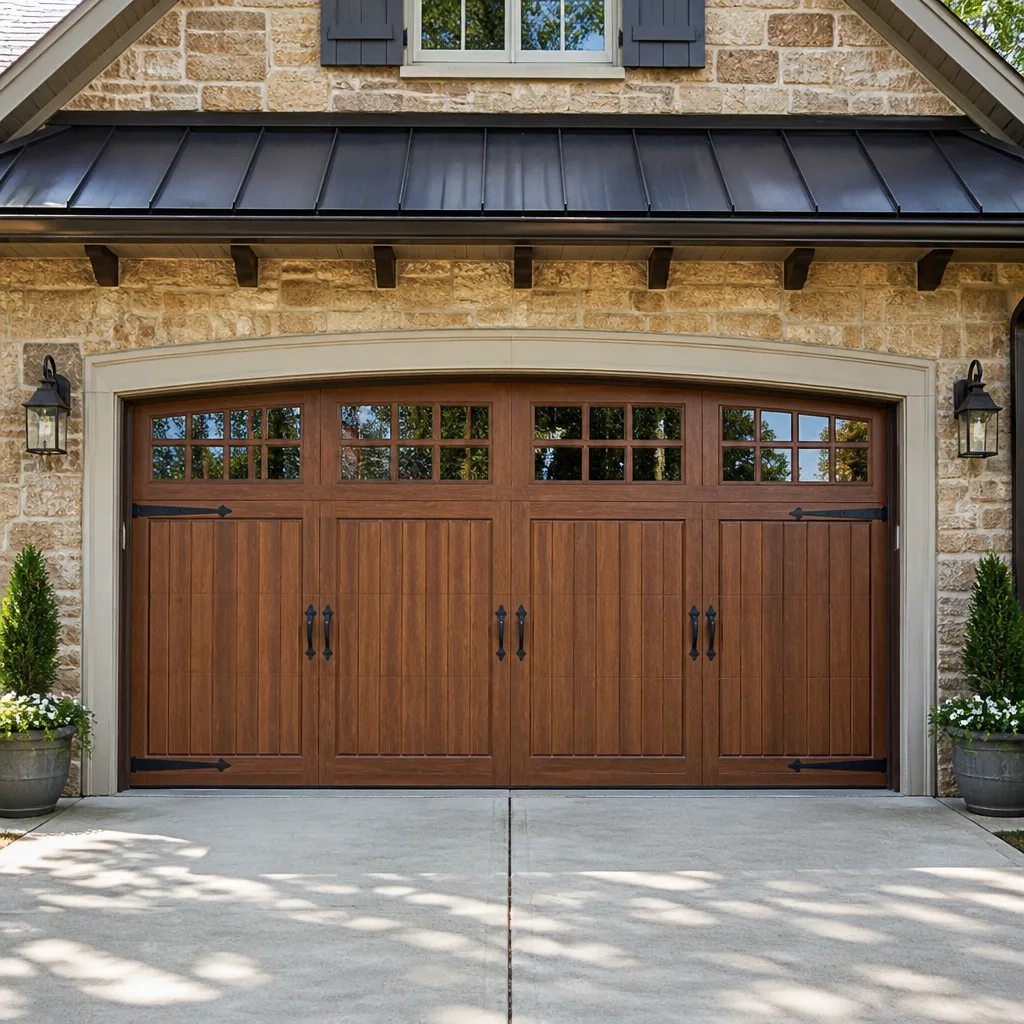 Carriage house
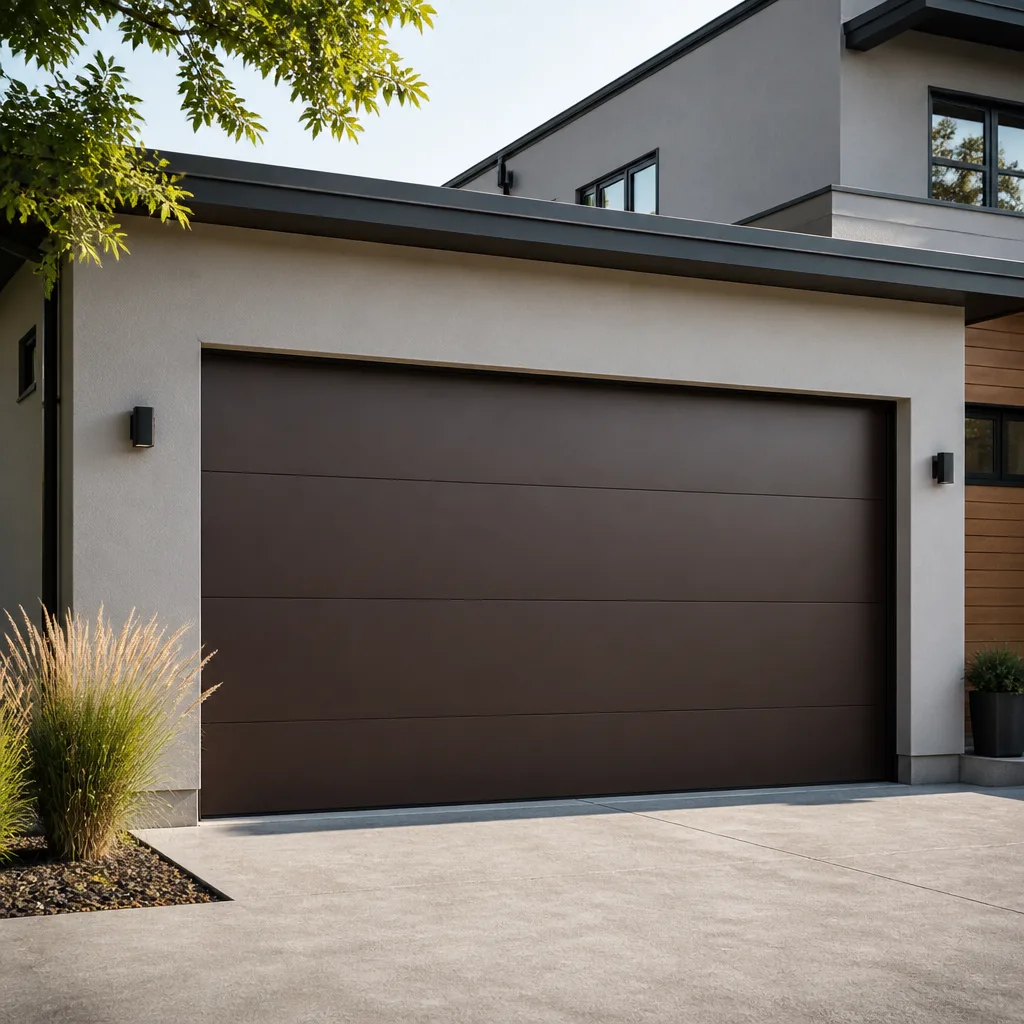 Modern flush
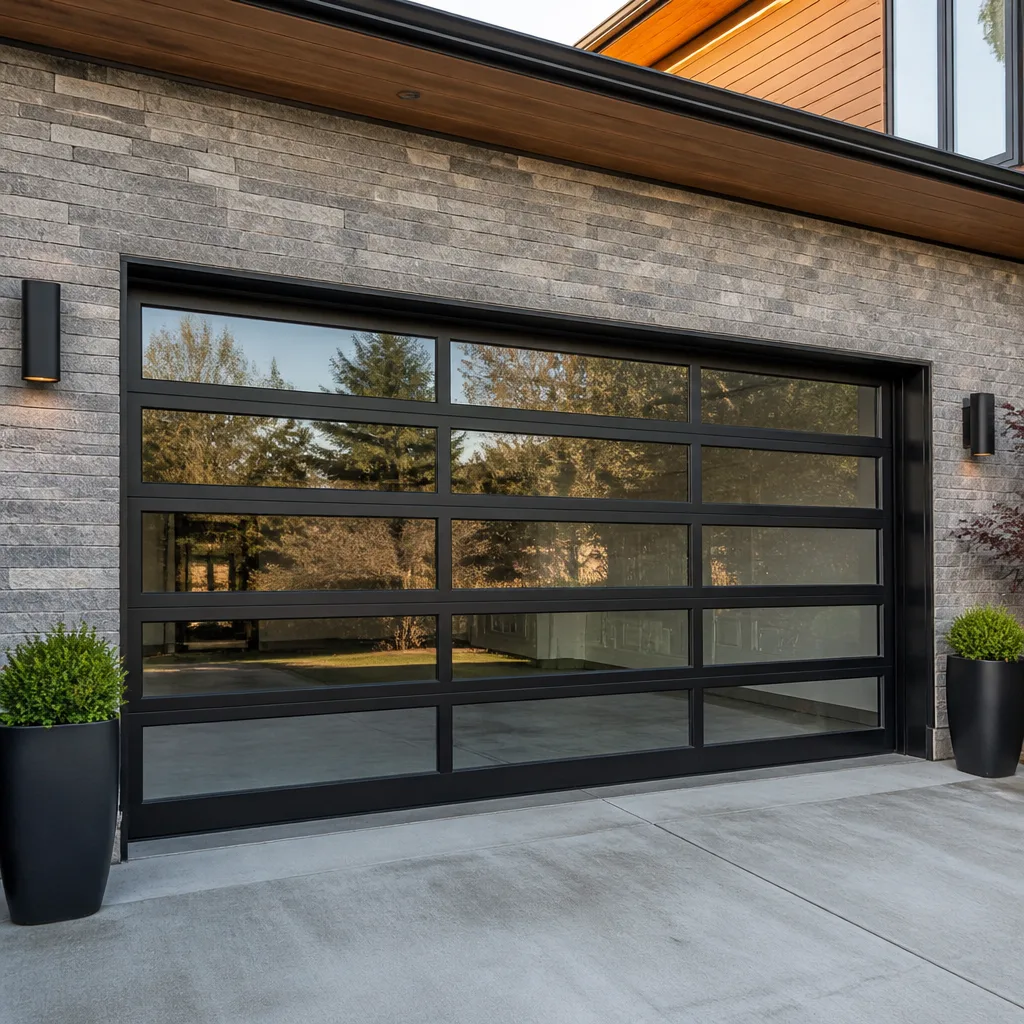 Full-view glass
 LiftMaster openers
 Chamberlain openers
Full 25-point door and opener safety check with every visit - springs, cables, rollers, tracks, and your LiftMaster or Chamberlain opener included
You get a price before we start. It does not change when the pro arrives.
Get your free estimateGarage Door Emergency Preparedness Guide for Sanford Homes
Most garage door advice assumes you have time. You don’t. The failures that matter in Sanford happen on a schedule nobody picks: a spring snaps while the car is inside, a storm knocks the power out at the worst possible moment, or the door stops halfway down and stays there with the house open to the street. The homeowners who handle these well aren’t luckier than everyone else. They’ve already tested the manual release, know their backup entry plan, and understand which failures are genuinely unsafe to leave overnight. This guide builds that readiness, piece by piece, for Sanford homes.
Quick Answer
Emergency garage door readiness in Sanford comes down to three things: knowing how to operate your manual release before you need it, securing a door that won’t close without creating a bigger security problem, and knowing which failures are safe to leave until morning versus which need a call right away. Test your release twice a year, keep a backup entry plan, and inspect the door before hurricane season. When something fails, we answer 24/7 and dispatch technicians from 7am to 7pm, Sunday through Friday.
Styles & brands we work with
- Raised-panel steel
- Carriage house
- Modern flush
- Full-view glass
- LiftMaster openers
- Chamberlain openers
Table of Contents
- How Do You Use the Manual Release on a Garage Door?
- How Do You Secure a Garage Door That Won’t Close?
- Pre-Hurricane Season Checklist for Your Garage Door
- How Do Rated and Unrated Garage Doors Differ in a Named Storm?
- The Emergency Call Decision Tree: Wait or Call Now?
- What to Tell a Dispatcher When You Call
- Why Brand Fluency Matters in an Emergency
- Common Mistakes to Avoid
How Do You Use the Manual Release on a Garage Door?
The manual release is a cord hanging from the trolley that connects your opener to the door. Pulling it disengages the door from the opener so you can lift it by hand. On most openers in Sanford homes, including LiftMaster and Chamberlain units, the cord hangs from a red-handled lever on the carriage. The release works, but only if the door is in good mechanical shape and only if you pull it the right way at the right moment.
Here’s the sequence that works:
- Make sure no one is standing under the door. A door that’s been sitting under spring tension can drop fast once it’s disconnected.
- Pull the cord straight down, firmly, once. Don’t yank it sideways and don’t tug repeatedly. A single clean pull trips the lever.
- Lift the door slowly by hand. If it feels extremely heavy or won’t budge, stop. The springs aren’t doing their job, and forcing it can bend panels or hurt you.
- Prop the door open if you need to move a car out. Use a sturdy brace, not a broom handle, and never leave the door propped unattended.
- Re-engage the carriage before running the opener. Pull the release cord toward the door (away from the opener) until the carriage clicks back onto the trolley, then test with a short opener cycle.
The mistake that causes the most permanent trouble is pulling the cord when the door is partially open and letting it slam. That can bend the carriage arm or damage the trolley track, which turns a five-minute reset into a garage door repair call. The other common error is pulling the cord and then hitting the opener button anyway. If the carriage is disengaged, the opener runs but nothing moves, and on some units that trips a safety fault. Our technicians have up to 12 years of experience and see both of these regularly.
Test the release on a calm day, once in spring and once in fall. Know where the cord hangs and how it feels to pull. That four-minute window in the morning before a meeting is not the time to learn.
How Do You Secure a Garage Door That Won’t Close?
When a door won’t close, the instinct is to force it, wedge something under it, or leave it open and hope. None of those hold. The safe sequence is: identify why it won’t close, secure the opening with something that resists lifting from outside, and get the door repaired before the temporary fix becomes permanent.
First, rule out the simple causes. Check whether something is blocking the safety sensors at the bottom corners. Wipe the lenses. Look for a track obstruction, a bent roller, or a door that’s come off one side of the track. If the door goes down partway and reverses, the sensors or the close-force limit are the usual culprits. Those are fixable on a service call, and they’re not the same thing as a broken spring.
If the door physically won’t close and you need to secure the house, these options actually hold:
- A heavy bar or brace across the inside of the door, seated in the tracks. This resists lifting from outside and is the most reliable temporary measure.
- A deadbolt-style slide lock through the track on one side if the door is already down and just won’t lock.
- Parking a vehicle tight against the inside of the door as a backup layer if you can’t brace it.
What doesn’t hold, despite what you’ll read elsewhere: a rope tied to the handle, a chair pushed against the door, or a wedge under the bottom seal. Those stop nothing and can damage the seal or the bottom panel. And never leave a door propped open on a track with children or pets in the house. Sanford homes often have the garage as the primary entry, so an unsecured door means the whole house is open. We work on the brand you already have, which matters when a temporary brace has to come off and the door has to be brought back into alignment.
Pre-Hurricane Season Checklist for Your Garage Door
The garage door is the largest moving opening on most Sanford homes, and it’s also the weakest point in a wind event. A door that fails under pressure doesn’t just let water in; it can compromise the wall it’s mounted in. The time to find out your door has a problem is not the week a storm is named. Run this checklist before hurricane season each year.
- Inspect the panels for dents, cracks, or loose hinges. A panel that’s already compromised is the one that fails first under wind load.
- Test the door’s balance. Disconnect the opener and lift the door halfway. It should stay put with minimal effort. If it drops or feels heavy, the springs are losing tension and need attention before storm season.
- Check the tracks for alignment. Look down each track from the floor. Any bend or gap where the roller rides is a failure point.
- Look at the weather seal along the bottom and sides. A worn seal lets wind-driven rain in and can whistle under pressure.
- Confirm the door’s wind rating if you have documentation. If you don’t know the rating, that’s worth finding out before you need it.
- Clear the area around the door’s travel path. Storm prep often means storing things in the garage; keep the track and the door’s path clear.
- Know your manual release location and test it. Power outages are common in named storms, and the release is your only way to move the door by hand.
Sanford’s storm season runs through the warmer months, and the failures we see cluster around the same two events: wind-driven pressure on doors that were already marginal, and power loss that leaves an opener dead with a car trapped inside. Both are predictable, and both are cheaper to prevent than to fix mid-storm. Our garage door opener repair service handles the opener side, and a pre-season inspection catches the door side.
How Do Rated and Unrated Garage Doors Differ in a Named Storm?
A wind-rated garage door is engineered and tested to resist a specified wind pressure, and an unrated door isn’t. In a named storm, that difference shows up in how the door behaves under load: rated doors hold their shape and keep the opening sealed, while unrated doors can bow, pull out of the tracks, or fail at the panel joints. The rating isn’t a marketing label. It reflects reinforcement in the panels, heavier hinges and rollers, and a track system built to stay aligned under pressure.
For Sanford homeowners, the practical question is whether your door has a rating and whether it’s still intact. A rated door with a bent track or a missing strut has lost much of its advantage. An unrated door in good condition is still safer than a rated door that’s been neglected. The condition matters as much as the label.
What you can do:
- Find out your door’s rating from the original documentation or the model number on the door itself.
- Look for reinforcement in the form of horizontal struts across the panels and heavier gauge hinges at the stress points.
- Ask about a wind-load retrofit if your door is unrated but structurally sound. Reinforcement kits exist for many common door models, including Clopay and Amarr systems.
- Replace rather than retrofit if the door is old, the panels are compromised, or the tracks are out of alignment. That’s a garage door installation decision, and it’s worth making before storm season rather than during it.
When you’re evaluating a replacement, ask for the wind rating in writing and confirm the installer will verify the reinforcement is correct for your opening. A rated door installed without the right reinforcement performs like an unrated one.
The Emergency Call Decision Tree: Wait or Call Now?
Not every garage door failure is an emergency, and treating every one like it is wastes money and time. The question is whether the failure creates a safety or security risk that can’t be managed until morning. Here’s how we think about it.
Call now if:
- A spring has broken and the door is stuck open or stuck closed with a car trapped inside.
- The door is hanging off one track or has come out of alignment and could fall.
- The door won’t close and the house is open to the street with no way to brace it.
- You hear a loud bang from the garage and the door drops or won’t move at all.
- The opener is smoking, sparking, or tripping a breaker.
- A car is trapped inside and you have a medical or work obligation that can’t wait.
Wait until morning if:
- The door works but is noisy, slow, or reversing intermittently.
- The opener’s light flickers or the remote has stopped working but the wall button still operates the door.
- The door is closed and secure, and the issue is cosmetic or performance-related.
- The sensors are misaligned but the door still closes when you hold the wall button.
The line between these two lists is whether the house is secure and whether anyone is at risk. A door that’s closed and locked with a noisy opener can wait. A door that’s open to the street cannot. For the calls that can’t wait, we answer 24/7, and a call outside dispatch hours is booked into the next opening, Sunday through Friday, 7am to 7pm. Springs, openers, panels, full installs: one call covers it. The Sanford Garage Door Repair Pros team handles the whole range.
What to Tell a Dispatcher When You Call
The details you give on the call determine whether the right technician and the right parts show up on the first visit. A vague call gets a general appointment. A specific call gets a faster diagnosis. Have these ready before you dial:
- Your door’s brand and model if you know it. LiftMaster, Chamberlain, Genie, Clopay, Amarr, Wayne Dalton, Craftsman, and Raynor systems all have different carriage designs, spring configurations, and opener logic. Brand tells us what to bring.
- What the door is doing, in plain terms. “Won’t close past halfway” is more useful than “it’s broken.” Note whether it reverses, stops, or won’t move at all.
- Whether the door is open, closed, or stuck partway. This determines urgency more than anything else.
- What you’ve already tried. If you pulled the manual release or reset the opener, say so. It changes the diagnosis.
- Whether a car is trapped inside. Say it early. It affects how the call is prioritized.
- Your address and gate or access details. Sanford properties vary; tell us how to reach the garage.
- Whether you can see a broken spring. A visible gap in the spring above the door is the single most useful detail you can give.
The details that most affect response are the door’s state (open versus closed), whether a car is trapped, and the brand. Those three determine whether the call is a same-day repair or a scheduled visit, and whether the technician arrives with the right spring, carriage, or opener part. We answer 24/7, and calls outside dispatch hours are booked into the next opening. For repair calls in Sanford, same-day service is often available. You can reach us at (855) 506-7237.
Why Brand Fluency Matters in an Emergency
A garage door emergency is a parts problem as much as a mechanical one. The carriage design on a Genie opener isn’t the same as a LiftMaster, and a Clopay panel doesn’t swap with an Amarr. When a technician arrives without the right part, the visit becomes a diagnosis followed by a second appointment. That’s the difference between back to working before the day is out and waiting another day with your car stuck.
We service eight of the most widely installed garage door brands: LiftMaster, Chamberlain, Genie, Clopay, Amarr, Wayne Dalton, Craftsman, and Raynor. That covers the vast majority of residential and light-commercial systems in Sanford and the surrounding area. Being brand-agnostic means the diagnosis follows the actual failure, not a push toward a proprietary system we’d profit from selling. No upsell to replace what we can repair. When a door genuinely needs replacement, we say so and explain why, but the decision stays with you.
Garage doors are all we do. That single-trade focus shows up in the speed of a diagnosis and in the safety judgment around springs, which are the most dangerous component on the door. A wound torsion spring holds enormous stored energy, and a technician who doesn’t work on them daily is a risk to themselves and to your door. We treat spring repair as a named specialty for exactly that reason.
The Sanford Garage Door Repair Pros team is the same group you’d call for a routine tune-up or a full replacement. Same brand coverage, same diagnostic approach, whether the call is an emergency or a scheduled estimate.
Common Mistakes to Avoid
- Pulling the manual release while the door is under load and letting it slam. This bends the carriage arm and can damage the trolley track, turning a reset into a repair. Pull straight down, once, and control the door as it moves.
- Re-engaging the carriage and immediately running the opener at full speed. Test with a short cycle first. A carriage that isn’t fully seated can strip the trolley gear.
- Trying to repair a broken torsion spring yourself. This is the one component on the door that can cause serious injury. A wound spring holds enough energy to break bones, and the tools to handle it safely aren’t in a typical homeowner’s garage. Leave it to a trained technician.
- Securing an open door with a rope or a chair. Neither resists lifting from outside. Use a brace seated in the tracks or a slide lock, and get the door repaired before the temporary fix becomes the permanent one.
- Assuming a reversing door is a sensor problem and ignoring it. Reversing can be a sensor misalignment, a close-force limit, or a sign of a track obstruction. Guessing at it can leave a real failure in place.
- Skipping the pre-season inspection because the door “seems fine.” Sanford’s storm season finds the marginal doors. A bent track or a losing spring is invisible until it fails under pressure.
- Calling a general handyman for a garage door problem. A handyman who splits focus across trades won’t have the brand-specific parts or the spring training. Garage doors are all we do, and that’s the point of calling a specialist.
See the difference
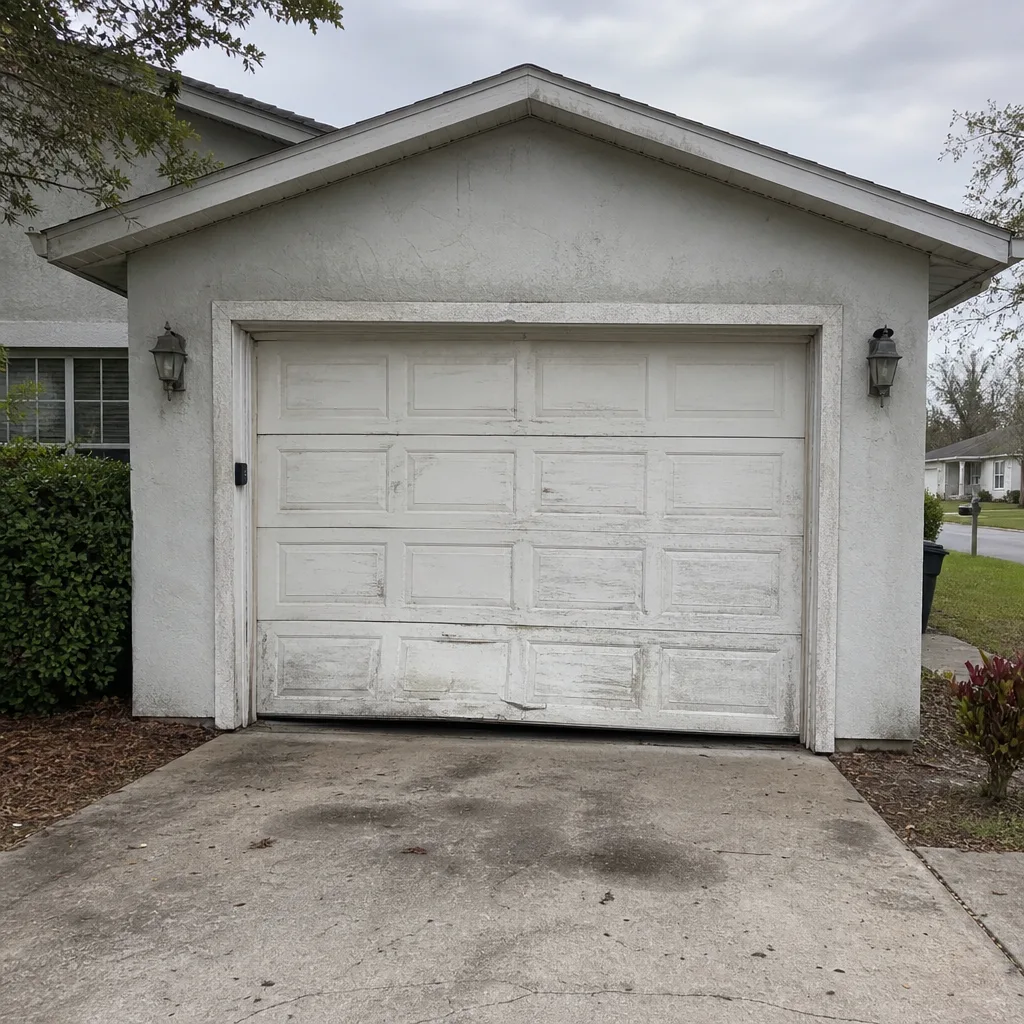 Before
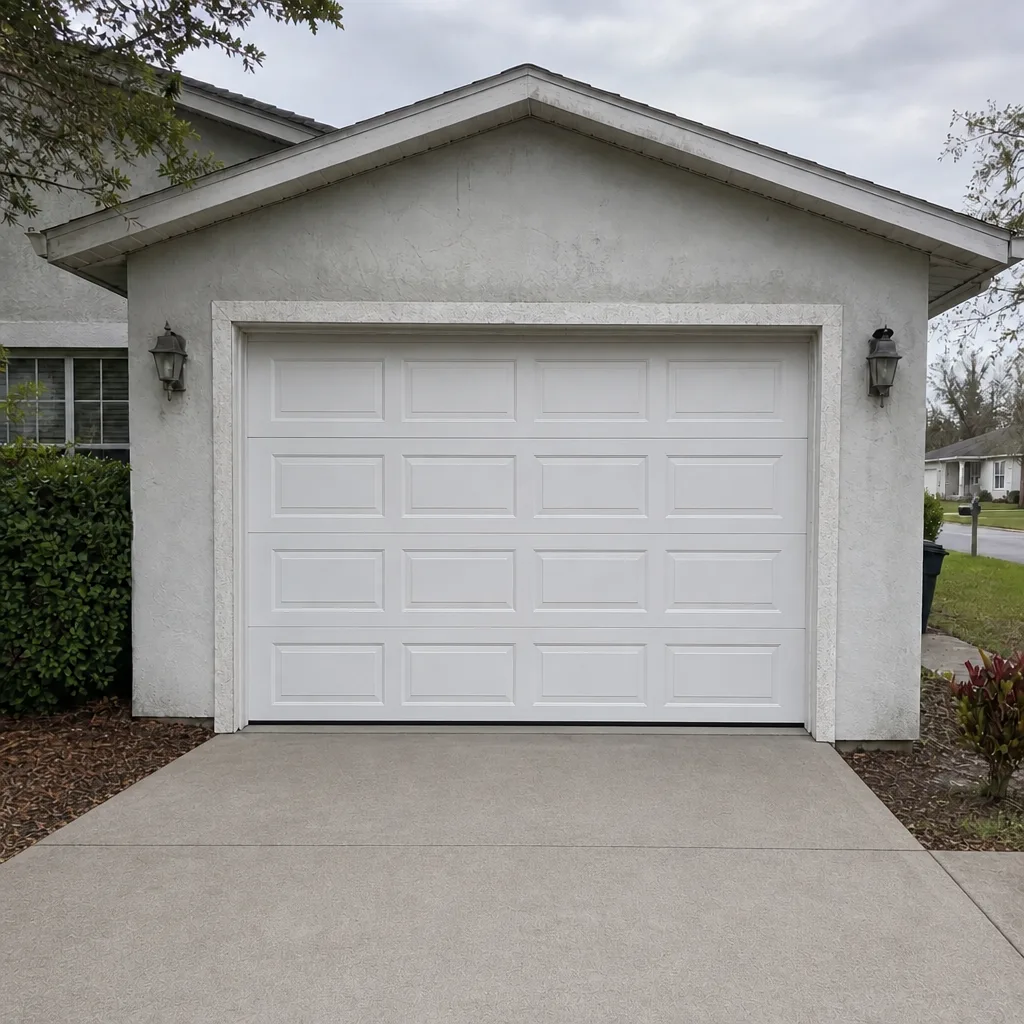 After
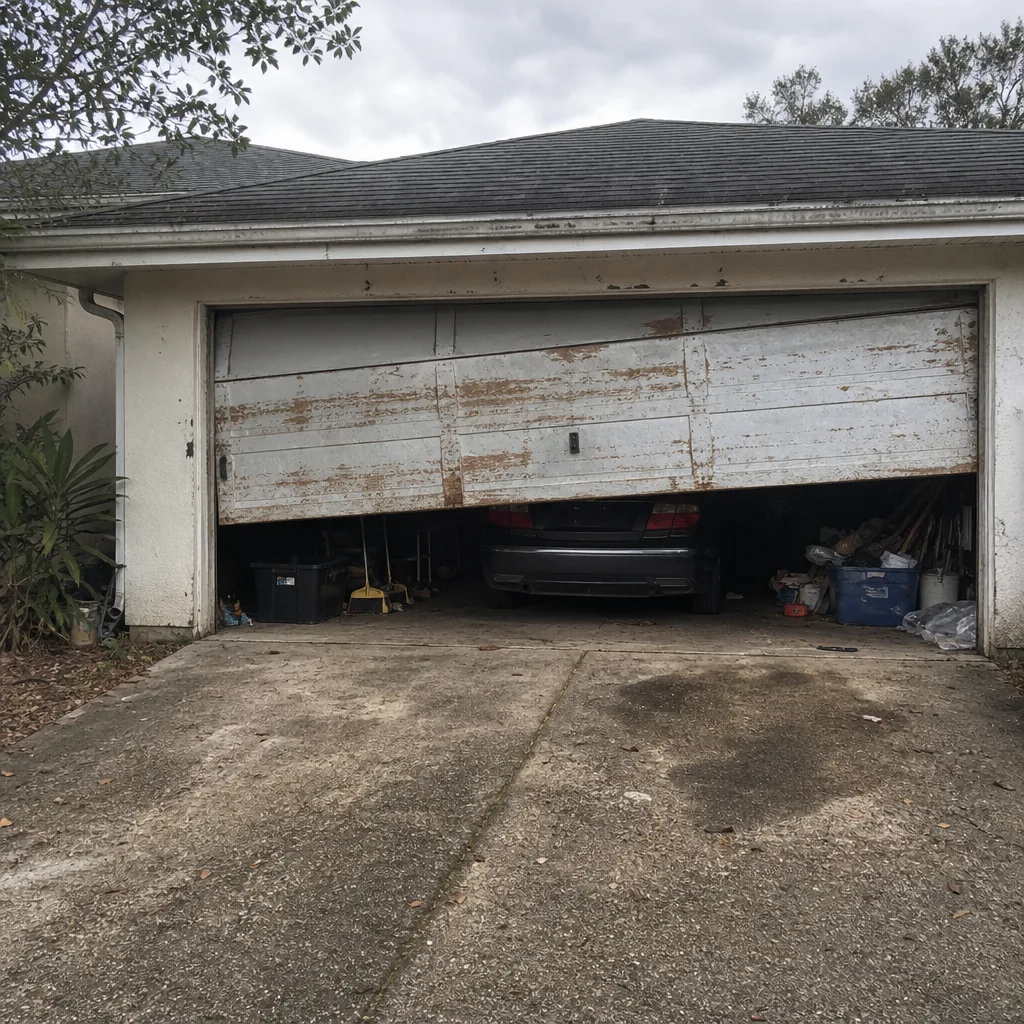 Before
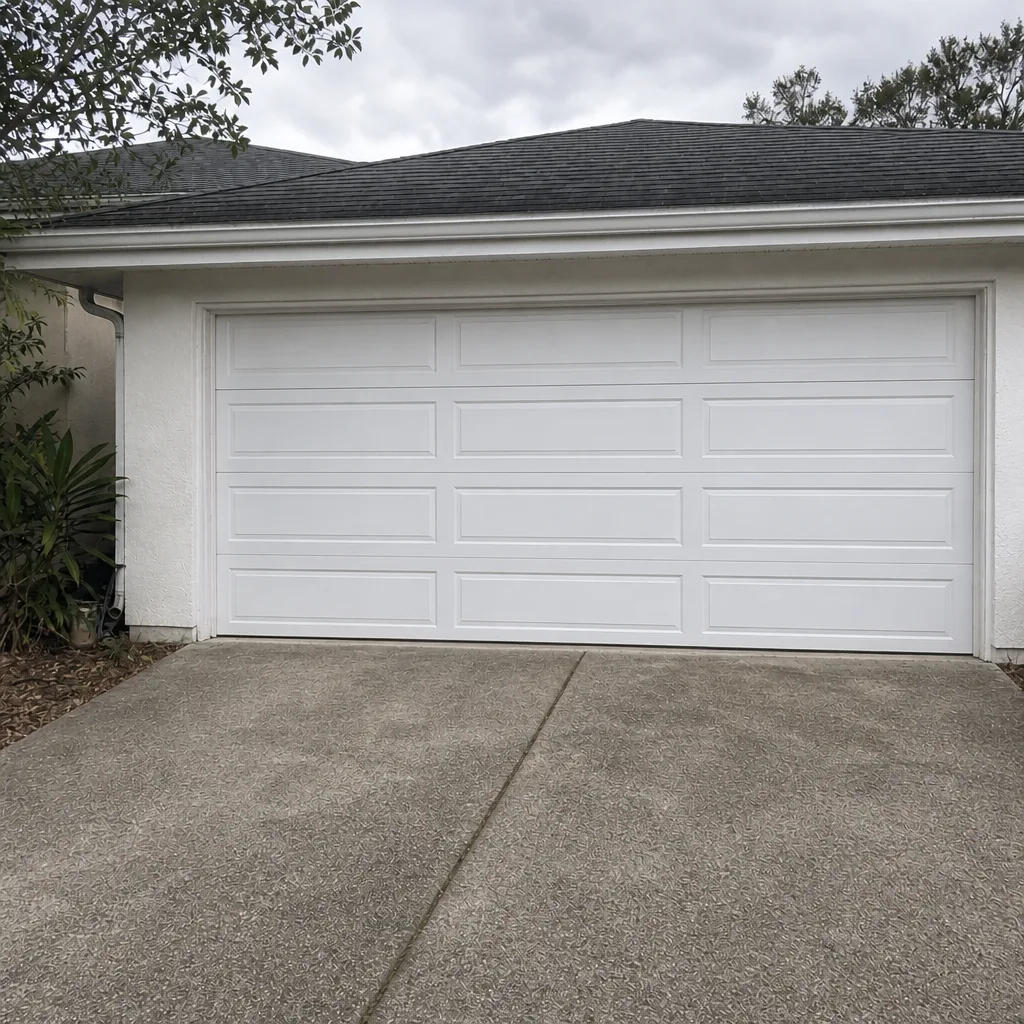 After
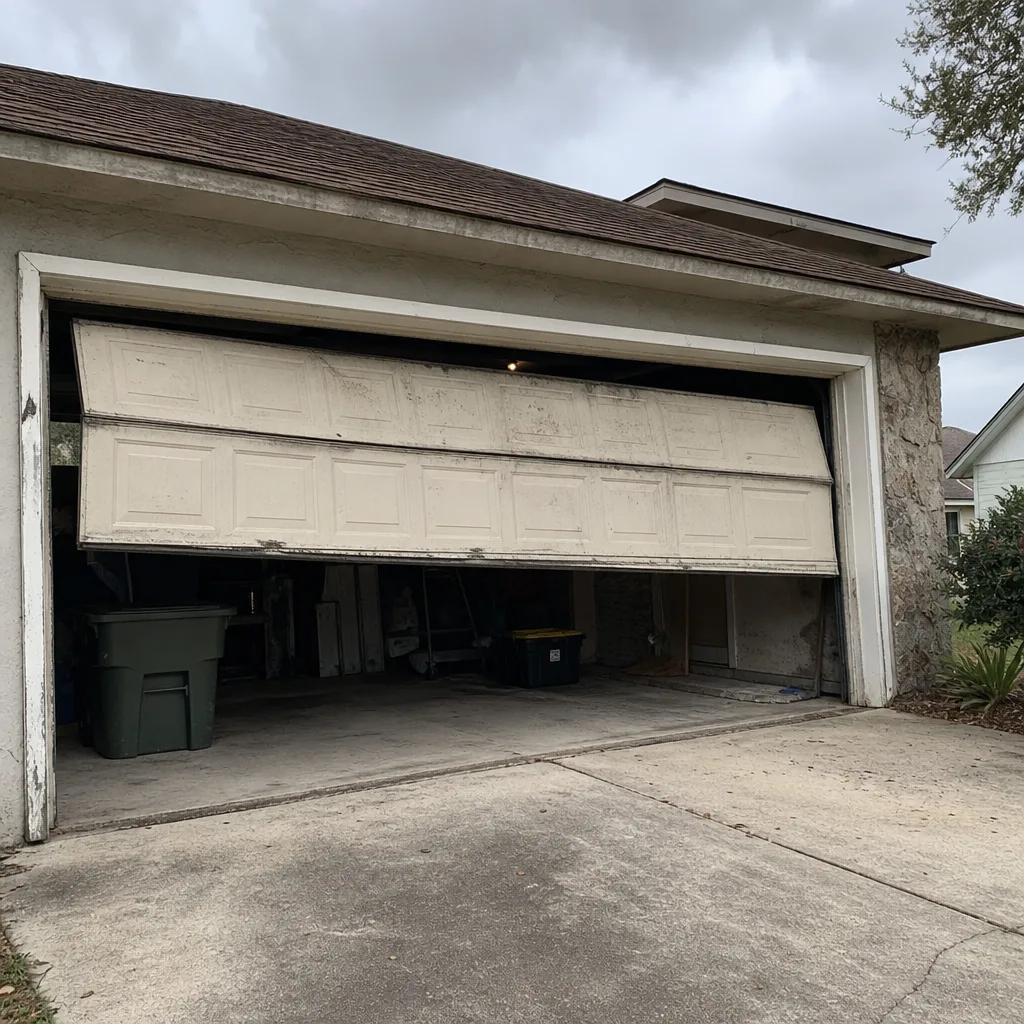 Before
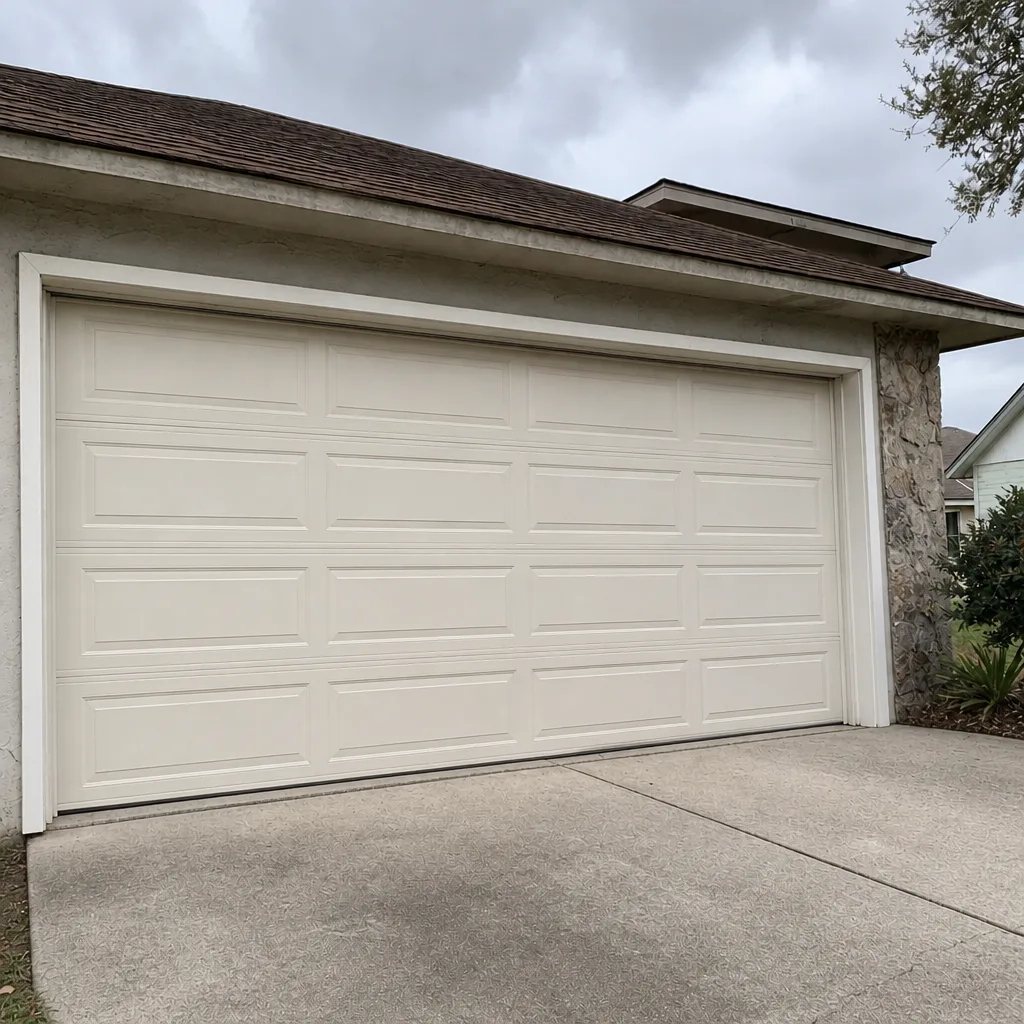 After
When to Call a Professional
Call a professional when the failure involves a spring, a door that’s come off its track, an opener that sparks or trips a breaker, or a door that won’t close and can’t be secured. Those are the situations where the risk of injury or property damage goes up with every attempt to fix them yourself. Call sooner rather than later if a car is trapped inside or the house is open to the street. For a noisy door, a slow opener, or a remote that’s stopped working while the wall button still operates the door, a scheduled visit is fine. Sanford Garage Door Repair Pros offers free estimates in Sanford. Call (855) 506-7237. We answer 24/7, with fast dispatch from 7am to 7pm, Sunday through Friday.
Frequently Asked Questions
Pull the manual release cord straight down once to disengage the door from the opener, then lift the door by hand slowly. If it feels extremely heavy or won’t budge, stop and call for help; the springs may not be doing their job. Re-engage the carriage before running the opener again.
Yes, in most cases. Spring repair is a same-day job when the right spring is on hand, which is why brand and model matter on the call. We ask for the door’s brand and any visible spring details when you call so the technician arrives with the right part. Call (855) 506-7237 for an exact quote; estimates are free.
First check the safety sensors and the tracks for debris or misalignment, then secure the opening with a brace seated in the tracks if the door still won’t close. Don’t rely on a rope or a chair. If the door is off its track or a spring is broken, call for service rather than forcing it.
Pricing is set per job by a written estimate, so the number depends on the failure, the brand, and the parts needed. What we can tell you is that the price is quoted and agreed before any work starts, so there’s no surprise on the invoice. Call (855) 506-7237 for an exact quote; estimates are free.
No. The written estimate sets the price, and the price is agreed before any work begins. If the diagnosis changes once the door is in front of us, we explain what changed and get your approval before continuing.
The local pros we connect you with are licensed and insured as their state requires. Our technicians have up to 12 years of experience, and spring repair is treated as a specialty because of the stored energy involved. Call (855) 506-7237 for an exact quote; estimates are free.
The Bottom Line
Emergency garage door readiness in Sanford comes down to preparation, not luck. Test your manual release twice a year. Know which failures are safe to leave overnight and which need a call right away. Run the pre-season checklist before hurricane season finds the weak points for you. Secure an open door with something that actually holds, and never attempt a torsion spring repair yourself. When something does fail, call with the brand, the door’s state, and whether a car is trapped. That’s the information that gets the right technician and the right part to your door on the first visit.
Sanford Garage Door Repair Pros connects Sanford homeowners with independent local professionals who service and install systems from LiftMaster, Chamberlain, Genie, Clopay, Amarr, Wayne Dalton, Craftsman, and Raynor. Call (855) 506-7237 for a free estimate. We answer 24/7, with fast dispatch from 7am to 7pm, Sunday through Friday.
Written by the team at Sanford Garage Door Repair Pros.